
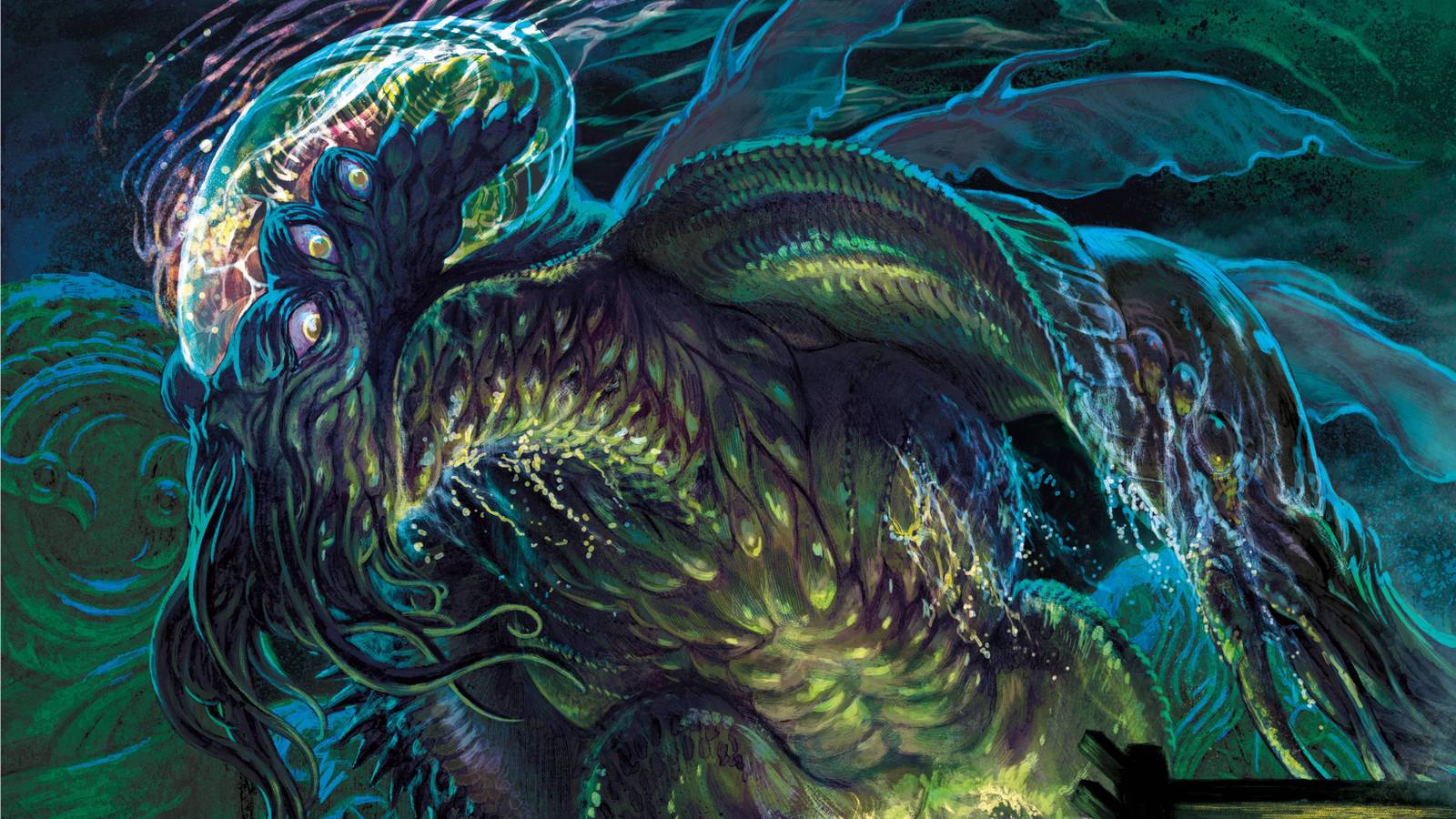
Published Oct 8, 2026, 6:04 AM EDT Francesco is an editor with a background in academic research, journalism, and content strategy, specializing in entertainment news and curation. He works across all of Polygon's verticals, specializing in tabletop games, with a focus on D&D and Magic. Say hello to Shub-Gorath Image: Brian Valenzuela/Wizards of the Coast For decades, the Cthulhu Mythos has been a prolific source of inspiration for creatives. Originating in the works of H.P. Lovecraft, this cosmology populates the universe with terrifying entities that, most of the time, lie in wait beyond the threshold of human perception. While Cthulhu is surely the most famous, Lovecraft and the writers who followed in the genre described as "Lovecraftian horror" have created a veritable pantheon of unfathomable, godlike beings. However, not even a Great Old One is immune to the changing of times. Chaosium Inc., the company that publishes the tabletop role-playing game Call of Cthulhu, recently launched a Gamefound project for Call of Cthulhu: Old Ones, a tabletop game for 2–4 players who take on the role of one of the Great Old Ones and their faction. The Cthulhu Mythos deities available in the game include Cthulhu, Hastur, Yog-Sothoth, and Shub-Gorath. While this last name may sound completely new to Cthulhu fans, it's not an original creation but in fact none other than Shub-Niggurath, whose name was changed by Chaosium. Chaosium changes Shub-Niggurath's name to Shub-Gorath Image: Loïc Muzy In a message published on the project's update page, Chaosium explained the reason behind the change. The name Shub-Niggurath could be associated with the racial slur used to describe Black people. Chaosium clarifies that "Lovecraft scholars concur 'Shub-Niggurath' was not derived from the slur," but it could nonetheless trigger automatic content filters online, an issue known as "the Scunthorpe problem," from the name of an English town whose inhabitants, in 1996, were prevented from creating AOL accounts because of the slur contained in the town's name. While this could be dismissed as a technical issue, Chaosium pointed out that the original name of the Great Old One "could be hurtful to some audiences, particularly when considered alongside Lovecraft’s own views." The writer maintained deeply racist and xenophobic views during his lifetime, as evidenced by his private correspondence and some of his fictional writing. Chaosium added that the name change can be justified from an in-universe perspective. Call of Cthulhu: Old Ones takes place in an age before humanity, when these deities were yet to be given proper names by the cultures that rose later. The choice of "Shub-Gorath" came from Shuma-Gorath, another Great Old One mentioned by Robert E. Howard (the creator of Conan the Barbarian) in a short story titled "The Curse of the Golden Skull." Interestingly, Shuma-Gorath was developed into a full character much later by Marvel Comics, which introduced it as a villain for Doctor Strange. Image: Marvel Studios The original Shub-Niggurath appeared only sparsely in Lovecraft's writing. It was mostly mentioned in invocations and through epithets, such as "The Black Goat of the Woods with a Thousand Young," or "the All-Mother and wife of the Not-to-Be-Named-One" (which could be referring to Yog-Sothoth). Contamination has always been a core component of the Cthulhu Mythos. Lovecraft and his contemporary writers, such as Howard and Clark Ashton Smith, encouraged each other to develop stories using the same monsters and deities, creating an ante-litteram collaborative fictional universe. Moreover, Lovecraft's original stories entered the public domain outside of the U.S. in 2007, and in 2024 in the U.S. Chaosium thus commented on the name change by saying that "bringing elements like these together feels very much in the spirit of how Lovecraft, Howard, and other writers built these interconnected worlds in the first place: borrowing ideas, adapting names, and combining elements from one another’s stories and mythologies. Shub-Gorath grew out of that same creative tradition." Cthulhu fans are used to wrestling with Lovecraft's controversial legacy. Predictably, the community has different opinions regarding Chaosium's announcement. Most fans seem unfazed, pointing out that the Great Old Ones are unfathomable creatures that cannot and should not be defined by their names (and that players can choose to use whatever name they want at the table). Others have been more vocal in their disagreement. The original creator of Call of Cthulhu, Sandy Petersen, wrote on X: "Man I defend Chaosium a lot online but I can't defend this." Image: Chaosium Inc. Chaosium preemptively acknowledged the potential backlash coming from the decision: "We also understand that for some players, staying as close as possible to the original names is an important part of preserving the legacy of these characters." The company believed that transparency was a priority on this occasion: "We don’t have a simple answer that will satisfy everyone." Call of Cthulhu: Old Ones reached its founding goal in less than twenty minutes. The project is currently close to $500,000 in funding, with the campaign ending on Oct. 15.
Call of Cthulhu Officially Changes the Name of a Lovecraftian God
Full Article
Original Source
Read the full article at Polygon →KhanList aggregates and links to publicly available news content. We do not host full articles from third-party sources. Always verify important information with original sources.