
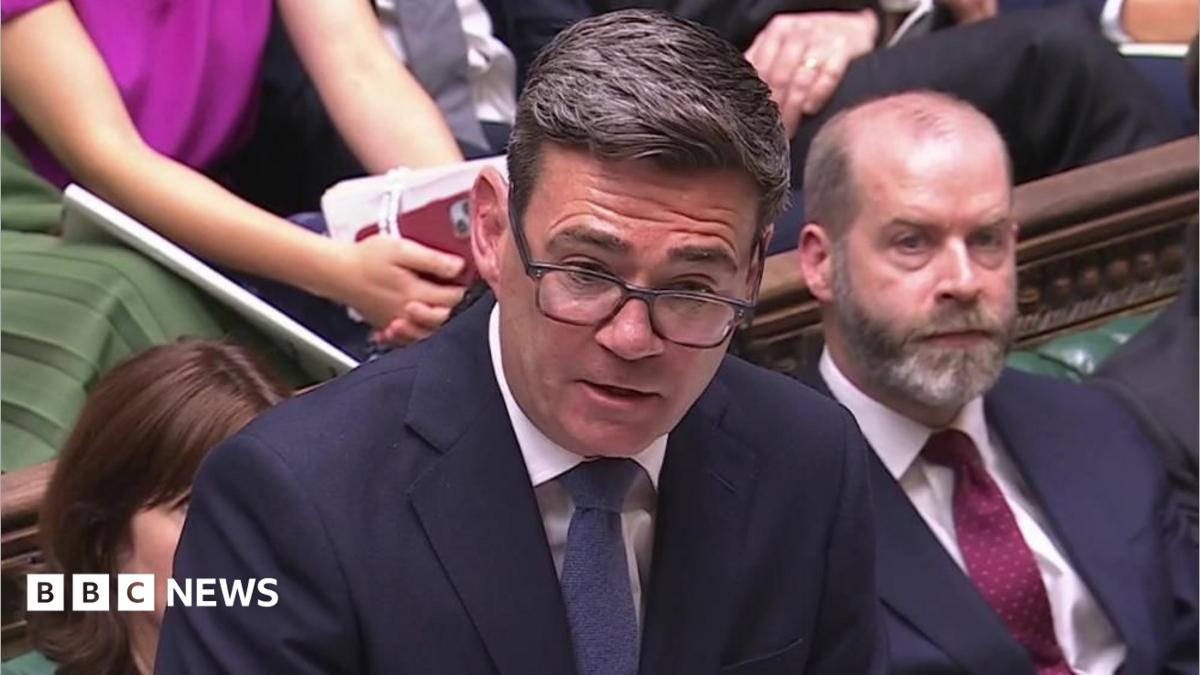
Burnham took his place in the House of Commons chamber to raucous cheers from the packed Labour benches and struck a confident tone from the start, clearly keen to maintain the sense of optimism he's promised the country.His initial exchanges with Kemi Badenoch were vaguely jocular. The Conservative leader started with a joke about the prime minister's stamina after a marathon Commons' session on Tuesday when he took questions for more than three hours; there was laughter from MPs and a cautious smile from Burnham.But if there was an early twinkle in the eye of either party leader their exchanges soon slipped into more familiar territory, trading barbs over tax and borrowing with Badenoch making claims of profligate government spending.Burnham, despite his promises to end what he's called political "point scoring" was soon pointing the finger at the Tories for their economic record, referencing the budget of former Prime Minister Liz Truss while promising he'd deliver fiscal discipline.He's not the first prime minister to pledge a new style of politics only to find it hard to dodge the adversarial nature of PMQs.David Cameron said he'd end "Punch and Judy politics" when he became Tory leader only to find himself in regular political knockabouts across the despatch box.But while the political barbs continued it's clear that Burnham is a more comfortable communicator than his predecessor. His real challenge will be delivering more than a change in tone.The backdrop to his first few days as prime minister with Westminster in full swing has been the increased cost of borrowing – a global trend but one to which the UK is exposed and which looks likely to limit the chancellor's room for manoeuvre at the budget come the end of October.Burnham has promised a transformational government but he's facing many of the same challenges as Sir Keir Starmer, with difficult decisions on defence spending, welfare and social care - to name just a few - hurtling towards him.These are the pressure points his political opponents will seek to exploit, as evidenced by Badenoch's approach at Prime Minister's Questions when she quizzed him over plans for taxes, spending and borrowing.Burnham pointed to his early actions in office, cutting VAT on domestic electricity bills and business rates for pubs and music venues as a sign of his priorities, but he gave little more away – leaning back on another familiar refrain that prime ministers don't write budgets from the despatch box.In reality, it would be unfair to expect much more in the way of detail about Burnham's plans for the economy during his very first session of PMQs, but these are questions his government will eventually have to answer.And what is clear is that despite the promise of a more consensual style of politics, when it comes to the substance there are sharp ideological differences across the Commons.Burnham's diagnosis for the country's problems centres on privatisation and deindustrialisation over recent decades, as well as Brexit.Badenoch disagrees, pointing instead to high taxes and spending as constraints on economic growth.While Burnham's early weeks in office have seen a shift in style with a summer tour around the country and heavy social media presence, the economic arguments between him and his political opponents remain, and now Westminster is back in session there will likely be a clamour for more detail about his planned direction.Today's Prime Minister's Questions is a taste of what's to come.As well as smart communications, the choices the prime minister makes against a tricky economic background will take careful navigation if he's to deliver the optimistic future he's promised.
Burnham's PMQs debut shows the challenge of delivering new style of politics
Full Article
Original Source
Read the full article at Bbc →KhanList aggregates and links to publicly available news content. We do not host full articles from third-party sources. Always verify important information with original sources.