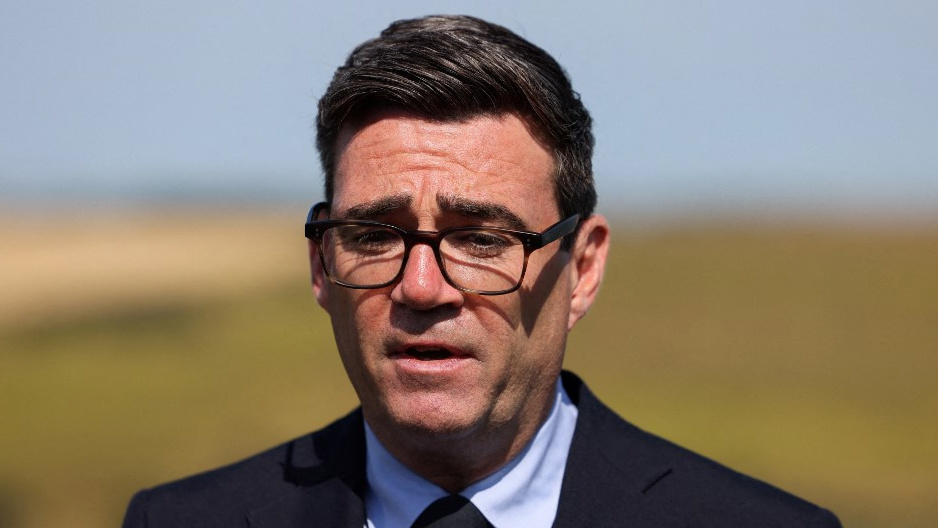
A new dawn has arrived in Britain. Andy Burnham has replaced Keir Starmer as prime minister. The Labour Party has arrested its seemingly irreversible slump, having learned its lessons, and is ready to resume governing, while addressing the concerns of ordinary people. Faith in politics has been restored. At least, that appears to be the portrait that has been deftly constructed in the first fortnight of the new Burnham premiership. The former Greater Manchester mayor took high office with an unambiguous message to deliver change. Outside Downing Street, in his first official speech, he promised that his arrival would be a “circuit breaker” moment in British politics. “This is the start of a complete rewiring of economic and political power,” he reiterated last week. The evidence suggests the British public finds his argument compelling. For the first time in more than a year, the Labour Party is polling ahead of Nigel Farage’s Reform UK, while Burnham’s personal ratings are also strong. New MEE newsletter: Jerusalem Dispatch Sign up to get the latest insights and analysis on Israel-Palestine, alongside Turkey Unpacked and other MEE newsletters Almost half of Britons polled said they would prefer a Labour government headed by Burnham to win the next election. As the Observer notes, the honeymoon period is in full swing. But the difference between reality and perception is striking - especially on critical foreign policy matters. Immediate policy introductions, like the £2 ($3) bus fare cap, a plan to end rough sleeping, and overhauls to education and social care have consolidated the message of a government delivering urgent change. 'We got it wrong' One of the first things Burnham did in preparation for becoming prime minister was to issue an apology for Labour’s response to Israel’s assault on Gaza. “Labour’s initial response to the treatment of Gaza caused huge hurt. We got it wrong and I am sorry for that,” he said, vowing to do better. He recently doubled down in an interview, saying Labour was too slow to call for a ceasefire. If this reflective rhetoric was meant to be emblematic of the drive for change, it instead cynically evaded the issue. The Labour Party’s failings on Gaza go far beyond not calling for a ceasefire sooner. When Israeli officials declared their intentions to carry out a campaign of systematic erasure in Gaza, Labour as the opposition party encouraged it, neutralising the possibility of a critical voice against the ongoing genocide. Each opportunity to make a clear break with the past has been squandered … It is therefore difficult to take Burnham's apology or apparent contrition over Gaza seriously Once in government, Labour armed Israel while Palestinians were being massacred, and continued to permit British spy flights that supplied intelligence, helping to facilitate Israel’s bloodshed. Those spy flights were overseen by the former defence secretary, John Healey, whose legacy of complicity in genocide didn’t earn him retribution from the new prime minister, but rather a promotion, elevating him to chancellor. Each opportunity to make a clear break with the past has been squandered. When Israeli arms companies supplying the weaponry being used to flatten Gaza attended the recent Farnborough International Airshow, Burnham chose to address the event, lending legitimacy to their presence, rather than distancing himself from it. It is therefore difficult to take Burnham’s apology or apparent contrition over Gaza seriously, when it remains unaccompanied by the moral conviction to act. That has become the defining pattern. Even before he became prime minister, in a lengthy interview with the Guardian, Burnham declined to describe the apocalyptic situation in Gaza as a genocide. This wasn’t cautious balance and tentative framing to avoid alienating potential supporters of his campaign; it was an early admission of an approach to Palestinian suffering that was at best going to consist of passive neutrality. Procedural equivocation A letter signed by a raft of MPs was recently sent to Burnham, demanding that he recognise Israel’s genocide in Gaza and impose sanctions. It was met with indifference; the Foreign Office instead reiterated that the government would “work tirelessly to achieve a sustainable peace in Palestine and Israel”. That language of procedural equivocation has become a staple. The new foreign secretary, Ed Miliband, has already published several statements invoking the Palestinian people, lamenting their “terrible suffering” and bemoaning the “intolerable situation in Gaza”. While he might have an impressive command of adjectives, he perhaps ought to cultivate an equally robust understanding of the powers and capabilities of his office. Miliband is well placed to enact change, to ensure that British policy on Palestine - which the administration he now serves acknowledges has been appalling - finally breaks with the past. Scratch beneath the surface, and a different picture emerges. According to a recent analysis, the foreign secretary is not expected to act quickly on the admission that the government needs to do better on Gaza. Burnham has also suggested exploring measures against illegal Israeli settlements in the occupied West Bank. That proposal, too, has reportedly been met with scepticism from Foreign Office diplomats and is unlikely to materialise. That this comes just as Labour Friends of Israel published a report arguing against blanket trade measures targeting Israeli settlements - with more than a third of the new cabinet belonging to the group - might be a coincidence. Or it might be the machine working exactly as intended. Selective paralysis Palestinians continue to be brutally killed in Gaza under the illusion of a ceasefire, while even the faint prospect of respite and safety slips further from reach, as Israeli annexation and occupation of the enclave becomes ever more entrenched. Meanwhile, in the occupied West Bank, land theft and oppression are intensifying, turbocharged by settler violence carried out under the full protection of the Israeli state. All the while, the British apology for failing to act sooner has itself been followed by further inaction. The truth is Burnham’s mea culpa on Gaza was nothing but a change in tone Read More » Yet this political paralysis is strikingly selective. Where there’s been an appetite, the government has acted with speed. Within days of becoming prime minister, Burnham had already allowed the US to use UK military bases in its bombing campaign against Iran, while the new defence secretary, Wes Streeting, promised to prioritise the military over other forms of spending. So where exactly is this remorse and meaningful change? The headlines, the polling and the commentary all speak of renewal. Yet Britain remains what it has long been: a state intrinsically wedded to the war machine, deferential to the imperial hubris of US foreign policy, treating the perpetual oppression and ethnic cleansing of Palestinians as an impossibly complex conflict - a smokescreen it uses to sidestep its obligations under international law. The captain might have changed, but the metaphorical voyage has not. Everyone insists a new hand is at the helm steering a new direction. The captain himself says as much. Yet the ship sails on the same course, without the slightest deviation. The views expressed in this article belong to the author and do not necessarily reflect the editorial policy of Middle East Eye.
Burnham is the new captain, but he's charting the same course on Israel
Full Article
Original Source
Read the full article at Middleeasteye →KhanList aggregates and links to publicly available news content. We do not host full articles from third-party sources. Always verify important information with original sources.