
Every year, the leading business networking group, E2Exchange or E2E, holds a gala event in London, usually in Mayfair. E2E connects ambitious SMEs, entrepreneurs and investors. Their lead speaker is often Lord Karan Bilimoria, the Cobra Beer founder and former president of the CBI.Bilimoria likes to begin by asking for a show of hands: who thinks Brexit was good for business; who believes it is bad? On the first, not one hand ever shoots up — I tell a lie, over several years attending these occasions I once saw a solitary palm raised, by a Tory life peer and pro-Brexiteer, who appeared shamefaced as he indicated his support. Otherwise, nothing.On the second, every person lifts their arm. It is quite a sight, 200 or so senior business figures — many of them self-made, running companies, employing considerable workforces, creating wealth — responding in the same way.The point is they come from across all sectors; the host, Bilimoria, is not linked to a political party. He sits in the Lords as an independent crossbencher. Theirs is a universal feeling. As far as London business is concerned, leaving the EU was a commercial and economic disaster.There is another point. That the Brexiteers do not want to know. Whenever the opposition of the business community, which is just as strong today as it ever was (if anything it is stronger), is put to them, they feign ignorance or maintain it does not matter.They may cite the few business figures who are avowedly pro-Brexit. Then they slip into a discourse about taking back control, tightening our borders, releasing ourselves from the shackles of EU rule-makers, entering into trade agreements that we were barred from. Mention the ‘Brexit dividend’ to business leaders and they laugh What they don’t talk about are the extra costs of trading with our nearest neighbours; shutting off free and easy access to 450 million people; having to fill in forms and to hire people just to complete the bureaucracy; suffering delays to orders; being unable to hire skilled workers from the EU; queueing for interminable lengths of time to clear passport control (for these folks, their time is money); struggling to transfer money; finding services harder to import and export. As for those trade pacts, they at best replace what was already in place when we were part of the EU, and the focus is on items that do not exactly punch out the lights (Stilton cheese, tea and biscuits to Japan). Mention the “Brexit dividend” to them, as Bilimoria often does, and they laugh.Bilimoria is on record as saying the 2016 referendum “should never have happened”, arguing that condensing such a complex, geopolitical issue into a simple binary vote was ridiculous. Back then, George Soros, the legendary speculator who bet spectacularly against the pound in 1992, said: “The fact is that Brexit is a lose-lose proposition, harmful both to Britain and the European Union. It cannot be undone, but people can change their minds.”Here we are, 10 years later and the Prime Minister says that he believes the British people are ready to change their minds.Across London, in boardrooms, trading floors, shopfloors, counters, offices and depots, there was relief at Andy Burnham’s stance. At last, there is hope a calamitous commercial and economic wrong can be righted.In City Hall, also. There, mayor Sadiq Khan earlier this summer asked his economists to analyse the impact of the Brexit decision on growth, employment, wages and productivity, and to reach an overall verdict.They concluded in their report, that “on aggregate, and since 2016, the UK economy appears to have settled onto a level about 5 per cent below the path implied by the six major EU economies (Germany, France, Italy, Spain, Netherlands and Poland).”In areas that relied heavily on EU workers, in accommodation, retail and food services, “their employment and total real wage levels dropped relative to the EU’s. There is also no evidence of sustainable productivity gains due to increased investment or capital deepening in these sectors since 2016.”On the capital, specifically: “London remains the UK’s most productive economic region by a considerable margin, with its contribution to national output increasing over the past decade to reach nearly 25 per cent.” Then, they said this: “As these sectors employ nearly 60 per cent of London’s workforce and comprise nearly half of its GVA, the employment and wage effects in particular are considerable for London’s economy. Therefore, Brexit has curtailed London’s potential to perform even better, in particular when it comes to productivity and nominal wage growth.” The UK and London are worse off, in other words.In the City, too. Dire predictions that the financial district would suffer and lose its global hegemony have not come to pass. Xavier Rolet, head of the London Stock Exchange in 2016, said that 200,000 jobs would be at risk, while others put the figure at between 75,000 and 100,000. That has not occurred. Rather, says the data from the Office for National Statistics, London has added 67,000 finance and insurance jobs in that decade.The think tank New Financial reckons London has remained ahead in the trading of foreign currencies, international interest rates and their derivatives, in cross-border bank claims, foreign bank assets and international debt issuance. It’s still No 2 for total assets managed for investment funds, foreign direct investment in financial services and investment in fintech.While the City has not collapsed and is still holding its own, just, it has not exactly powered ahead either, compared with New YorkIt’s down where the UK stock market is concerned but that may be due more to a weakened UK economy (arguably not helped by Brexit, where the Bank of England estimates the exit cost us 6 per cent of GDP) than the City suffering as a direct consequence of quitting. Some businesses that deal with the EU have relocated operations there. Likewise, managers and risk assessors have been moved because EU regulators require a local presence. Generally, though, there has not been the haemorrhage of talent.While the City has not collapsed and is still holding its own, just, it has not exactly powered ahead either, compared with New York. What there has been in the Square Mile is slippage. Where once, financial firms headquartered themselves in London or sent their heaviest hitters there, viewing it as the springboard to Europe and its vast free EU market, that is now not happening so much.Last year, the long-time head of Goldman Sachs in London provoked shudders by relocating to Milan. Richard Gnodde went in reaction to Rachel Reeves’s clampdown on non-doms (he was in that favoured tax bracket). But South African Gnodde had said ahead of Brexit that staff would move.Since then, Goldman has added to its offices in Frankfurt, Paris and Milan. Gnodde has complained, post-Brexit, that access to Europe is “not as free as it used to be” for financial institutions like his operating out of London. When he left, Goldman said he would be “primarily focused on growth opportunities for the firm across Europe”.While the City has been impacted but not as badly as feared, neither has it boomed. That was what the Brexiteers said would occur, that London would race into the distance, free of the stultifying hand of Brussels, becoming a free-for-all, loosely regulated, mighty magnet for the world’s financiers and their business associates. Instead, the place that has been firing on all cylinders is New York. While London has stalled and Europe’s financial centres have advanced a little, albeit in a fragmented fashion, New York continues to generate ever greater returns. It’s where tech is, it’s where the money is and it is where Donald Trump is. While the UK and EU have been grappling with the post-Brexit regulatory landscape, Trump, who cares little for regulation, has been driving America’s businesses and their own principal NYC base.For businesses all over London, for City Hall, for the City then, a return of closer ties with the EU cannot come soon enough. If the Brexiteers are disbelieving and scornful they only have to follow Bilimoria and ask.
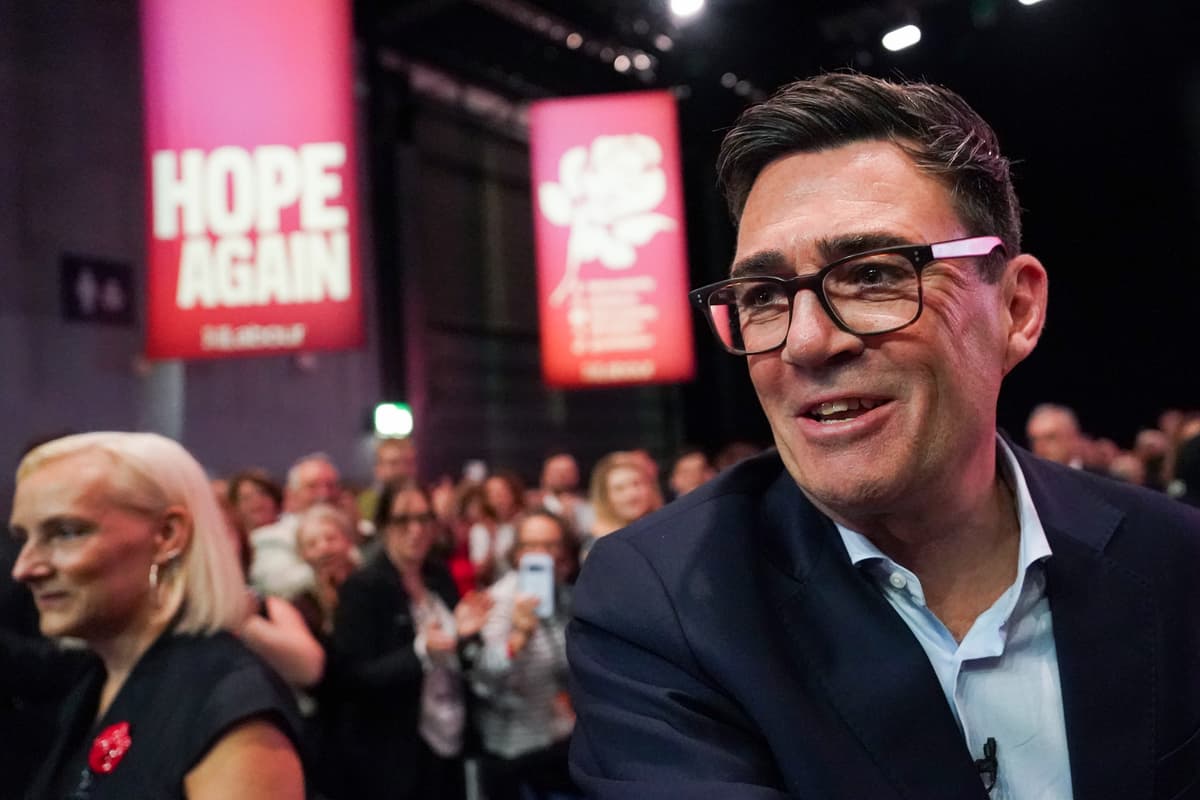
Burn Brexit, burn, signals Burnham — the City is with him
Full Article
Original Source
Read the full article at Standard →KhanList aggregates and links to publicly available news content. We do not host full articles from third-party sources. Always verify important information with original sources.