
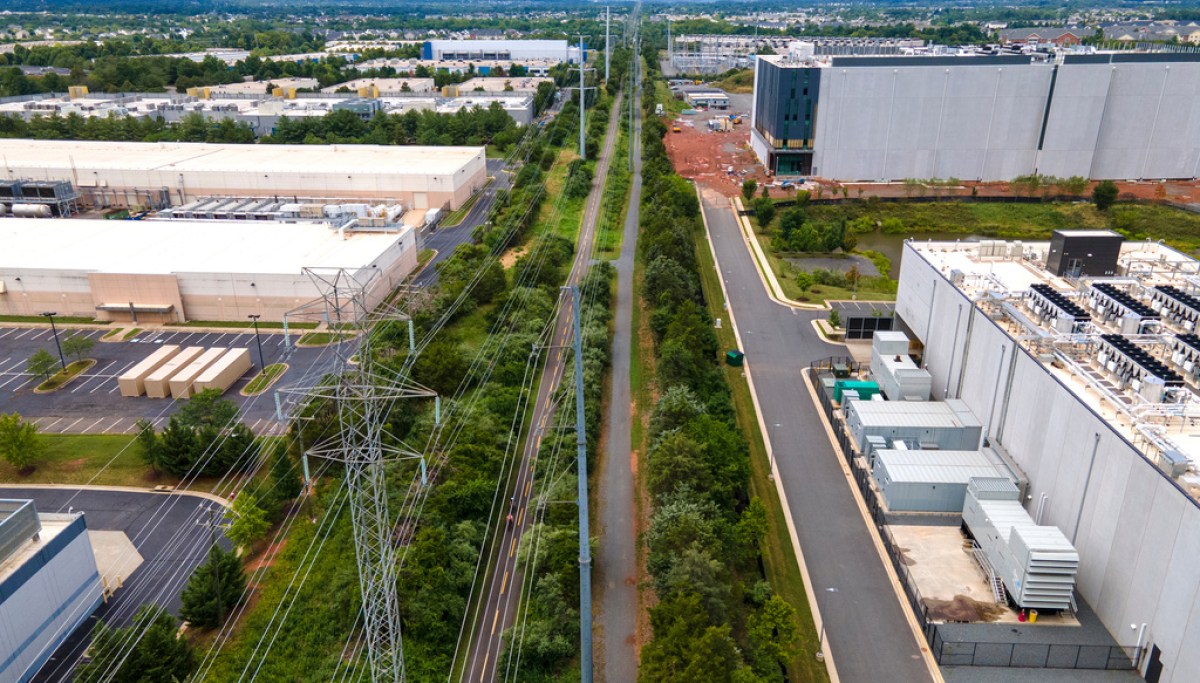
Just a few years ago, most Americans had barely heard the term “artificial intelligence.” Today, it is already changing daily life. An AI model can spot the signs of pancreatic cancer up to three years earlier than conventional methods. An AI sepsis-alert system cleared by the Food and Drug Administration is cutting hospital deaths by nearly one-fifth. Banks are using AI to stop fraud before it drains a family’s savings, and cities like Phoenix are testing AI-run traffic signals that are already shortening commute times at some of their worst intersections.None of it happens without data centers, and data centers are not built by one type of company. It takes the investors financing the projects, the utilities and power producers keeping the grid reliable as demand climbs, and the hyperscalers running the models, plus many more layers of different types of companies in between, all working together with local communities. Building data centers across the United States is how America wins the global AI race against China.That future depends on trust. Families in the towns where these projects break ground have every right to ask hard questions about land use, water, jobs, noise, and the price of electricity. The AI Infrastructure Coalition, which we co-chair, does not believe the choice is between AI leadership and protecting the communities that host data centers. That is why we commit to five Community Principles that will guide data-center development across the country.Our membership runs the length of the AI tech stack. This includes the investors financing the buildout, the utilities and power producers keeping the lights on, the companies building and operating the data centers themselves, and the hyperscalers running the models on top of it all.Why is this important? The major players from across the entire industry are all agreeing to the same rules, setting a gold standard for building not only data centers, but trust with communities across the United States.1. Protect ratepayers. Data centers will bear the full cost of the energy they use, so those costs aren’t passed on to other customers. That means building, bringing, or paying the full cost of new generation and transmission to their facilities, and working with utility partners on large-load rate structures that make sure every large load, including data centers, pays the costs it causes. It also means coordinating with grid operators to help keep the grid reliable and the lights on for everyone.2. Benefit the community. Data centers will give back to the communities that host them, helping fund local priorities like recreation centers, schools, roads, hospitals, and first responders, or helping lower property taxes. Done right, a data center should grow a local economy, not just occupy land in it.3. Minimize water use. Operators will invest in advanced cooling technology that saves tens of millions of gallons of water per year, put money into local water infrastructure, and pursue water replenishment where it’s feasible, recognizing that water availability in the desert Southwest isn’t the same as it is along the Gulf Coast.4. Hire local and invest in American workers. Companies will prioritize hiring residents of the communities where they build, backing the technical education and workforce-training programs that prepare people for careers in technology and the skilled trades. The industry needs hundreds of thousands more electricians, HVAC technicians, and other skilled tradespeople.5. Earn the community’s trust. Earning that support means engaging local leaders and residents early, listening to what they have to say, being appropriately transparent throughout, and staying respectful of their concerns and their quality of life. A community that feels informed is a very different partner than one that feels steamrolled.Washington, not to mention those gathered on social media and around dinner tables across America, has spent the better part of the past two years arguing about whether AI is good or bad for America.That’s the wrong debate. AI developed and built in America will benefit every family in one way or another.AI IS ESCAPING THE LAB. WHY ARE WE LETTING BIG TECH GRADE ITS OWN HOMEWORK?The real question is whether we build the infrastructure in a way families can trust, from the companies financing America’s AI future to the utility flipping the switch.America does not have to choose between AI leadership and protecting local communities. In fact, lasting AI leadership requires getting the community piece right. That’s what our pledge is all about.Kyrsten Sinema is a former member of the U.S. Senate. Garret Graves is a former member of the U.S. House of Representatives.
Build data centers, beat China, but don’t steamroll America’s communities
Full Article
Original Source
Read the full article at Washingtonexaminer →KhanList aggregates and links to publicly available news content. We do not host full articles from third-party sources. Always verify important information with original sources.