
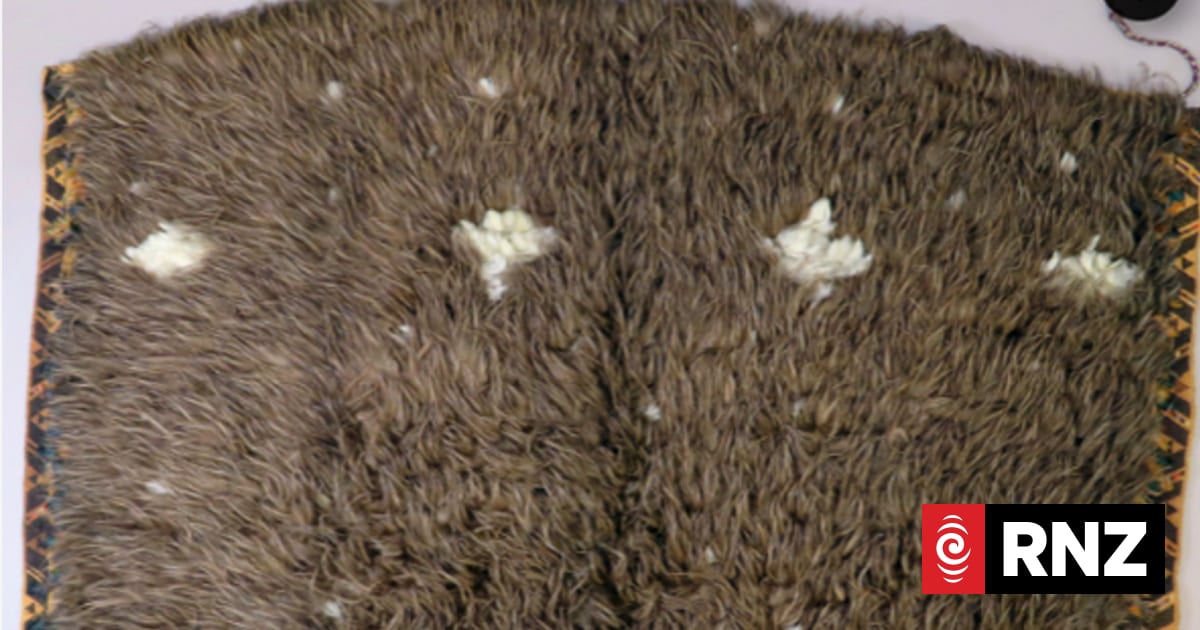
More than 125 years after a kiwi-feather cloak was given away, it's finally being returned by a British museum to the iwi that made it.The kahu kiwi had been gifted on behalf Ngāti Rārua and Ngāti Toa Rangatira by Hapareta Rore Pukekohatu and Mere te Hiko to British doctor Dr George Cleghorn in 1900 for the work he did around Wairau Pā near Blenheim.The cloak was loaned to the Pitt Rivers Museum at the University of Oxford, by Cleghorn's widow, Helen, in 1913.Dr Lorraine Eade, a descendant of one of the iwi leaders and the chair of Ngāti Rārua o Te Wairau Society, finally managed to track the kahu kiwi down to the museum.Eade told Morning Report Ngāti Rārua have been on a mission to identify taonga gifted to Cleghorn and other dignitaries in the period from 1890 to 1930.A group from the iwi fly out for Oxford on Tuesday to pick up the kahu kiwi."I'm going to feel elated when we get it back to New Zealand. Our Cleghorn relatives are meeting us at Pitt Rivers Museum and the New Zealand relatives are meeting us at Takapūwāhia Marae, so its been a joint effort between the Cleghorn descendants and relatives and of course our iwi."On its return to Aotearoa the cloak will be temporarily cared for at The Museum of New Zealand Te Papa Tongarewa, before returning to Hauhunga Marae around October 2027 once the building of a new wharenui at the marae is completed, Eade said.Chair of Ngāti Rārua o Te Wairau Society Dr Lorraine Eade.Supplied/Lorraine EadeEade said Dr Cleghorn arrived in New Zealand in 1876 and was made the medical superintendent of Wairau Hospital where he did much work for the local Māori community."He wasn't supposed to serve Māori who lived within the Wairau Pā, because we were associated to another road board, we had to go to Picton Hospital, but he never ever turned us away. He came out and he did home visits, he came out and talked to us about how to keep your water safe after flooding."Eade said much of the time whānau didn't have the resources to pay Cleghorn, but there was a level of reciprocity and they would provide him with flax for sutures, sphagnum moss for bandaging and kai.Cleghorn also performed the first appendectomy in New Zealand, set up typhoid wards at Wairau Hospital and was overall integral to the community, Eade said."He had a huge farewell when he left Blenheim the community raised 300 sovereigns for him as part of his farewell. And of course Hapareta and Mere te Hiko on behalf of the Pā came to that event and provided him the kahu kiwi and some greenstone as well."The very next day he was heading to Picton with his wife and they stopped off at the Pā again and he was given more taonga by our rangatira there, so he was very, very special to us because he did look after the interests of Ngāti Rārua, Ngāti Toa and Rangitāne of Wairau Pā."Eade said he also received a greenstone mere (a flat clublike weapon) which has been more difficult track down and his relatives have informed the iwi that it was auctioned off in the 1970s."It's not necessarily about bringing it back because it's probably in private ownership, it's kind of identifying where it is and what it looks like and having the ability to touch that, feel the mauri within it."Ngāti Rārua have set up a taonga database containing a list of all of the taonga that were gifted to dignitaries, Eade said."We're on a mission. This will be the first one across the line and then we'll start the journey for the next one."
British musuem returns 125-year-old kahu kiwi to Marlborough iwi
Full Article
Original Source
Read the full article at Rnz →KhanList aggregates and links to publicly available news content. We do not host full articles from third-party sources. Always verify important information with original sources.