
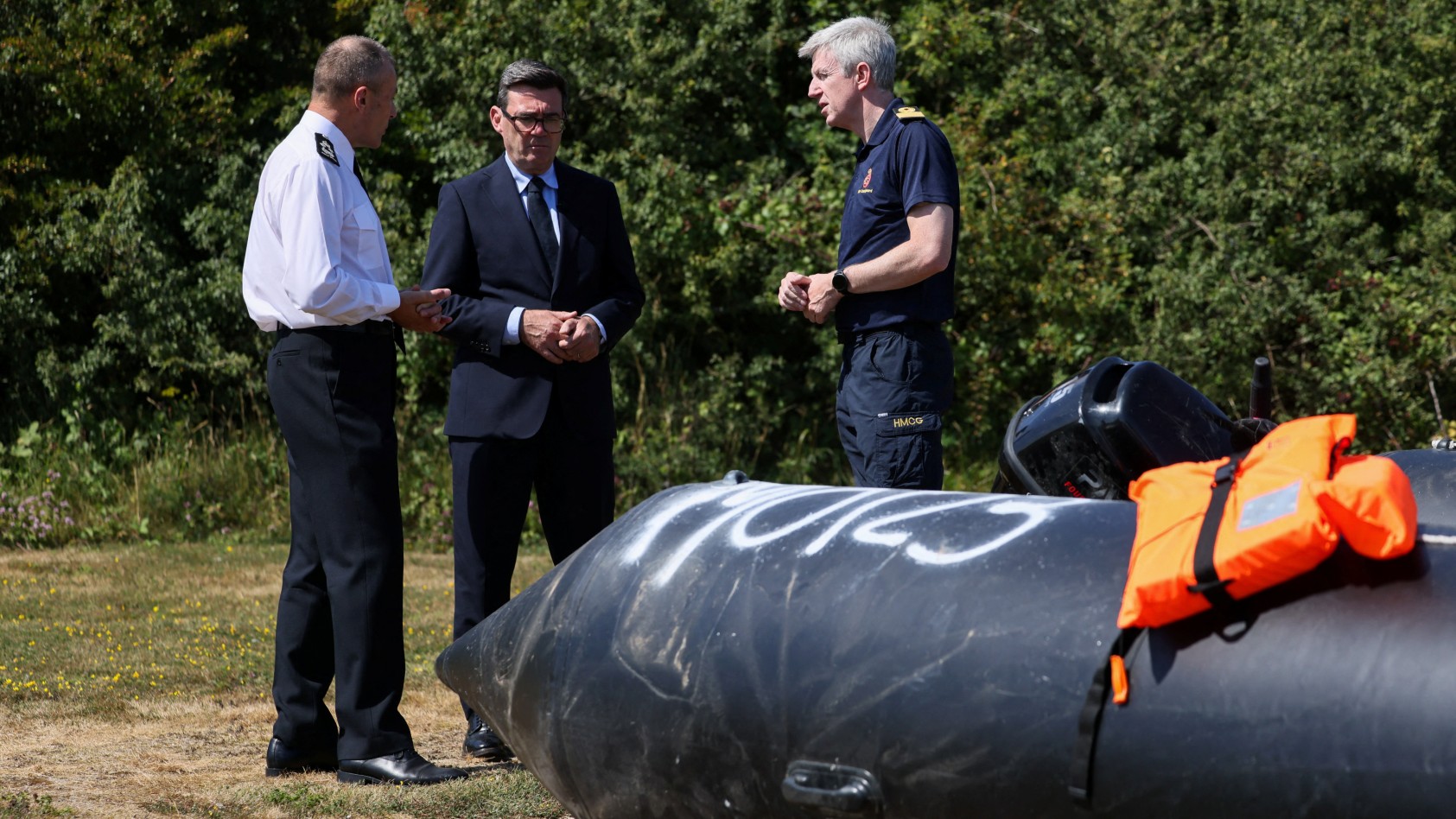
For a while there, it seemed like they’d stopped talking about it. Andy Burnham had become prime minister and hit the ground running with a series of small but respectable measures aimed at alleviating what, for most people, is the most pressing problem in Britain: the cost of living. At the same time, Nigel Farage, leader of the hard-right Reform UK, had become a joke, running against a comedian with a bin on his head in a pointless by-election. More seriously, behind the smokescreen that farce was intended to create, Farage had found himself at the centre of scandal after scandal, including a parliamentary standards watchdog inquiry into a series of “gifts” he had received like £5m ($6.8m) from crypto billionaire Christopher Harborne. For the first time, the swaggering marionette of the super-rich was looking vulnerable, with Burnham already pulling ahead of him in the polls. New MEE newsletter: Jerusalem Dispatch Sign up to get the latest insights and analysis on Israel-Palestine, alongside Turkey Unpacked and other MEE newsletters Then Ceuta happened. An estimated 70,000 Moroccans entered the Spanish enclave in North Africa via sea and land, with at least 141 dying in the attempt. Reform saw their chance, and before you could say "Ceuta is more than 1,000 miles from the UK", party spokesman Zia Yusuf was on a plane. That Yusuf arrived in Ceuta as most people had gone back to Morocco didn't stop him from scaremongering on social media and in an interview with the Reform-adjacent GB News. He spoke darkly of "marauding migrants" despite only finding a few dozen men to film, one group eating biscuits as they happily spoke to him. Hearing the dog whistle loud and clear, Reform supporters and other far-right elements in Britain, poured their ever-present Islamophobia out on social media, the so-called storming of Europe by Moroccans becoming a storm of Muslims. But here's the thing: for all the absurdity of Reform's claims that the United Kingdom was about to be invaded because of an incident in North Africa - partly geopolitical in nature - that led to exactly zero people making it to mainland Spain, it worked. Propaganda works A day after Yusuf's grandstanding and acres of coverage in the reactionary media, Burnham showed up in Dover, where most asylum seekers crossing the English Channel from France to Britain arrive, pledging that he would be "relentless" in stopping the dreaded "small boats". He even stood looking gravely at an empty dinghy put on display for him. Elon Musk, UK far right, and Islamophobia: Why Humza Yousaf is sounding the alarm Read More » The images of the prime minister on the cliffs overlooking the Channel told us one thing clearly: Reform was framing the national conversation again. And more than three weeks after Ceuta, the headlines continue. The crossing of a larger-than-usual boat this month was splashed across the front pages, and Burnham was heckled in Ilkeston, a town in the Midlands, as he began a "listening tour" of the country, when a man shouted: "Any ideas how we're going to stop the boats?" Giving an interview on migration to GB News didn't stop the channel from running a weak "exclusive" that found more people had arrived by boat in Burnham's first three weeks in office than in Starmer's. And, in a telling statistic last week, a Sky News/YouGov poll found that 40 percent of Britons incorrectly believed small boat crossings had gone up this year, despite Home Office statistics showing they were down 43 percent from last year, putting them at their lowest level since 2021. It's clear that the far-right propaganda works, and time and time again the government and the media walk right into the trap. If Burnham could resist kneejerk reactions due to Labour's fear of Reform and plant his feet on dealing with the cost of living, he could be onto a winner. An Ipsos poll last month found that a staggering 76 percent of people in the UK were concerned about the impact of the rising cost of living on them personally over the next six months. To be fair, Burnham also said that Britain should "offer support for people who genuinely need it" and that safe routes for asylum seekers should be created "because that also takes away the selling point of the gangs". That may have pleased the centrist dads who are all in on the affable northerner, but those words are nothing new. Safe routes and smuggler crackdowns have been promised by a series of former prime ministers, from Boris Johnson to Starmer. 'Survival strategy' The truth is that Britain is having the wrong conversation about migration. The relentless talk of enforcing the borders, smashing the trafficking networks and seeing off the "threat" of "migrants" misses the point entirely. By the time you try to stop people in the Channel, it's already too late. Britain is having the wrong conversation about migration. The relentless talk of enforcing the borders, smashing the trafficking networks and seeing off the "threat" of "migrants" misses the point entirely It is clear to anyone with a conscience and a sense of humanity that desperate people fleeing war and oppression should not have to undertake the most perilous of journeys to exercise their right to claim asylum in a safe country. Nobody wants people to drown, and of course the cold-blooded traffickers who see human beings as commodities should be stopped. They are not the problem, though. They are a symptom that only exists because the immigration policies of European governments, including Britain's, create an environment in which they can thrive. Stop one gang and another appears. Traffickers, though they may provide a convenient bogeyman, are not the first link in the chain that ends with desperate people crossing the English Channel. It begins in Syria, in Afghanistan, Sudan and Somalia. It begins in other places where people have no choice but to flee. That the West destabilised many of the countries and regions from which frightened people have escaped over the last two decades doesn't appear to matter in a political environment that demands leaders be "tough on immigration". As highlighted by Eric Reidy, migration and special coverage editor for The New Humanitarian, in the wake of what happened in Ceuta, human beings have always migrated to safety, long before our current borders existed. "It is a fundamental human survival strategy and adaptation," he said. That's an important point. People will always flee from danger; all of us would, which is why the 1951 Refugee Convention and its 1967 Protocol exist. Under it, recognising that people often have no other option, governments cannot punish asylum seekers for entering irregularly or without proper authorisation. Britain is not only a signatory; it helped draft it. Perhaps those involved in its initial conception as a mechanism to ensure safe havens for Europeans didn't foresee that it would eventually apply to people all over the world; people who have been forced out of their homes, often leaving full and happy lives behind. But if it was good enough for white people, it's good enough for everyone else. Humane response There are clear things European governments could do to stop people setting out on perilous journeys during which they often die or are kidnapped by gangs and tortured while ransoms are demanded from their families at home. Britain helped create the refugees it now wants to keep out Read More » Very few people really want to take that risk – they do it because they have to. Given that, and given that the vast majority of people from war-torn countries take refuge in neighbouring countries hoping to go home soon, how about not cutting the development aid needed to ensure they have adequate food, shelter and education for their children there? How about responding to the desperate pleas of the UN refugee agency? As British-Somali poet Warsan Shire wrote in her poem "Home": "No one puts their children in a boat unless the water is safer than the land." And Burnham is right. Safe routes are also desperately needed. They are key to providing the sanctuary that everyone deserves and, though the rights of asylum seekers must always be the main consideration, they would provide the added benefit of neutralising the weaponisation of small boats. But Burnham must, unlike other prime ministers, be clear on what safe routes will actually mean, because in recent years, only Ukrainians and Afghans have been granted them. The government cannot be allowed to crack down harshly on irregular asylum seekers while simultaneously pledging to introduce safe routes in such a febrile political environment. Burnham and his home secretary, Shabana Mahmood, should develop the safe routes first – that is the only humane response. It's time to stop deciding immigration and asylum policies based on political expediency. It's time to see asylum seekers as people, not pawns, and it's time to remember that Europeans were refugees once and could be again. Taking in refugees isn't supposed to be easy. It's supposed to be right. The views expressed in this article belong to the author and do not necessarily reflect the editorial policy of Middle East Eye.
Britain's 'small boats' obsession misses the point on migration
Full Article
Original Source
Read the full article at Middleeasteye →KhanList aggregates and links to publicly available news content. We do not host full articles from third-party sources. Always verify important information with original sources.