
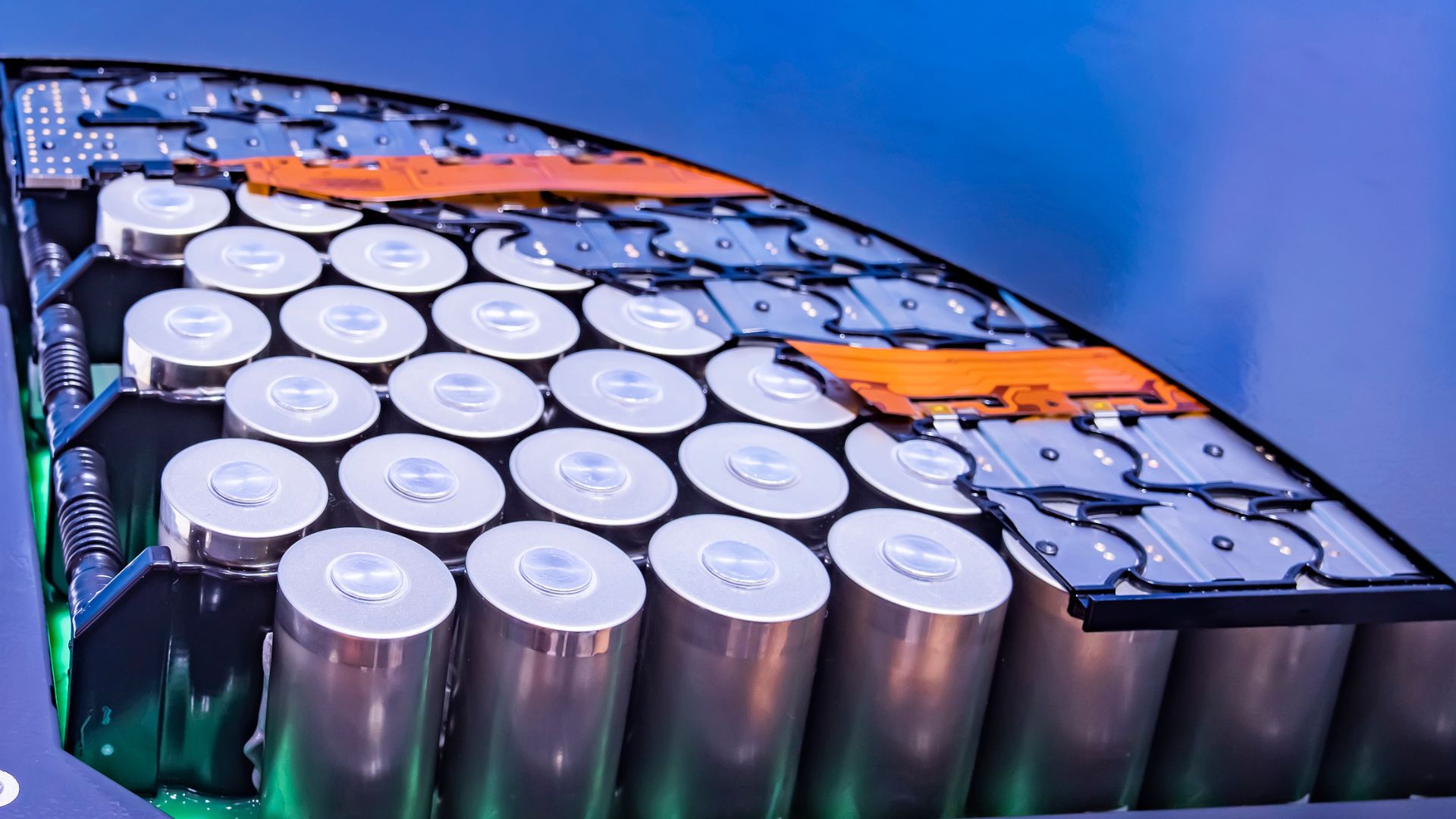
A lithium metal battery developed by Chicago-based Pure Lithium Corporation has completed more than 9,315 charge-discharge cycles in laboratory testing. The test has potentially opened the technology to electric vehicles, data centers, and grid-scale energy storage. Announced on Thursday, the results were achieved using the company’s Advanced Anode battery at a 1C charge and discharge rate and 100 percent depth of discharge. Pure Lithium said the cells showed negligible capacity fade and continue to cycle in its laboratory. The company claims no other lithium metal battery under development has achieved comparable results under equivalent testing conditions. Commercial lithium-ion batteries typically deliver between 250 and 2,000 cycles, depending on their chemistry and intended application. Pure Lithium’s battery has surpassed the upper end of that range by more than four times. The cell was also fully discharged during every cycle. Repeatedly using a battery’s full capacity can accelerate its degradation, making this effect particularly relevant for applications requiring frequent charging and discharging. Pure Lithium said the extended lifespan could lower the levelized cost of energy storage, which measures the total cost of storing and supplying electricity throughout a system’s operating life. “The results of Pure Lithium’s cycling performance are disruptive. Cycle life is the single largest determinant of the levelized cost of energy storage (LCOS). Pure Lithium’s cycle life has the potential to reduce LCOS by 75%,” said Pure Lithium’s Founder, Chairman and CEO, Emilie Bodoin. Overcoming a commercialization barrier Lithium has long been considered a promising battery material because it is lightweight and offers far greater energy density than graphite, the material commonly used in conventional lithium-ion battery anodes. According to Pure Lithium, lithium metal provides ten times the anode energy density of graphite. Replacing graphite with lithium metal could potentially double a battery’s energy density while reducing its weight and cost. However, poor cycle life has remained one of the largest obstacles to commercialization. Repeated charging and discharging can degrade lithium metal cells, preventing them from maintaining their performance over extended periods. Pure Lithium developed its Advanced Anode technology specifically to address this durability problem. The company believes its cycling results could expand lithium metal batteries beyond specialized high-energy uses. The previous record The latest result marks a substantial increase over Pure Lithium’s previous battery test. In January 2025, the company reported more than 2,200 cycles at the same 1C charge-discharge rate and 100 percent depth of discharge. That battery retained more than 80 percent of its capacity and used an anode originally designed to deliver 1,000 cycles. Pure Lithium said its development process involved redesigning the entire battery rather than focusing on one component. “We took a first principles approach to commercializing the lithium metal battery. Rather than focusing on one component, we started by reinventing the entire lithium metal battery making process, rebuilding the anode, the electrolyte, the cell architecture and the materials supply chain,” said Ms Bodoin. “This bold approach of reducing cost and improving performance is what is needed to make this battery a commercial reality,” she added. Get the latest in engineering, tech, space & science - delivered daily to your inbox.Atharva is a full-time content writer with a post-graduate degree in media & amp; entertainment and a graduate degree in electronics & telecommunications. He has written in the sports and technology domains respectively. In his leisure time, Atharva loves learning about digital marketing and watching soccer matches. His main goal behind joining Interesting Engineering is to learn more about how the recent technological advancements are helping human beings on both societal and individual levels in their daily lives.
Breakthrough lithium metal battery sets record with 9,315 cycles in tests
Full Article
Original Source
Read the full article at Interestingengineering →KhanList aggregates and links to publicly available news content. We do not host full articles from third-party sources. Always verify important information with original sources.