
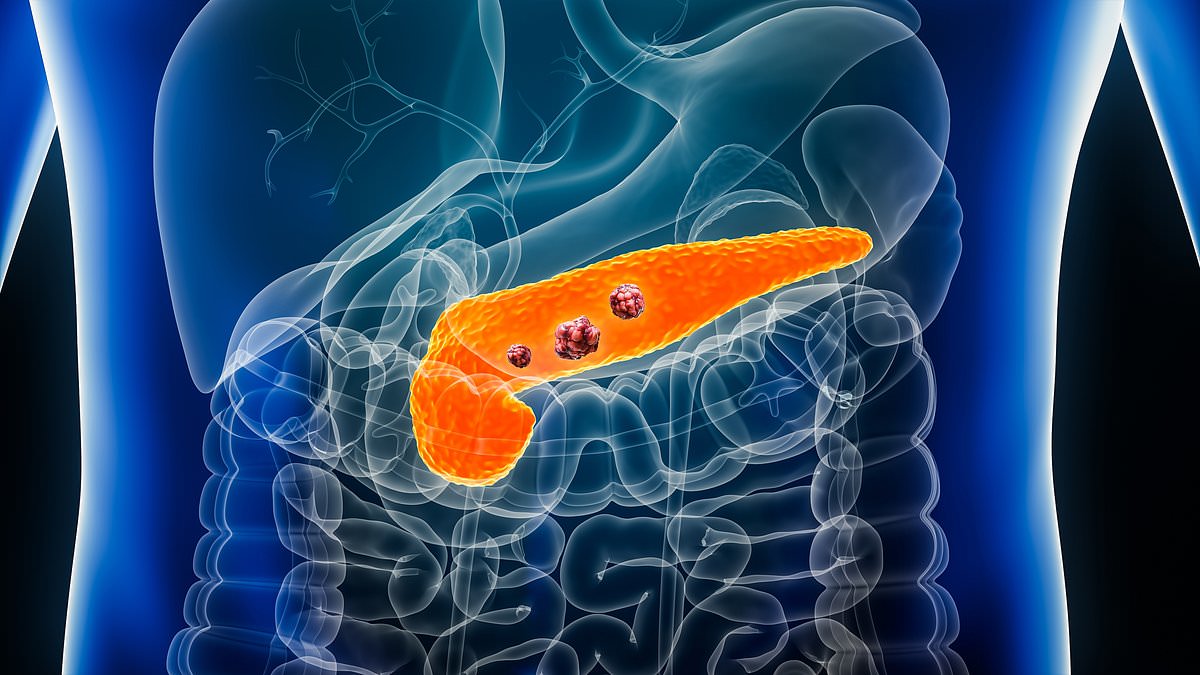
Doctors today hailed a breakthrough in the fight against pancreatic cancer after a new drug combination was shown to shrink and even erase tumours in a clinical trial. Daraxonrasib has been credited as one of the most significant advances against the deadly disease in decades.Earlier this year, US health officials approved the daily pill after it was found to double survival in patients with aggressive forms of the disease, from 6.7 to 13.2 months. However, at the time, experts warned the drug is not a cure as patients in the trail eventually saw their cancer progress. Now researchers have found that combining Daraxonrasib with chemotherapy could increase the proportion of patients alive after one year. The lead medic on the trial said the results represented the 'closest thing to a cure' for some patients. In the study - presented at the European Organisation for Research and Treatment of Cancer, in Barcelona - tumours shrank or disappeared in just over 60 per cent of patients given the combination treatment. One in 12 patients saw their tumours disappear entirely over the 18 month study period. The daily pill wiped out the disease in one in 12 patients when combined with chemotherapy, a clinical trial suggestsOverall, tumours stopped growing in 55 of the 61 patients involved. One year after treatment over three quarters (76.6 per cent) of patients were still alive, compared to just 45 per cent with standard treatment alone. Dr Wungki Park, an oncologist at Memorial Sloan Kettering Cancer Centre in New York, labelled the study a 'massive breakthrough' in treating pancreatic cancer. 'In about one in 12 patients, it completely disappeared,' he said. 'This is the closest thing we've got to a cure. We have never seen so many patients whose cancer has spread respond completely to a drug.'Just imagine, in an average of 18 months your cancer just disappears on the scan... that's the closest we've come to complete remission, it's incredible.' Around 11,500 people are diagnosed with pancreatic cancer in the UK each year, and approximately 10,200 die from the disease. It is Britain's fifth biggest cause of cancer death, despite accounting for only around three per cent of new cases. Fewer than six in 100 patients are still alive five years after diagnosis, making it one of the deadliest common cancers. The new drug works by locking on to the mutated KRAS gene, which is responsible for around 90 per cent of pancreatic tumours and continuously signals cancer cells to grow and multiply. By shutting this off, the drug can prevent tumours from spreading. Fewer than 5 per cent of patients in the trial discontinued treatment due to side-effects, with patients mainly reporting rash, diarrhoea, fatigue and nausea.However, Dr Park cautioned that this does not mean these patients will remain cancer free - as cancer frequently develops resistance to drug treatments - but he remains hopeful that the trial marks a significant step forward in the fight against the disease. Dr Madina Kara, head of research at Pancreatic Cancer UK, said the results were 'encouraging'. 'Half of people with pancreatic cancer die within three months of diagnosis and their loved ones would give anything to spend more precious time with them,' she said. 'These findings are part of a growing body of evidence that offers real hope to people with advanced pancreatic cancer.'The UK Government must ensure we build on the momentum we are seeing by increasing investment into pancreatic research and clinical trials, so that more patients can take part in studies that could improve outcomes.'It must also ensure there is a rapid pathway to deliver any game-changing new treatments to patients across the UK as soon as they are proven to work.'Pancreatic cancer is particularly difficult to treat because it frequently causes few obvious symptoms until it has already spread.Early warning signs can include pain in the upper abdomen or back, unexplained weight loss, indigestion, changes to bowel habits and jaundice – yellowing of the skin or whites of the eyes. By the time the disease is advanced, surgery – currently the only treatment with the potential to cure pancreatic cancer – is usually no longer possible.
Breakthrough for lethal pancreatic cancer: Drug combo that 'makes tumours disappear' is 'closest thing to a cure', experts say
Full Article
Original Source
Read the full article at Dailymail →KhanList aggregates and links to publicly available news content. We do not host full articles from third-party sources. Always verify important information with original sources.