
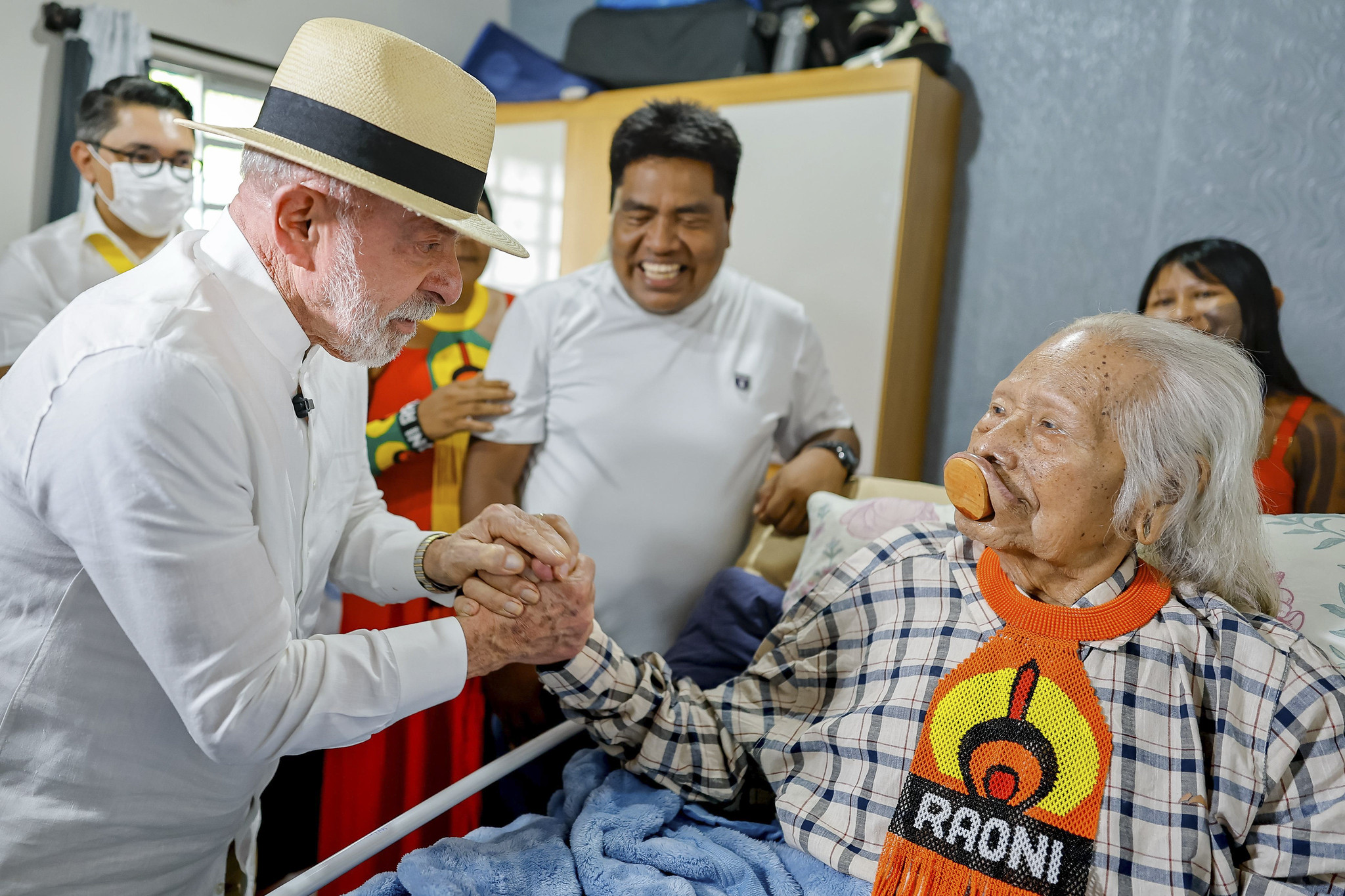
Brazil has taken a step toward formally recognizing the Indigenous land where one of the Amazon rainforest’s best-known defenders, Indigenous leader Raoni Metuktire, was born. The Mẽbêngôkre, or Kayapó, and Yudjá, or Juruna, peoples live on the 362,000-hectare (895,000-acre) Kapôt Nhĩnore Indigenous Territory, on the border between Pará and Mato Grosso states in the southern Brazilian Amazon. They have been fighting for legal rights to their land since 2004. On Nov. 19, President Luiz Inácio Lula da Silva, known as Lula, announced in a ceremony a government order that recognizes the two peoples’ permanent right to the territory. For full legal recognition, the territory still needs its borders marked on the ground, final approval by presidential decree and official registration. Only then can authorities remove non-Indigenous occupants. “Today, I had the opportunity to meet again with Chief Raoni, a historic leader of the Indigenous peoples, for whom I have deep respect and admiration,” Lula wrote in an Instagram post, following a visit to the leader. “I also signed the ordinance that recognizes the permanent possession of the Mebêngôkre and Yudjá peoples over the Kapôt Nhinore Indigenous Territory … an important step in guaranteeing the rights of the original peoples,” he said. Raoni has been in palliative care since he was diagnosed with cancer at age 94 earlier in 2026. He was born in the Kapôt Nhĩnore Indigenous Territory, where his father, Umoro, is buried. About 83% of the territory still has its original forest, according to data from Brazil’s Indigenous affairs agency, Funai, but has been gradually occupied by cattle ranchers and soy farmers. Deforestation increased dramatically from 4,178 hectares (10,300 acres) in 2000 to 58,000 hectares (143,300 acres) by 2026. According to Sumaúma, an Amazon-based publication, eight large cattle ranches in the territory sell directly or indirectly to the international meat-processing company JBS. Sumaúma also identified 14 properties growing soy. If the territory is left unprotected, such agricultural developments could multiply. A recent Greenpeace Brasil report suggests 259 registered farms and ranches overlapping 95.6% of the Indigenous territory as of February 2026. The registration with Brazil’s rural land registry, known as CAR, is reported by landholders and does not guarantee a land title, ownership of the land, or mean that forest has been destroyed. This system has made it easier, the Greenpeace report says, for land grabbers to claim public forests and Indigenous lands that lack full protection, and even secure loans to develop them into farms. To protect other Indigenous lands still awaiting full recognition, Greenpeace Brasil has pushed Brazil’s National Monetary Council, which sets rural credit rules, to bar farms that overlap these lands from rural credit. “Any overlap of farms with Indigenous lands delimited, declared or placed under restriction by Funai must be grounds for denying rural credit,” Cristiane Mazzetti, coordinator of Greenpeace Brasil’s Zero Deforestation campaign, said in a statement. Banner image: President Lula visits Raoni Metuktire on Nov. 19. Image courtesy of Ricardo Stuckert/PR. Credits Topics
Brazil’s President Lula moves to recognize Chief Raoni’s Indigenous land
Full Article
Original Source
Read the full article at News →KhanList aggregates and links to publicly available news content. We do not host full articles from third-party sources. Always verify important information with original sources.