
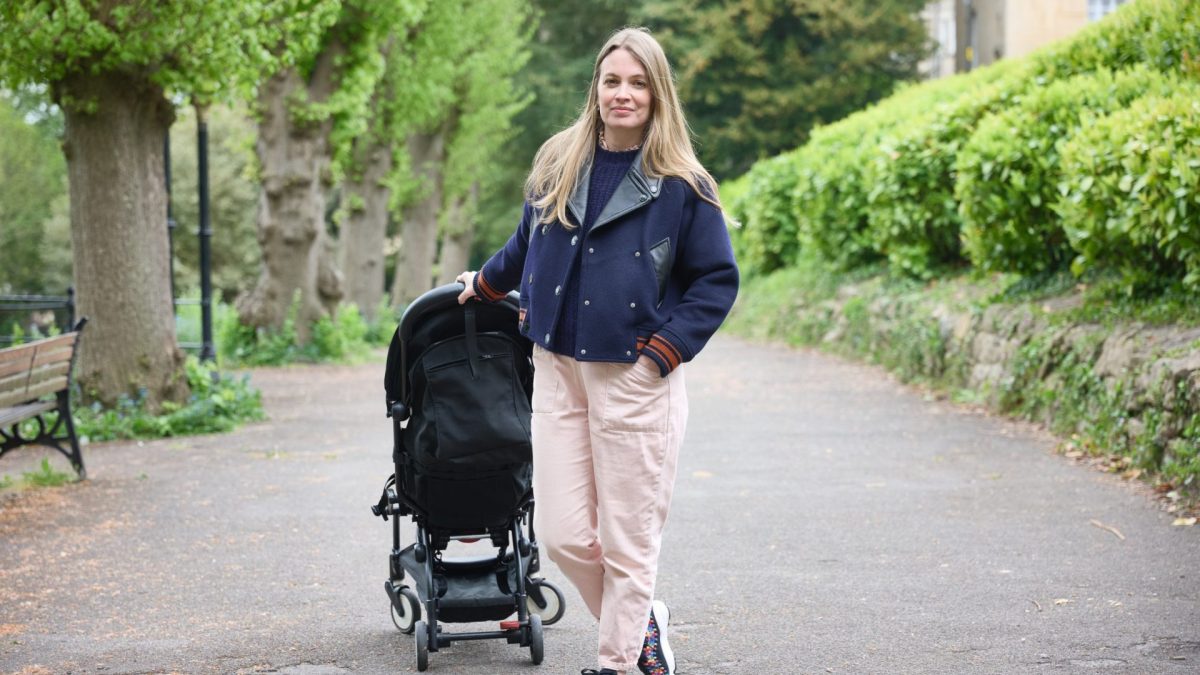
When my mum was still working full-time, she was insanely busy. Her job, in communications for the Met Police, was demanding. She’d wake at 5.15am and fire off emails on her BlackBerry before breakfast, only to get home after dark. Often, she was on-call in the evenings or at weekends, responding to big stories in real time. In her final months of employment, after years of her frantic job playing an outsized role in our lives, we’d marvel at all the free time she’d have once she retired. How on Earth would she fill her days, we wondered. I could sense her trepidation at the prospect of oceans of free time stretching out before her. We needn’t have worried. Now, securing time in my 70-something mother’s schedule is akin to getting a table at a fashionable London eatery. And, while I know she’ll always show up in an emergency, when it comes to more routine visits, she doesn’t always have time to see me or her grandson – the three-year-old she adores with quasi-religious fervour. Because there are multiple dance classes a week, including ballet and contemporary. For a while, there was flamenco, musical theatre, and now she’s considering tap. There’s Pilates and a regular swim. Then there are local council meetings, where she is the lone leftie causing trouble. Her 80-year-old friend Angela has invited her to art club, and she’s always booked in to see films – sometimes with post-show talks – at the local independent cinema. Shorts There are trips to meet friends at Wisley Gardens or the nearest big town to have a wander around Anthropologie. And don’t forget: she needs to paint the front door, get the duvet dry-cleaned, clear out the garage, get home to feed the cat (even though her neighbours regularly offer) and watch PMQs. My mum might no longer be organising press briefings at New Scotland Yard, meeting the mayor at City Hall or fielding calls from journalists at 10pm, but somehow she seems just as busy. I ask a friend, Natalie*, 41 from Norwich, with two daughters under six, if any of this rings a bell. “YES!” she shrieks, seemingly elated not to be alone in this predicament. “And it drives me wild! My mum spent years badgering me to have kids, telling me to hurry up and get on with it, and now they’re here, she’s too busy to see them!” Natalie’s parents, a former CEO and schoolteacher, have a holiday home in Menorca where they are spending more and more time. The worst thing, Natalie says, is that she moved her family to East Sussex from London to be closer to them. “I’m pretty sure we saw them more when we were in London,” she says, rolling her eyes. “They’d be coming to town to see a show or an exhibition or do some shopping, and then sort of tag us on to the trip.” The expectation that we have more time when we retire, says Dr Carole Easton OBE, chief executive at the Centre for Ageing Better, may be misplaced. “Contrary to the stereotype that we start to slow down as we age,” she says, “many people tell us that in their sixties, seventies and beyond, they are as busy as ever, maybe even more so.” “My parents really take advantage of all the seniors’ discounts around,” Tom, 39 from Somerset, and dad to two-year-old Teddy, tells me at one nursery pick-up. “I also get the feeling they’re making up for lost time. I was one of four, so they never had time for themselves. They’re also way more social now. They often go for tea and cake with friends in the afternoons. I’d always imagined they’d help with pick-up and be a bit more hands-on, but they’ve made it clear that they don’t mind being asked once in a while, but that’s it. They’ve done their stint.” Tom isn’t alone, but there are plenty of grandparents who do pick up the childcare slack. Around 50 per cent of UK grandparents look after their grandchildren throughout the year, with one in three doing so during school holidays. ‘We made the decision to move two and a half hours away from my mum. I might not make the same decision again today,’ says Marisa (Photo: Tom Pilston/The i Paper) But for many of the millennial parents I speak to, memories of how their own grandparents spent their time seem to differ wildly from what they see their parents doing today. Lily, 36, from London, says: “My granny and grandad were always around. Christmas and birthdays and the big stuff, but also Saturday afternoons. If they weren’t with us, they were at home. Grandad would be in the shed or the garden, and granny was always knitting one of us kids something. At least, that’s how I remember it. I guess you don’t imagine your grandparents having fun without you when you’re seven.” Easton suggests there are a host of reasons why grandparents today are busier than we might expect. One, she says, is work. “Over the course of the last 20 years, we have seen a huge explosion in the number of people working beyond 65.” Around 25 per cent of grandparents who look after grandchildren are still working. For some, she points out, this is a choice, because they are seeking “social connections”, “purpose” or “just loving what they do”. But for others, it is a necessity. Recent research from the Centre for Ageing Better found that nearly one in three people in their sixties are now living in financially precarious circumstances. “Increases to the state pension age and the rise in the cost of living are driving many older people to remain or even return to the workplace beyond state pension age.” Fascinatingly, Dr Giorgio Di Gessa of UCL’s epidemiology and public health department found: “The extent and nature of grandparental care is also closely linked to grandparents’ socio-economic status. For example, grandparents with fewer financial resources tended to offer childcare more regularly than their wealthier counterparts.” “Socio-economic disparities also shape the nature of caregiving tasks,” he says. “Less affluent grandparents were more likely to engage in hands-on activities, such as cooking meals and taking their grandchildren to and from school”, particularly grandmothers, he says. “In contrast, grandparents with more education were more likely to help with homework frequently.” People between 65 and 74 are also the most probable of any age group to volunteer, says Easton. Jenny* 33 from London, told me her mum volunteers at the local charity shop. “She loves it. She loves chatting to the customers, seeing what they buy. Sometimes it means she’s not around at the weekends, but I don’t mind too much because I think the connection is really good for her.” Mia, 39, is based in Oxfordshire. Her dad volunteers as a gardener in the cathedral gardens where he lives. “It often means he can’t come to the park on a Sunday morning. I try not to complain, but I actually get a bit jealous when I see other kids kicking a ball around with their grandad.” It might be easy to assume that because people are living for longer, older people are healthier than ever and therefore able to do more. But this isn’t the case. In fact, a major study from UCL Centre for Longitudinal Studies and the University of Oxford, published in the Journals of Gerontology in 2024, which looked at health data collected from more than 100,000 people across Europe, the UK and America between 2004 and 2018 found the opposite. It said “people in their fifties, sixties and seventies were more likely to have serious health problems than people who were born before or during the Second World War when they reached that age”. The research blamed this “generational shift” on changes in nutrition and a decline in physical activity, which, they suggest, may be related to changes in the types of work we do. This means that even for those less busy grandparents, ill health makes taking on an abundance of childcare even more taxing. For those who are healthy and financially secure, their absence can be a bit difficult to swallow – especially when parents had nudged and nagged about wanting to become grandparents. As “me-me-me-millennials”, as my mum likes to call us, are my peers simply surprised that, despite being well into our thirties and beyond, we’re no longer the centre of our parents’ universe? Is this a purely millennial response to not being looked after for ever? Perhaps another way to look at it is the boomers’ tendency to live the lives they want. After all, they were the generation of social mobility, homeownership, savings and pensions. Many have the economic freedom to holiday or play golf each week in a way younger generations could only dream of. It is, in some ways, yet another luxury of being born a boomer. They played the game while it still worked. And now they’re cashing in. Keiron*, 42, from Frome, says his parents are a case in point. “My mum and dad are nuts about my kids and my niece and nephew. They spoil them rotten when they see them, but they certainly haven’t put their lives on hold to be grandparents… They are the best advert for saving for your retirement I’ve ever seen,” he says. “They really are living their best life. They love their grandkids, but man, I think they might love a cruise around the Med more.” Growing up watching my mum work so hard, I certainly don’t feel entitled to ask for her time. I take a genuine pleasure in watching her do all the things a demanding career got in the way of. I’d much rather she was at the cinema with a glass of wine at 74 with a newly replaced knee, than running around after my toddler. We made the decision to move two and a half hours away from her. I thought that proved to her – and me – my independence. Four years into parenthood, I’ll concede I might not make the same decision again today. But I do understand the frustration of some of my peers. Life is far more expensive now. Parenting styles have become more intense – we’re expected to be far more involved, and that becomes trickier with busy jobs or multiple children. And, after all, we’re millennials. Perhaps we expect them to help look after our babies because, in many ways, they are still looking after us. Despite this dreadful economy, I don’t think grandparents’ time is something millennials are inherently entitled to. We’re just bloody lucky if we can get it. *Names changed
Boomers ‘adore’ their grandkids – but are too busy to look after them
Full Article
Original Source
Read the full article at Inews →KhanList aggregates and links to publicly available news content. We do not host full articles from third-party sources. Always verify important information with original sources.