
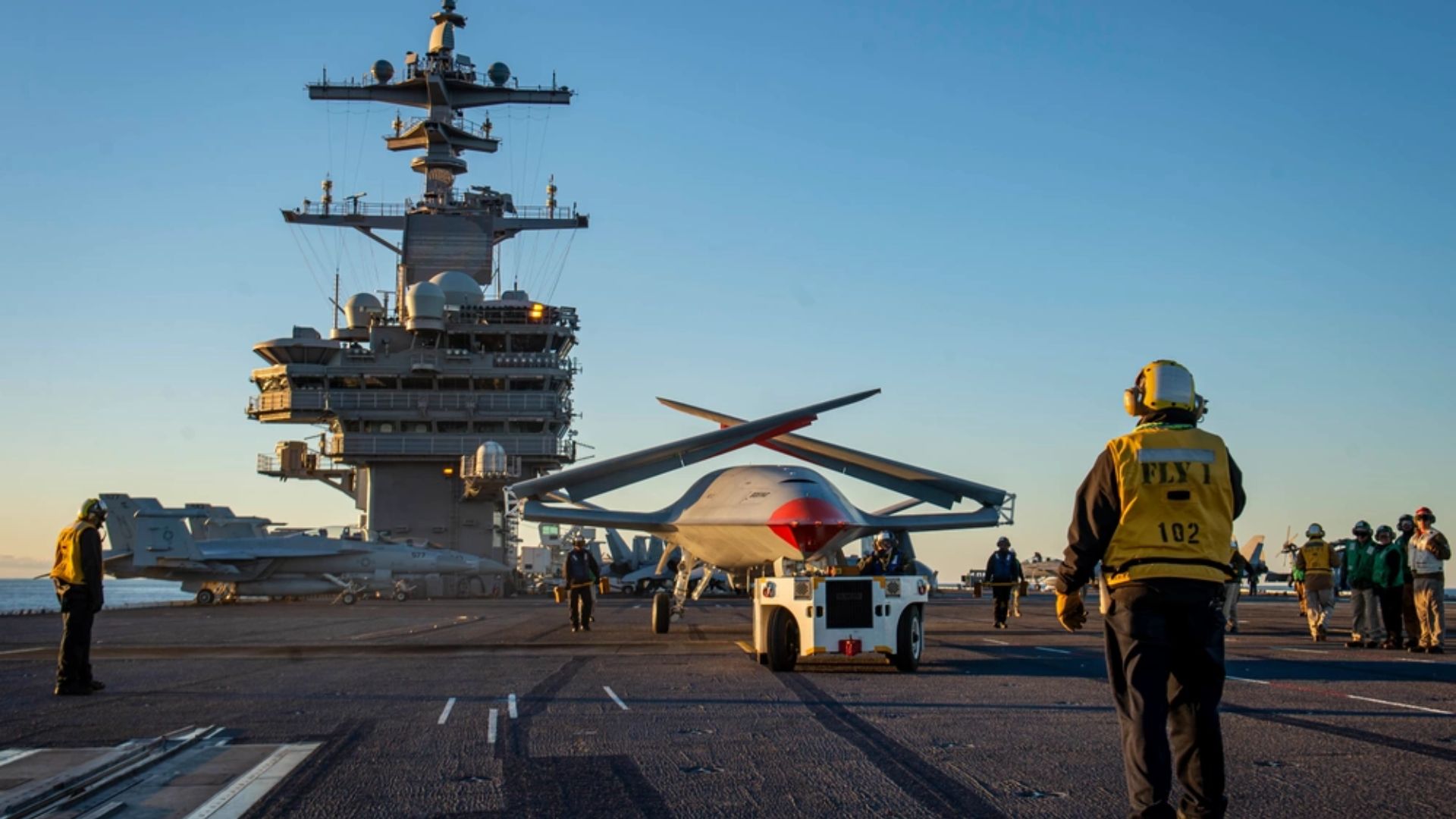
The U.S. Navy has awarded Boeing a $562 million contract to begin low-rate initial production of the MQ-25A Stingray, moving the carrier-based unmanned tanker from development toward operational service. The fixed-price incentive contract covers three Lot 1 aircraft and also funds long-lead components for three additional Lot 2 aircraft. The Navy expects initial Lot 1 deliveries to begin in 2029. A tanker that frees fighters for combat The MQ-25 is designed to perform aerial refueling from aircraft carriers, a mission currently handled in part by the Navy’s F/A-18E/F Super Hornets. Moving the tanker mission to an unmanned aircraft could keep more Super Hornets available for strike and other combat missions while reducing some of the flying hours on the fighter fleet. The Government Accountability Office has reported that the Stingray is intended to transfer at least 14,000 pounds of fuel at a range of 500 nautical miles, giving carrier aircraft another way to extend their reach. The Navy’s broader program calls for 76 MQ-25 aircraft, consisting of operational aircraft and earlier development and test airframes. Boeing says the new Lot 1 award brings the number of Stingrays under contract to 14. The MQ-25 is a sizable aircraft, measuring about 51 feet (15.5 meters) long with a 75-foot (23-meter) wingspan. It is powered by a Rolls-Royce AE 3007N turbofan, allowing it to fly at speeds above 500 mph and operate at altitudes exceeding 39,000 feet. Its stated range is up to 500 nautical miles, giving the Navy the ability to position the unmanned tanker well away from the carrier while extending the reach of aircraft operating from the deck. From test aircraft to production The production award follows a major milestone earlier this year. The Navy granted the MQ-25 Milestone C approval in May, clearing the program to enter low-rate initial production following its first flight in April. That April 25 flight demonstrated the aircraft’s ability to autonomously taxi, take off, fly, and land while operating with the Navy’s Unmanned Carrier Aviation Mission Control System. The program has nevertheless experienced delays. The Pentagon’s April 2026 Selected Acquisition Report identified technical risks and a Boeing labor strike among factors affecting the schedule, with initial operational capability now expected in 2029, four years later than the program’s original target. The Navy is also building the infrastructure needed to operate the aircraft from carriers. In March, the USS Theodore Roosevelt became the first Navy carrier equipped with an Unmanned Air Warfare Center supporting MQ-25 operations, according to Navy Times. A new role for unmanned aircraft on carriers The MQ-25 is more than an unmanned tanker. The Navy describes it as the first operational carrier-based unmanned aircraft and a pathfinder for integrating autonomous aircraft into future carrier air wings. Its initial job is relatively straightforward. Carry fuel so crewed fighters do not have to. But proving that an unmanned aircraft can routinely operate from a carrier deck, integrate with manned aircraft, and be controlled through the carrier air wing’s systems could establish the foundation for broader unmanned aviation operations at sea. Boeing is expected to deliver the first three LRIP aircraft beginning in 2029, bringing the MQ-25 another step closer to becoming a regular part of the U.S. Navy carrier operations. Get the latest in engineering, tech, space & science - delivered daily to your inbox.Kaif Shaikh is a journalist and writer passionate about turning complex information into clear, impactful stories. His writing covers technology, sustainability, geopolitics, and occasionally fiction. A graduate in Journalism and Mass Communication, his work has appeared in the Times of India and beyond. After a near-fatal experience, Kaif began seeing both stories and silences differently. Outside work, he juggles far too many projects and passions, but always makes time to read, reflect, and hold onto the thread of wonder.
Boeing’s unmanned MQ-25 tanker moves closer to joining US Navy carriers in 2029
Full Article
Original Source
Read the full article at Interestingengineering →KhanList aggregates and links to publicly available news content. We do not host full articles from third-party sources. Always verify important information with original sources.