
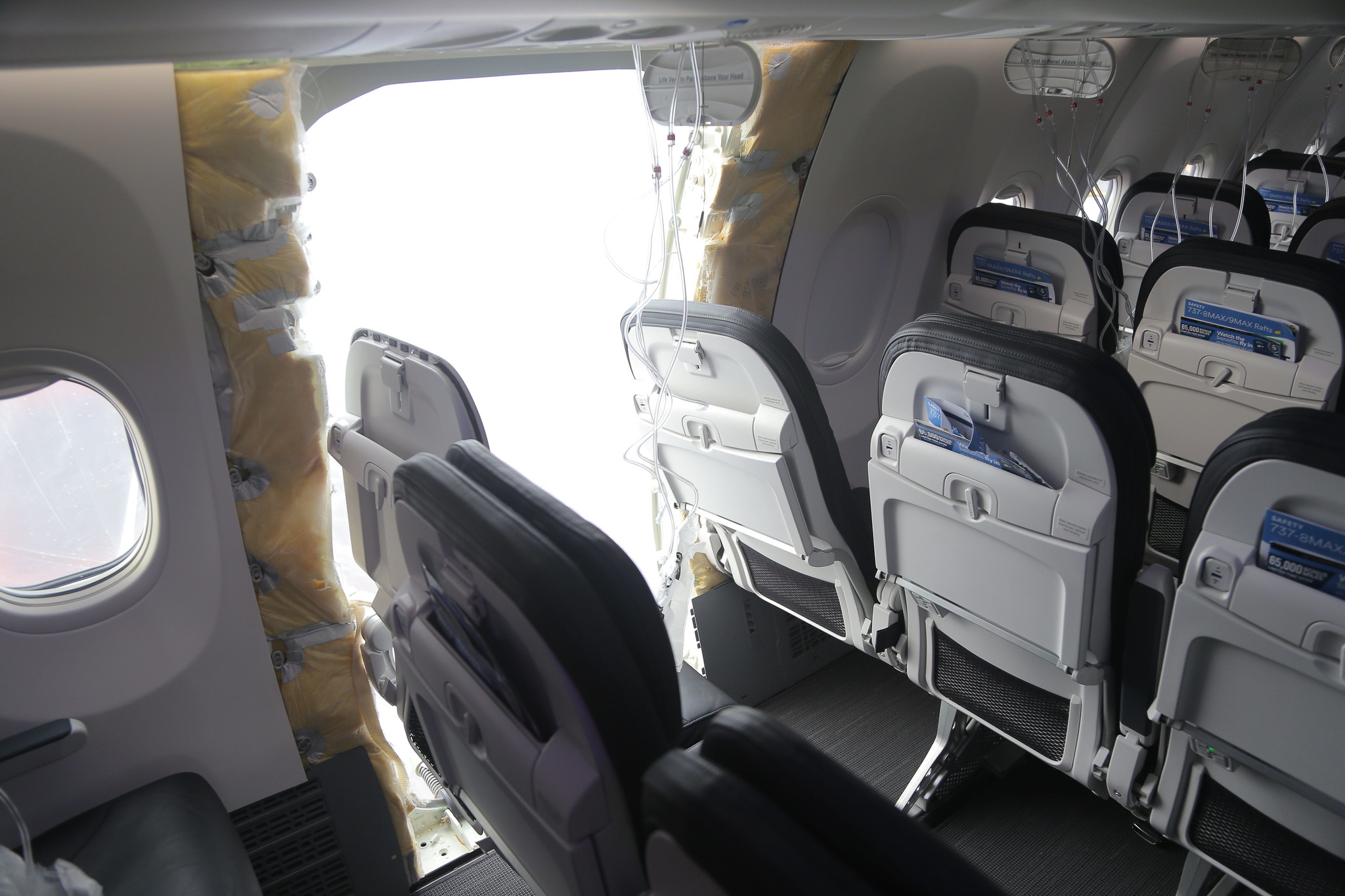
Boeing admits the 737 MAX 9 whose door plug blew out on Alaska Airlines flight 1282 “was not reasonably safe in construction” when it left the factory. But the planemaker is still fighting to keep passengers from collecting punitive damages. Its argument amounts to tough luck: the airplane was built in Washington, and Washington law generally doesn’t allow those damages. Boeing already won that argument against a mother and her son who was nearly sucked out of the opening in the fuselage. Another group of passengers is trying to show that the misconduct reaches back to decisions made at the company’s former Chicago headquarters – in order to access Illinois law. Boeing has formally acknowledged the defective construction that resulted in the blowout. On January 5, 2024, the Alaska Airlines jet was climbing out of Portland for Ontario, California when the plug departed the airplane at nearly 15,000 feet. The cabin rapidly depressurized. Oxygen masks dropped, belongings flew out, and the pilots brought the aircraft safely back to Portland. Spirit AeroSystems had built the fuselage. At Boeing’s Renton factory, the plug was opened for rivet repairs, then closed without reinstalling the four bolts that kept it from moving. I covered the whistleblower’s account of those missing bolts before investigators eventually confirmed them. The National Transportation Safety Board identified Boeing’s inadequate training, guidance and oversight as the probable cause. “Not reasonably safe in construction” is the language of Washington’s product liability law. A manufacturer can be strictly liable for injuries caused by a product that materially departed from its specifications when it left the manufacturer’s control. That leaves the fight to focus on the value of passenger injuries and whether Boeing can be punished beyond paying compensation. Last month, I wrote about Cynthia Tisher and her son, whose shirt was sucked off his body. According to their lawsuit, his seat pitched toward the opening. His mother held onto him, afraid he’d be pulled out, too. Other passengers helped them move away. Their federal lawsuit sought punitive damages against Boeing and Spirit AeroSystems. The judge ruled that Washington law governed and threw that request out. The blowout happened over Oregon, but the manufacturing failure occurred in Washington. The judge refused to reconsider. The current admission comes in litigation by a 47 plaintiff group suing Boeing, Spirit AeroSystems and Alaska Airlines, which claims Boeing management promised safety improvements to regulators and the public while failing to deliver them. They say decisions at the former Chicago headquarters helped produce the failures that sent this airplane out without its bolts. Boeing’s admission makes sense as litigation strategy. Boeing can argue testimony over how badly it acted is unnecessary to decide how much compensation each passenger deserves. And its strategy turns on getting punitive damages thrown out. Topics on this page
Boeing Admits Its 737 Was Unsafe In Construction—Tells Door Plug Passengers Tough Luck On Punitive Damages
Full Article
Original Source
Read the full article at Viewfromthewing →KhanList aggregates and links to publicly available news content. We do not host full articles from third-party sources. Always verify important information with original sources.