
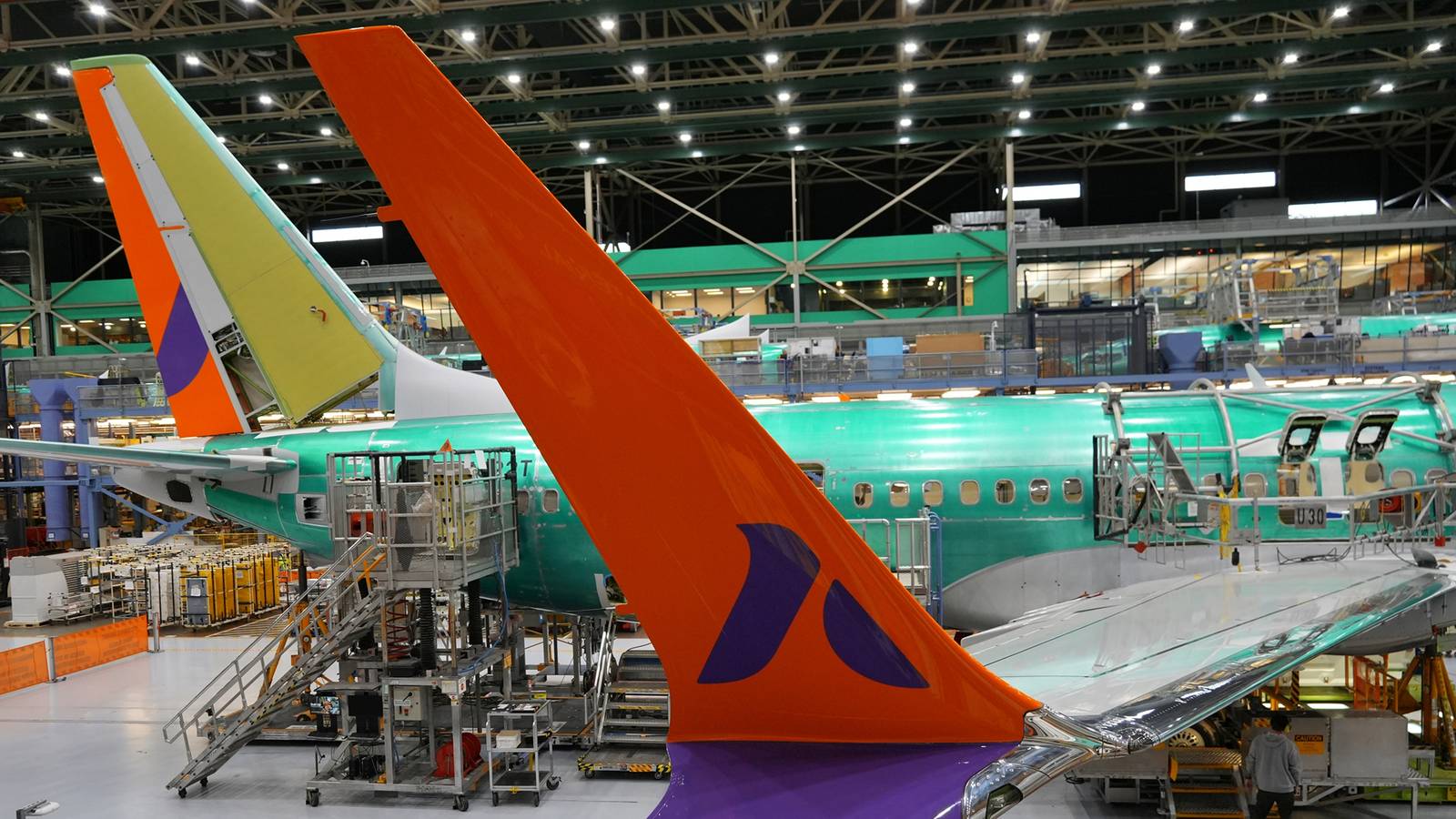
Credit: Coby Wayne | Shutterstock Published Oct 28, 2026, 3:13 AM EDT Luke has over a decade of experience as a travel writer and aviation analyst. As a passionate traveler based across the Middle East and Asia, Luke offers strong insights into the industry. Based in South East Asia. Sign in to your Simple Flying account Boeing has confirmed it will fall short of its target of delivering around 500 737 MAX jets this year, as problems with wing production at its Renton, Washington, factory continue to limit output. The company is still struggling to stabilize production at 47 aircraft per month, with CEO Kelly Ortberg acknowledging that efforts to improve factory output are taking longer than expected. Ortberg added that the production rate would not be fully stable until early 2027. Boeing delivered 367 737s in the first nine months of 2026, and would need another 133 in the fourth quarter to meet its target. Production bottlenecks have also pushed back its next planned increase of 52 jets per month to the second half of 2027. Wing Bottleneck Impacts Boeing 737 MAX Delivery Goal Credit: Stephen Coughlan | Shutterstock In an earnings call on Tuesday, Ortberg confirmed that wing production remains the most significant constraint on Boeing 737 MAX production, admitting that Boeing will not reach its 500-jet delivery target for 2026. Speaking to CNBC, Ortberg acknowledged there was pressure to increase production, saying, "I know everybody wants us to go faster." However, he stressed that the priority was to first stabilize production and establish a system that delivers safe, high-quality aircraft. Boeing builds all 737 MAX wings in Renton, and they are among the first major components assembled. Any slowdown in this process can limit production across the entire program. However, Ortberg says other areas of the 737 production system are performing better, particularly final assembly, where rework has fallen by 40% since the start of 2025. The planemaker has since introduced additional measures and is increasing capacity in areas where the improvements fell short. Ortberg said that, while wing production was improving, the company wanted to maintain the 47-per-month rate until it could show that it was sustainable. He told analysts: "Some of those flow enablers just flat out did not yield the flow savings." Production Of 52 Jets Per Month Pushed Into Second Half Of 2027 Credit: Coby Wayne | Shutterstock Stabilizing production at 47 737s per month is the first step in Boeing's planned increase in output. The company had planned to reach this target by summer 2026, but now does not expect the 47-rate to stabilize until early 2027. Ortberg said the target of 52 jets per month will also slip into the second half of 2027, having previously indicated it would happen in the first half of next year. Looking further ahead, Ortberg added that he would like Boeing to eventually reach 63 737s per month. Before the MAX was grounded in March 2019, the company had been preparing to increase production from 52 to 57 aircraft per month. This will depend heavily on Boeing securing FAA production certification for its new North Line in Everett, Washington. The facility opened in July and will initially add five aircraft per month to the 47 built at Renton, with the first MAX 10 rolling off the new line on October 26. 737 MAX Deliveries Are Still Up Year-On-Year Credit: Markus Mainka | Shutterstock Despite the delays, 737 MAX deliveries have increased compared with last year. Boeing delivered 124 aircraft in the third quarter, a slight increase from 121 a year earlier. Deliveries for the first nine months were also up by more than 10% this year, rising from 330 in 2025 to 367 in 2026. However, the manufacturer averaged just over 41 737 deliveries per month in the third quarter, below the roughly 44 per month it needs during the final quarter to reach its annual target. The ongoing wing production problems show that Boeing still needs to improve manufacturing efficiency before it can commit to further increases in output.
Boeing Admits It Will Miss 500-Jet 737 MAX Delivery Target As It Can’t Build Enough Wings
Full Article
Original Source
Read the full article at Simpleflying →KhanList aggregates and links to publicly available news content. We do not host full articles from third-party sources. Always verify important information with original sources.