
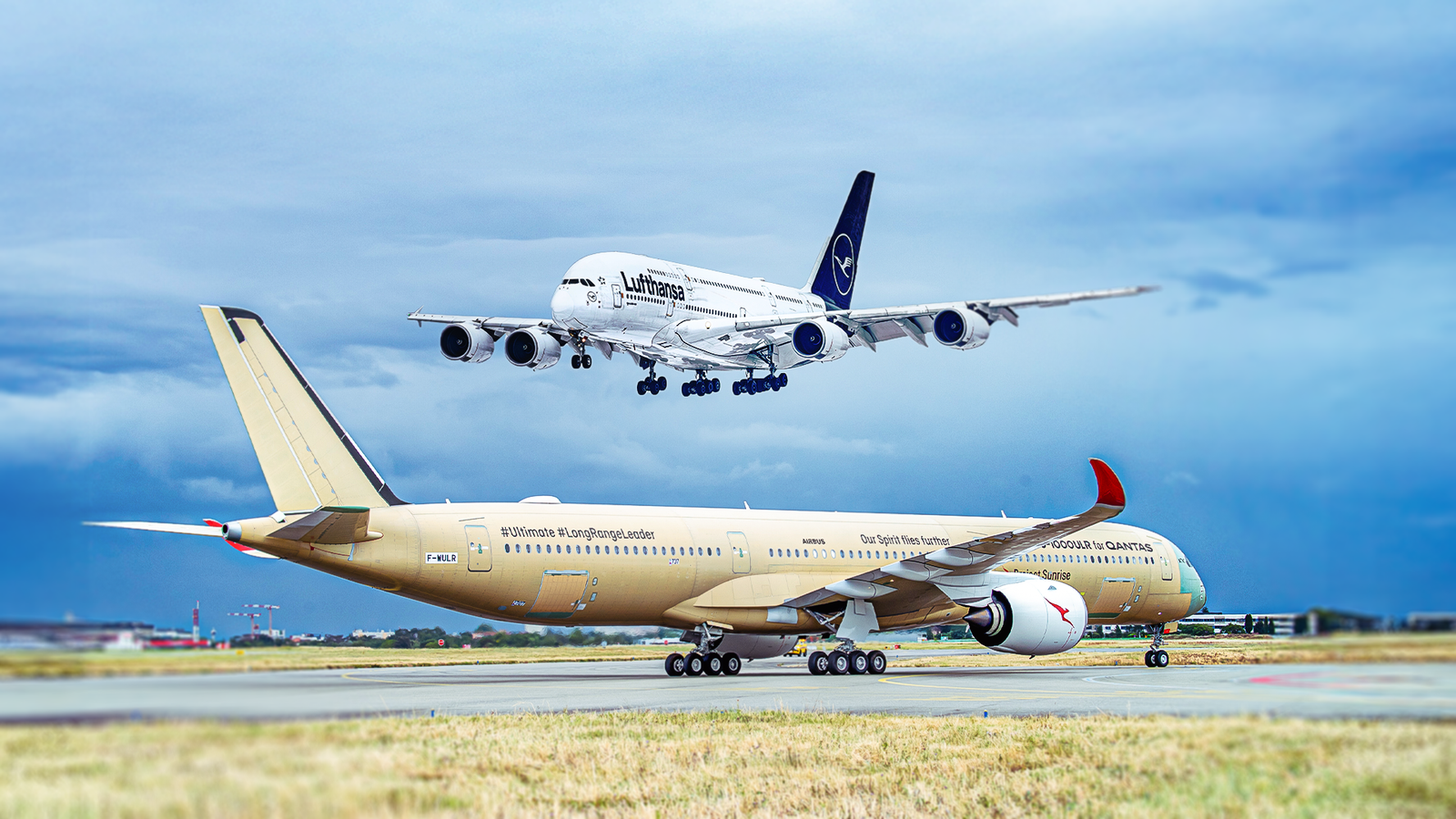
Published Oct 2, 2026, 2:00 PM EDT Daniel comes to Simple Flying with a business focused approach to the aviation world. Daniel enjoys analyzing strategy and how companies move against each other to gain a step ahead in the skies. Besides strategy, Daniel also has a passion for aircraft design and the history of aviation. Based in New York The Airbus A380 is in an interesting phase of its life today. The type received 251 orders by the time Airbus announced the program's end in 2019, while the COVID-19 pandemic saw operators ground either their entire A380 fleets or nearly all of them. In an era where worldwide passenger traffic fell by about 90%, a double-decker airliner with 500 seats and four engines was the wrong type of aircraft for essentially every airline. However, in 2026, 189 A380s are still in service, or about 75% of the number delivered. For most A380 customers that returned the superjumbo to service, the parking of these birds was always intended to be temporary. However, there are some high-profile examples of airlines retiring their A380s fully before reversing course. In part, this is because long-haul travel demand recovered much faster than airlines anticipated, while deliveries of new widebodies slowed. The Boeing 777-9 also continues to be delayed, but, today, the writing is on the wall for the A380, as the world's most capable twin-jet is now preparing to enter service. Airbus A380 Operations Today Credit: MC MEDIASTUDIO | Shutterstock The A380 is currently being flown worldwide by ten airlines: Emirates, British Airways, Singapore Airlines, Qantas, Etihad Airways, Lufthansa, Qatar Airways, Asiana Airlines, Korean Air, and All Nippon Airways. Of these ten, Emirates is by far the largest operator with 116 in its fleet, followed by British Airways and Singapore Airlines with 12 each. Meanwhile, All Nippon Airways is the smallest with just three examples, while the worldwide A380 fleet (including planes temporarily stored and parked that are set to re-enter service) amounts to 189. Four airlines permanently removed their A380s due to the pandemic: Air France, Hi Fly Malta (which acquired its sole A380 second-hand), Malaysia Airlines, and Thai Airways. Meanwhile, China Southern retired its double-deckers in 2022. In addition, Emirates, Singapore Airlines, Qantas, Etihad Airways, Lufthansa, Qatar Airways, and Korean Air have all trimmed their fleets compared to before the pandemic, but are still operating the type, and not all of these carriers have announced retirement schedules. Asiana Airlines was planning to retire the A380 in 2026, but this timeline has been pushed back due to new aircraft delays. Qantas aims to remove all of its A380s in 2028, and Korean Air intends to retire the A380 by 2031, while Lufthansa will start retiring the A380 after 2030. Unexpectedly, the A380 has made a comeback, and it will be sticking around well into the next decade. In part, this is because travel demand rose quite quickly, while new aircraft continue to arrive behind schedule, but there's one aircraft that has been particularly influential in keeping the A380 going. Delays With The Boeing 777-9 Credit: EQRoy I Shutterstock Among the ten current operators of the A380, only two (Asiana Airlines and Qantas) have yet to order the Boeing 777-9. Asiana is merging with Korean Air, which has ordered the 777-9, and so it's really Qantas that has abstained from buying Boeing's upcoming giant, as it's favoring the Airbus A350-1000 instead. The aircraft was originally set to enter service in 2020, but it's now been delayed until 2027, and the 777-9's development has taken nearly as long as Concorde. Most 777-9 customers didn't order the aircraft to replace the A380 specifically, especially given that most of these double-deckers are fairly young. Airbus A380 Operators And Boeing 777-9 Customers A380s Flying 777-9 Orders Airbus A380 Operators And Boeing 777-9 Customers A380s Flying Airbus A380 Operators And Boeing 777-9 Customers Air India None 10 Ethiopian Airlines None 8 All Nippon Airways 3 18 Etihad Airways 9 15 Asiana Airlines 6 None Korean Air 5 40 British Airways 12 24 Lufthansa 8 20 Cathay Pacific None 35 Qantas 10 None China Airlines None 18 Qatar Airways 8 90 Emirates 116 235 Singapore Airlines 12 31 However, had the plane arrived on time, there would have been dozens in service already, and you would see existing customers begin considering 777-9s as A380 replacements, given how much more economical it is. As such, with a seven-year delay and more uncertainty still about actual delivery timelines, airlines have had to reinvest in their A380s for the time being. Lufthansa, which intends to use the 777-9 as a Boeing 747-400 replacement first, is now updating the business class cabin on its A380s and will keep them until the next decade. Had the 777-9s come on time, the 747-400s would have already been gone, while the A380s likely wouldn't have gotten new interiors. Emirates planned to have received over 100 777-9s by 2026, as per its original contract, but it's now refurbishing its A380s while it has yet to fly a single 777-9. Threats To The A380's Survival Credit: Airbus Airbus is working to certify the A350-1000ULR, which could be the final nail in the A380's coffin. It's not necessarily because of the plane itself, since Qantas is the only customer for the type, but it's more about what the A350-1000ULR represents. The A380 is fundamentally designed for routes between major airline hubs and large spokes. Meanwhile, planes like the Boeing 787 and Airbus A350 are designed to serve smaller cities nonstop, in what's been commonly referred to as the 'point-to-point' model. The A350-1000ULR is far from being a small aircraft, but the main benefit of the aircraft is that it has the longest range of any airliner in production today. Qantas will use this plane to connect Sydney to London and New York, all three of which are huge cities, but which were too far apart to be connected nonstop until now. Once the airline begins operating these routes, it'll have less need to operate A380s on its trunk routes to destinations such as Los Angeles and Dallas/Fort Worth. Qantas carries a substantial amount of connecting passengers on these routes. Furthermore, by flying to more destinations nonstop, the airline doesn't require so much capacity on its trunk routes. The A350-1000ULR represents the final evolution of the point-to-point model, even if it's connecting Sydney to two of the world's largest cities, and airlines are continuing to take massive numbers of Boeing 787s and Airbus A350s to implement this concept on a wider scale. This is reducing the need to operate the A380. The Current Challenges Facing The A380 Credit: photojohn830 I Shutterstock The A380 has extremely high operating costs, and this means that airlines need to sell almost all of the aircraft's seats to make a profit. The aircraft can work on routes like London to Los Angeles or Singapore to Sydney, and it can actually prove quite lucrative as well. However, jet fuel prices are currently elevated due to the war in Iran, which has narrowed the gap considerably between operating costs and revenue. For the A380, which already has immense operating costs, this makes the economics extremely difficult. Qantas originally planned to begin retiring its A380s in 2032, with future orders expected to be placed for their replacements. The A350s and 787s that the airline currently has on order would be used for growth and to start replacing Qantas' Airbus A330 fleet. However, the carrier recently announced that it was moving the retirement timeline for the A380 fleet a full four years (up to 2028), and that all ten examples that Qantas currently flies would be gone by the middle of the year. Qantas operates the A380 on some of the world's longest routes, and it's feeling the pain of higher fuel prices even more than most other A380 operators. Considering that airlines have generally been pushing back their A380 retirement dates, it was an unexpected announcement from Qantas, and it's clear that elevated oil prices have changed the economics of flying the superjumbo. Whether this will push other carriers to put their A380s out to pasture remains to be seen. Who's Committed To The A380 For The Long Run? Credit: Wangkun Jia I Shutterstock One of the most useful ways to determine an airline's commitment to a fleet is interior refurbishments. While they don't guarantee that an aircraft will remain with an airline long-term, carriers typically need to use the plane for several years afterward to justify the investment, and interior retrofit projects for an A380 can cost tens of millions per aircraft. Lufthansa, for example, is currently retrofitting its A380s with new business class seats. However, it will not use the full Allegris cabins that are being rolled out to the rest of the fleet. Still it intends to keep its examples flying until the 2030s. British Airways, meanwhile, is committing to a full nose-to-tail retrofit of all 12 A380s in its fleet, including new seats in all four travel classes and a new layout that will feature the world's largest business class cabin. Elsewhere, Emirates is refurbishing its A380s with premium economy and intends to install the cabin on 110 A380s out of the 116 it currently uses. Emirates and British Airways are committed to the A380, while Qantas and Korean Air will retire the type within the next several years. Lufthansa will follow shortly in the 2030s, while Qatar Airways' and Singapore Airlines' long-term intentions for the A380 remain to be seen. However, another interesting case to monitor is Etihad Airways. Although the Abu Dhabi-based carrier hasn't been refurbishing its A380s, it is currently working on returning its ninth A380 to service, with that aircraft expected to begin flying passengers again in January 2027. Returning previously stored aircraft to service is also an expensive process, and the fact that Etihad is continuing to do this signals that it sees a long-term place within its fleet for the A380.
Boeing 777X's Delay Puts The Airbus A380 On Life Support, While The A350-1000ULR Kills It Off
Full Article
Original Source
Read the full article at Simpleflying →KhanList aggregates and links to publicly available news content. We do not host full articles from third-party sources. Always verify important information with original sources.