
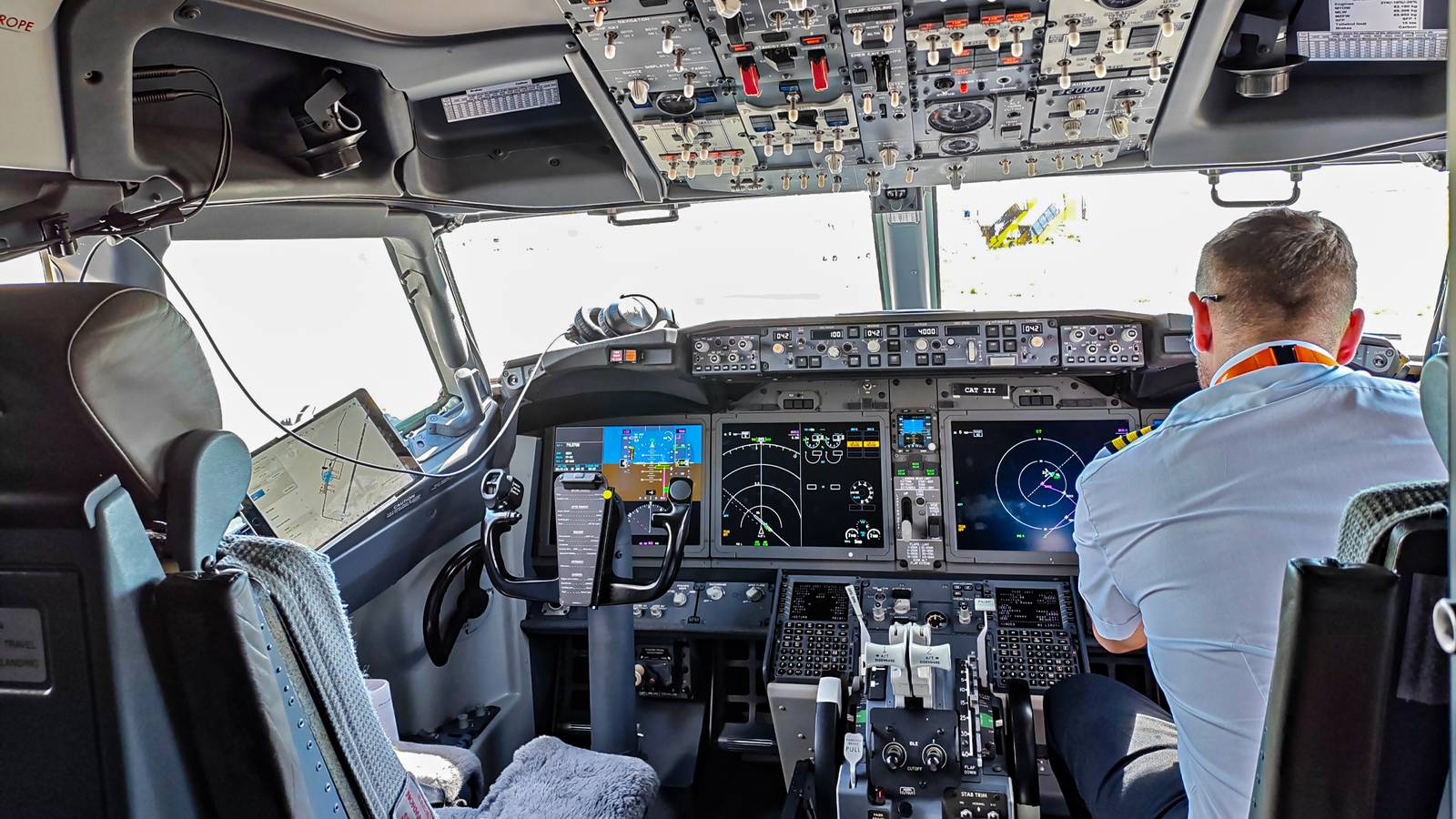
Taking the first steps onto the flight deck of a Boeing 737 MAX can trigger a powerful sense of familiarity for pilots transitioning from the trusted Next-Generation (NG) series. The familiar overhead panel layout, iconic yokes, and throttle quadrant seem largely unchanged. However, this visual comfort conceals a fundamental transformation in how flight crews interact with onboard avionics and manage information flow. When Boeing engineered the MAX to compete in the modern narrowbody landscape, upgrading the cockpit was not just about cosmetic modernization. Boeing saw it as shifting data management into the digital age while preserving a delicate type-rating lineage. So what do pilots actually see and do from the left and right seats? In reality, four massive landscape displays, repositioned controls, and subtle system overhauls completely redefine every phase of a flight. From Gauges To Screens The single most striking visual departure from older 737 generations is the total restructuring of the instrument panel. Gone are the six smaller, square display units that characterized the 737NG flight deck since the late 1990s. In their place sits a clean, expansive arrangement of four massive 15.1-inch landscape Liquid Crystal Display (LCD) screens supplied by Collins Aerospace, using advanced display architecture adapted directly from the 787 Dreamliner. Operationally, the leap in screen technology and size greatly changes how flight crews consume primary flight and navigation data. On older NG aircraft, individual mechanical gauges, such as the flap position indicator and backup clocks, needed their own dedicated panel space. The MAX digital suite consolidates these traditional elements directly onto the primary flight displays and engine-indicating and crew-alerting system (EICAS) screens. Flight crews now monitor engine parameters, primary flight data, and navigational maps rendered in crisp, high-resolution color fidelity that adapts seamlessly to ambient cockpit lighting. By merging multiple data streams onto unified glass screens, Boeing and Collins Aerospace removed visual clutter, letting captains and first officers scan critical aircraft states instantly without shifting focus across fragmented analog clusters. Easier Workload For Pilots The outer display units now house primary flight and navigation data, and the central workspace between the captain and first officer equally underwent significant ergonomic surgery. On older 737s, auxiliary instrumentation and landing gear controls were scattered across vertical panel sections, requiring pilots to reach across distinct boundaries during high-workload procedures like takeoff and landing, as illustrated by The Boeing 737 Technical Site. To establish symmetry and improve accessibility, Boeing repositioned the core controls. The landing gear handle and the Integrated Standby Flight Display (ISFD) now sit squarely in the central gap between the inboard display screens. This deliberate shift gives both pilots equal visual access and reach to the backup flight instruments and gear actuation lever during emergency maneuvers or instrument failures. Further down the console, additional control layouts reflect modern operational efficiencies. The autobrake rotary selector, multifunction display (MFD) controls, and brake pressure indicators migrated down toward the lower center console, sitting neatly between the flight management computers (FMCs). Meanwhile, the autobrake panel moved forward on the lower center console, directly in front of the thrust levers, streamlining the flow needed during rejected takeoffs or wet-runway landings. Additional Safety Enhancements In day-to-day operations, the expanded display surface unlocks high-definition situational awareness tools that were previously unavailable or severely restricted on older 737 generations. The main advancement for pilots is the Vertical Situation Display (VSD), which shows a real-time profileof the aircraft's altitude relative to terrain, approach glidepaths, and waypoint altitude constraints directly beneath the horizontal navigation map. The VSD replaces complex mental calculations during steep descents into mountainous airfields or congested airspace, giving crews a continuous visual trajectory vector. In addition to the main instrument panel displays, many commercial operators equip the captain's station with a Collins Head-Up Guidance System (HGS). Projecting flight paths, airspeed vectors, and runway alignment cues onto a glass combiner plate in the pilot's forward line of sight, the HGS lets captains fly Category III low-visibility approaches to tight decision heights without losing visual contact with the outside world. According to Air International Magazine, this hardware integration gives crews flying dense short-haul routes precision schedule reliability even in severe weather conditions. Deploying these sophisticated avionics tools makes a huge difference to how pilots manage energy states during high-density arrivals. By integrating vertical profile planning and head-up guidance directly into active scan patterns, flight crews can easily adapt to the differences between older narrowbody handling and modern NextGen air traffic management requirements, ensuring greater precision and fuel efficiency across every descent profile. Commonality Across The Old And New Generation Resolving the tension between modern digital avionics and fleet commonality meant Boeing had to design the MAX flight deck around strict type-rating continuity with the 737NG. For major international operators, preserving a shared type rating lets flight crews transition between the 737NG and the 737 MAX without lengthy, expensive full-type qualification programs in full-flight simulators. As Simple Flying previously explored, this commonality lets airlines maintain mixed-fleet rosters and dispatch pilots onto either aircraft typebased on daily operational needs. For this seamless transition to work, flight crews undergo approved differences training, which focuses strictly on the revised display interfaces and software logic rather than core flying techniques. As documented in WeFly pilot reports, the FAA and EASA mandate computer-based training modules alongside targeted simulator sessions to familiarize pilots with the EICAS layout, relocated gear handles, and altered system switches. Despite the massive 15.1-inch glass screens, basic cockpit flows, pre-flight checklists, and overhead panel switch positions remain identical to the NG, so muscle memory built over thousands of flight hours transfers directly to the MAX. Protecting the training pipeline is a vital economic safeguard for commercial airlines managing pilot staffing shortages. Avoiding the massive financial outlay of separate type ratings lets carriers scale narrowbody schedules and integrate new airframes without straining simulator availability. It clearly shows that cockpit commonality is as valuable as raw aerodynamic performance. Moving To Fly-By-Wire Systems The 737 MAX cockpit transformation is arguably strongest in digital flight-control modifications that operate without direct pilot intervention. Unlike the 737NG, which relies on traditional mechanical cables and hydraulic actuators for roll spoilers, the 737 MAX incorporates a fly-by-wire spoiler system. Replacing mechanical linkages with electronic fly-by-wire control units reduces overall airframe weight, improves roll response, and automatically deploys ground spoilers during rejected takeoffs or touchdown rollout with millisecond precision. The flight control computer logic also incorporates a re-engineered flight control framework. Following the global grounding and subsequent recertification in November 2020, the Maneuvering Characteristics Augmentation System (MCAS) was updated with strict safety protocols. As detailed in Simple Flying's previous coverage, the current system relies on dual cross-checked Angle of Attack (AOA) sensors, triggers a flight deck recompare alert if inputs diverge by more than 5.5 degrees, and operates only once without overriding manual elevator authority, guaranteeing that pilots retain absolute control through the control column. Establishing this multi-layered safety architecture permanently alters the philosophy of automated flight control systems in commercial aviation. Modern software logic no longer operates behind an opaque curtain; instead, it provides transparent feedback, explicit crew alerts, and absolute manual override authority, restoring pilot trust and setting a rigorous safety benchmark for all future narrowbody platforms. Taking The Past Well Into The Future The modern 737 MAX cockpit is the ultimate example of how, in aerospace engineering, a strong foundation and only necessary enhancements can create a familiar yet highly advanced pilot interface. Boeing has successfully balanced advanced 21st-century glass avionics with a 1960s structural foundation. By consolidating legacy mechanical gauges into four 15.1-inch landscape displays and introducing fly-by-wire spoiler logic, Boeing gave flight crews unprecedented situational awareness and operational efficiency, while maintaining the vital common type rating that keeps airline operating budgets manageable. A concrete demonstration of this design's real-world impact can be seen in daily transcontinental operations across North America and Europe. Pilots operating high-density sectors transition between legacy NGs and new MAX airframes within the same duty period, using identical overhead setups while leveraging advanced vertical-profile monitoring on the new glass screens. Simple Flying previously analyzed that dual capacity lets airlinesmaximize crew scheduling flexibility without compromising safety margins. Single-aisle aircraft have made a noticeable push into ultra-long-haul transcontinental and transatlantic routes, and the evolution of the 737 flight deck offers a clear preview of the future of pilot-machine interaction. Boeing's hybrid design philosophy will be pushed to its limits in the coming years, and airlines will look at how seamlessly upcoming variants integrate into global flight lines as regulatory certification processes conclude. Flight crews, regulators, and airline executives are watching closely to evaluate long-term operational success. What is certain, though, is that the MAX project has matured to the point where it can address future challenges promptly, with years of lessons learned behind it.
Boeing 737 MAX Cockpit: What Pilots See & Do On Every Flight
Full Article
Original Source
Read the full article at Simpleflying →KhanList aggregates and links to publicly available news content. We do not host full articles from third-party sources. Always verify important information with original sources.