
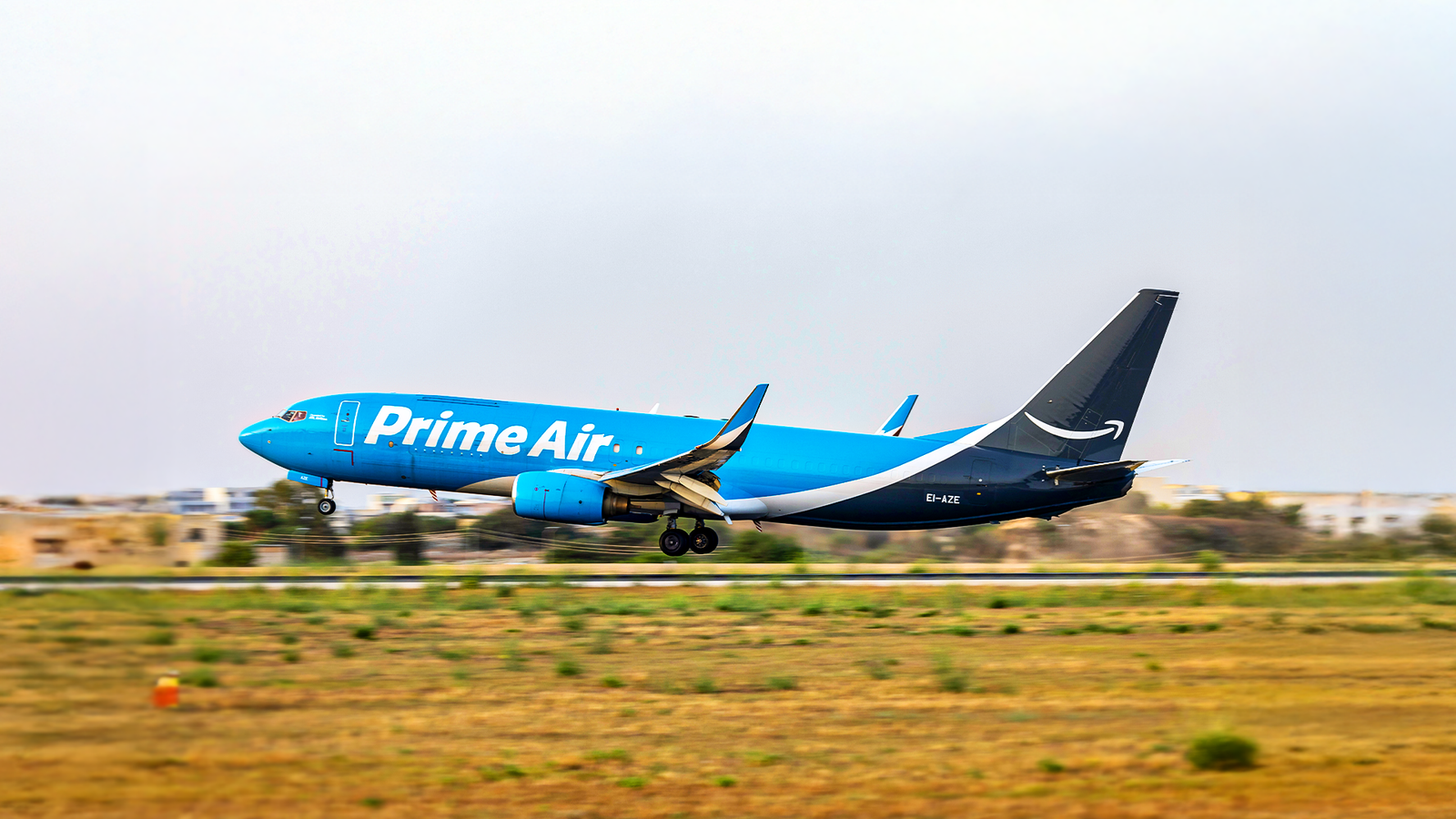
Published Oct 23, 2026, 12:00 PM EDT Luke Diaz is a freelance military writer with experience with active duty experience in the US Navy as well as defense and industrial engineering. He is a former Naval Flight Officer who performed tactical air control on the carrier-based E-2 Hawkeye. Despite being the superior platform on paper, the Airbus A321 passenger-to-freighter (P2F) conversion program has struggled to break the market stranglehold of the Boeing 737-800 Converted Freighter (BCF). Due to the poor sales debut, this has left Airbus with many idle airframes waiting for buyers. The barrier to the A321 P2F has come down to the advantages offered to air cargo carriers from the infrastructure and supply chain ecosystem that already exists for the legacy Boeing freighter. Boeing entered the next-generation narrowbody conversion market with a substantial head start. In air freight operators, true efficiency depends heavily on more than the upfront airframe price. The specific route structures, engine maintenance schedules, and the type of freight being flown are all important variables determining the success or failure of a given airframe within the business model of a cargo flyer. By the time the Airbus A321 P2F program began delivering its first airframes in late 2020, Boeing’s 737-800 conversion lines had already been operating for roughly three years. This timing allowed lessors and operators to aggressively scale up 737–800 fleets during the pandemic-era e-commerce surge. Transitioning to an Airbus narrowbody freighter introduces redundant training costs and supply chain complexities that many operators are hesitant to absorb, even if the A321 freighter offers greater volume and advanced containerized cargo options. Strategic Configurations: Containerized Logistics Versus Field Flexibility Credit: A Periam Photography | Shutterstock The macroeconomic climate has exacerbated the divide between the two planemakers as they duel for dominance over the air freight market. Boeing launched its 737-800 Converted Freighter in 2016 to meet a highly practical market need. Boeing correctly forecast that China's rapidly expanding domestic cargo sector would drive nearly a third of global demand and chose a tried-and-true platform. Its airframe is built on a baseline design that flight crews and mechanics worldwide already understood, making it a prime choice for expanding existing fleets. Airbus arrived four years later with a much loftier ambition, introducing its first converted A321 freighter into commercial service with Qantas in October 2020 as the natural successor to the iconic Boeing 757 freighter. It delivers a maximum payload of roughly 28 tonnes and unprecedented volumetric capacity for its class, and, because the Airbus fuselage sits higher off the ground and is slightly wider than the Boeing, it has an automated lower deck cargo loading system. This layout allows operators to pack the entire aircraft, both main and lower decks, using Unit Load Devices. The Airbus A321 is optimized for high-volume, containerized hub-to-hub logistics. The Airbus converter states the A321 burns 9% less fuel per tonne than the 737-800 and offers a 28% volume advantage. The A321 is tailored for dense, heavy freight networks where speed of loading and automated ground handling are critical. The Boeing 737-800 is optimized for high-frequency, low-overhead regional feeder routes. Boeing notes its freighter cuts fuel use and emissions by 20% compared to legacy standard-body aircraft. The 737 airframe dates back to a low-slung, mechanical design intended for austere airfields. It cannot fit standard containers in its lower belly holds. However, this lack of automation makes the 737-800 very flexible. Network Compatibility: Matching Ground Service To The Hold Credit: EvrenKalinbacak | Shutterstock The very technical advantages that make the A321 a superior converted platform are exactly what place it at a commercial disadvantage in the conversion market. The A321 is significantly heavier and structurally larger than the 737-800. If an operator fills both planes with light e-commerce parcels, the A321 carries the same revenue-generating volume as the Boeing but burns considerably more fuel just to fly. Air freight splits into two distinct categories that heavily dictate airframe economics. Dense cargo like machinery components or pharmaceuticals hits maximum weight long before it fills a cabin, while light, bulky e-commerce parcels pack a hold before they approach any payload limits. This dynamic undermines the raw-weight argument for the Airbus, while also supporting the airframe's primary strength: sheer volumetric capacity. A major dilemma is that the A321’s containerized lower deck only works if outstations on a cargo network have the expensive specialized loaders and ULD inventories to support it. If a cargo airline flies into a secondary regional airport that lacks Airbus-specific equipment, the technical advantage vanishes. Consequently, heavy freight networks with highly advanced hubs heavily favor Airbus, while distributed parcel networks moving through varied, basic airports favor the ubiquitous Boeing platform. Asset Management: A Head Start Measured In Donor Aircraft Credit: Phung Quang Minh | Shutterstock A passenger-to-freighter conversion is fundamentally a game of managing asset depreciation. The initial capital risk is far lower because a used 737-800 is cheaper to source and costs millions less to convert. A 737 freighter can sit idle during low-demand daytime hours and still turn a profit on a single nightly flight. Boeing's early lead established a powerful secondary network effect across the global aviation ecosystem. Inevitably, converting an Airbus A321 required significantly more initial capital investment than a standard 737-800. The A321's high acquisition and conversion costs demand that the aircraft remain in the air constantly to amortize its debt, a utilization rate regional cargo markets rarely support. Lessors looking to capitalize on the post-pandemic e-commerce boom naturally leaned toward the Boeing platform because of its lower entry price and abundant feedstock. This massive head start let Boeing flood the market between 2021 and 2023, building an entrenched global footprint of standard-body freighters long before competing Airbus conversion lines could ramp up to capacity. A massive, ubiquitous fleet ensures that cargo operators can easily source spare parts, specialized engineers, and qualified flight crew from essentially anywhere on the planet. This oversupply is precisely where the more expensive Airbus A321 faces its toughest economic challenge. Operational Variables: Thermal Engine Margins And Nighttime Noise Credit: kirill_makarov | Shutterstock IBA reports Boeing has over 50 of its popular 737–800 freighters sitting idle in storage, but that number represents only a tiny fraction of its massive global fleet. For the newer Airbus A321 freighter, the situation couldn't be more different. When one is grounded, every plane represents a much larger share of the global A321 cargo fleet. Because multiple airlines canceled contracts or failed entirely, leasing companies were left holding expensive, newly converted Airbus jets that no one wanted to hire. As multiple airlines returned their airframes or shut down cargo sub-fleets, lessors were forced to park the expensive jets and lease their engines separately. On paper, the Airbus A321 is designed to be highly fuel-efficient. In daily operations, however, those theoretical savings quickly fade away in the face of other operating costs. Notably, two of the primary detractors that have put the A321 P2F at a disadvantage relate directly to its powerplants. To lift heavy cargo, the A321 must run its engines at Exhaust Gas Temperature (EGT) redlines. Operating constantly at these extreme thermal boundaries dramatically erodes the engine's 'EGT margin,' a critical engine health metric. Additionally, most express package delivery happens overnight, but many airport hubs in Europe enforce strict noise limits during these hours. Because high-thrust Airbus engines are so loud, operators are limited by network or payload when operating the plane. The A321's primary advantage over Boeing is its superior capacity, leaving the cheaper, simpler 737-800 the more practical tool for regional express networks. Launch Customers: Route Structures Determine The Optimal Platform Credit: Sergey Kustov | Shutterstock A clear illustration of the market divide comes from the initial customers each narrowbody freighter won. The first A321 P2F went to work for Australia Post under Qantas. It flies the ideal express, domestic, and regional freight missions its designers envisioned. In this network, dense mail sacks and parcel sorting demand rapid airport turnarounds, making containerized belly-loading highly efficient. Here, the A321's efficiency fits the mission perfectly because airports have the equipment needed to handle its containers. China's domestic market operates in a very different ecosystem that heavily favors the simpler Boeing jet. China Postal Airlines has become the largest operator of the 737-800 freighter in mainland China, replacing its aging 737 Classic and 757 fleets. While the converted Boeing offered less cargo volume than the Airbus, it provided immediate fleet conformity and instantly integrated into the massive pre-existing support network. What Could Change The Balance From Here? Credit: Ronen Fefer | Shutterstock Long-term market forecasts favor narrowbody conversion freighters as a popular choice for cargo operators into the future. Boeing projects air cargo traffic to grow by 3.7% annually through 2045. This sustained expansion should eventually absorb today's idle aircraft, though the near-term outlook remains highly challenging for Airbus. The anticipated mass migration of aging Boeing 757 freighter operators over to the Airbus A321 has failed to materialize. Instead, operators have invested heavily in sustaining their existing 757 fleets, prioritizing the aircraft's superior range, payload capacity, and established support. Meanwhile, competition is coming down the line from a planned 737-900ER conversion series, which is currently targeting regulatory certification by 2029. The Airbus A321 P2F retains a significant long-term roadmap to capture future sales. The A320 and A321 family is one of the most widely produced aircraft lines in history. Thousands of older passenger A321s will flood the secondary market over the next decade as airlines replace them with newer A321neos. Rather than being decided purely by fuel-burn metrics, future sales will likely follow existing fleet biases.
Boeing 737-800BCF Vs. Airbus A321 P2F: Which Freighter Is More Efficient?
Full Article
Original Source
Read the full article at Simpleflying →KhanList aggregates and links to publicly available news content. We do not host full articles from third-party sources. Always verify important information with original sources.