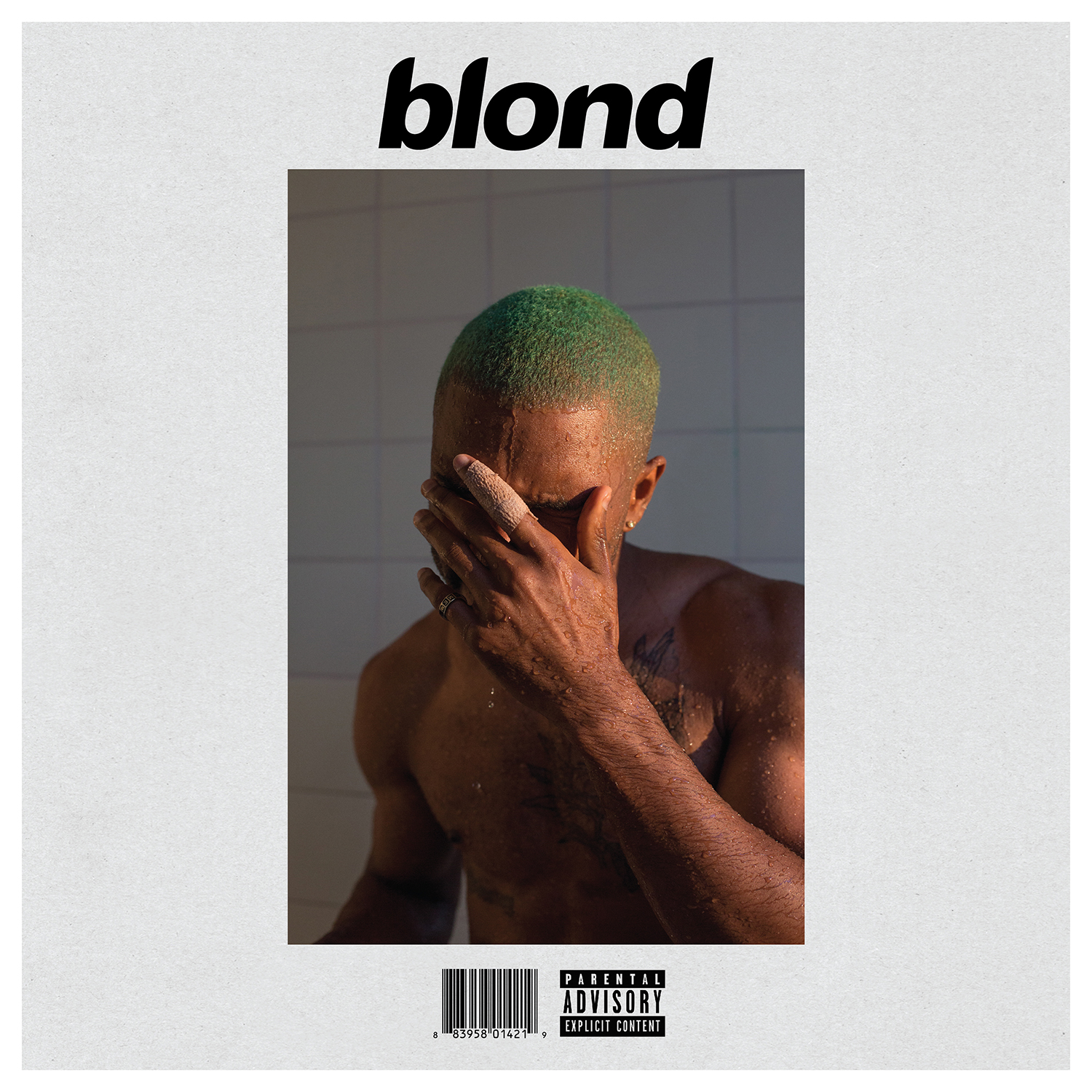
It was all so slippery. The way it went down; the way it sounded, too. Just when you thought you had a grip on Frank Ocean, he slid through your fingers and vanished, leaving behind nothing but a cloud of smoke and streaks of light. Elusiveness is his nature, his essence, and yet so is profound emotional resonance. It’s what made Blonde so alluring back then, and why an album defined by impermanence has so powerfully endured.When Ocean released Blonde 10 years ago today, he ended a four-year wait for the official follow-up to Channel Orange, the debut album that completed his rise from blog-world sensation to Grammy-nominated superstar. He also completed a bait-and-switch that excluded Def Jam and Universal Music Group from a stake in that landmark LP, keeping his label in the dark about Blonde and instead fulfilling his contract with Endless, an oblique visual album playable only as a 45-minute video on Apple Music. It was not available for purchase.The Blonde switcheroo was an incredible coup for Ocean. He reportedly increased his potential profits from 14% to 70% by releasing it through his own label Boys Don’t Cry, which for the longest time was supposed to be the album title too. The stealthy maneuver also read as a middle finger to the major label that, half a decade earlier, kept this modern icon on the shelf until they could no longer ignore the buzz he’d manifested with the self-released mixtape Nostalgia, Ultra. It felt especially pointed that the visual component for Endless comprised uncut black-and-white footage of Ocean building a staircase to nowhere. Due to nagging insecurity, an intense desire for privacy, and a stubborn insistence on doing things his own way, he has increasingly shied away from every step on the music industry’s prescribed ladder to fame. “I was always reluctant to do those things except in cases where they had this nostalgic significance to me,” he told the New York Times after Blonde dropped. “Like performing at the VMAs, being tapped to perform at the Grammys — me saying yes to those things had a lot to do with how those things made me feel before I was actually in the business. And just wanting to be rubbing shoulders with those people and being seen at those places. I still was reluctant and sort of skeptical of those things because I questioned whether or not I was prepared.”You can imagine a similar logic at work when the guy who sang about Coachella on his breakthrough hit in 2011 agreed to headline the desert mega-fest in 2023, then crumbled under pressure, scrapping his ambitious production plans at the last minute due to an injury and ultimately pulling out of the second weekend. Those kinds of mainstream spotlight moments have never been Ocean’s speciality. He’s a product of the blog era, and most of his greatest successes have been halfway off the grid, starting with the star-making mixtape he released as a free download through Tumblr. Ocean’s fundamental scarcity ensures that when he pops up in unexpected contexts — dropping a rap verse on the era-concluding Odd Future posse cut “Oldie,” sliding on a Calvin Harris beach party jam alongside Migos — his presence is all the more thrilling. Writing in the Times in 2016, Jon Caramanica asserted that Ocean’s absence in the three years leading up Blonde “has felt like a position statement against celebrity culture.” In hindsight, it’s inconceivable that Ocean ever put out a physical album through conventional channels and participated in the attendant pageantry. These days, I can hardly even believe he was on Watch The Throne; having gotten a good long look at that seat, he moved on to other pursuits.Rather than climbing upward to the top of the industry, Ocean has always been more interested in venturing outward. Sometimes that meant traversing the globe with a backpack full of hard drives, exploring the real world away from the spotlight rather than publicly navigating a heavily mediated internet. (I have to believe that's why "Facebook Story," with its disdain for virtual connection, ended up on here.) Sometimes it meant just cruising in one of his beloved automobiles. “How much of my life has happened inside of a car?” he wrote in a statement accompanying Blonde. “I wonder if the odds are that I'll die in one.” While working on the album, he moved around frequently, living out of hotels. That transitory existence comes through in the ghostly textures of both Blonde and Endless — the sound of spiritual presence but physical absence, of a heart pouring out in the heat of the moment and instantly turning to vapor.The first thing most people noticed about Blonde was its frequent lack of drums. So many tracks drifted through space, untethered to live or programmed beats, as if he were paring back everything to give us an even more extreme closeup. Even some of the more robust tracks, like the sweeping, helium-dazed introduction “Nikes,” seemed wobbly and free-flowing. One could argue that, mirroring the way Ocean’s reclusive tendencies made his appearances all the more special, the persistent absence of rhythm made more commonplace tracks like the gliding, ultra-smooth “Pink + White” hit harder. But that would require taking the piss, and anyway it’s beside the point. When you’re on Ocean’s wavelength, the quiet parts are rewards in their own right, not endurance tests meant to cast the album’s poppier moments in a more flattering light.The production choices were controversial, and they led to a shrugging reception from some corners. Certain critics dismissed the songs as sloppy, unfinished, or inert. To skeptics, Ocean’s opus was a “hookless morass,” “a trickling bubblebath of an album that ultimately runs lukewarm.” Seemingly at will, Ocean can level you with a showstopping gospel ballad like “Godspeed,” and his refusal to do it more often was frustrating for some. Like Radiohead’s Kid A, another long-awaited follow-up that upended expectations, Blonde is now near-universally touted as a classic but was much more polarizing upon impact, before the public became accustomed to its textures and contours. It’s a comparison I made within a week of release, and a decade later, it holds up better than I could have imagined. (In this analogy, Nostalgia, Ultra is The Bends, Channel Orange is OK Computer, and Endless is Amnesiac.) Despite some listeners’ sense that he was holding out on them sonically, Blonde represented Ocean’s attempt to be more vulnerable as a songwriter, leaning away from the character studies of Channel Orange into autobiography. This time, the vignettes gave us glimpses of the real Lonny Breaux, past and present, and they showed off his flaws and weaknesses as much as his prodigious talent. “I’m just a guy, I’m not a god,” he assures us on closer “Futura Free,” before admitting, to himself and us, “Sometimes I feel like a god, but I’m not a god.” The track accents its familiar rags-to-riches narrative with lore like the reveal that Tyler, The Creator used to sleep on his couch. On the Nostalgia, Ultra ditty “Songs For Women” Ocean had positioned his music in conversation with Drake’s, and he’s never been more Aubrey than on “Nights,” from the beat-switching backdrop to the memoir bars about back in the days, Acura days. But for all the factoids Ocean gave us, Blonde connected not because it satisfied some parasocial hunger for personal information but because of how effectively it conveyed the intensity of his internal world. The sparse guitar reverie “Ivy,” a song my colleague Tom Breihan once brilliantly compared to Usher singing for Deerhunter, is the first of many windows into giddy joy giving way to heartbreak: “I thought that I was dreamin’ when you said you loved me/ The start of nothin’.” The ache is even more overwhelming on “Solo” as Ocean describes getting stood up one night in Colorado to the dulcet tones of James Blake’s organ. “I brought trees to blow through, but it's just me and no you,” he laments, before a dagger of a detail: “Stayed up 'til my phone died.”The complexities of Frank Ocean were on full display here — his passions, preferences, and hangups distilled into utterly bespoke music that flouted the rules of pop stardom. Some of the most abstract moments, like the glassy-eyed “White Ferrari,” were also some of its tenderest. Ocean told the Times he manipulated his vocals to create multiple voices on some songs because “sometimes I felt like you weren’t hearing enough versions of me within a song.” In the 360-page Boys Don’t Cry zine released concurrently with Blonde and Endless, he famously described his sexuality as “a little bent.” (Also in there: an interview with Lil B and a poem about McDonald’s by Kanye West.) I still haven't figured out what Ocean was trying to say by including an anti-drug voicemail from somebody else's mom.This guy refused to be pinned down, and some songs on Blonde felt like they might float away, not least of all its opening overture. “Nikes” begins the album with a queasy blur of sex and drugs, swagger and self-doubt, humor and grief, establishing a context for the sounds and stories to come. He makes passing mention of a tumultuous world (“R.I.P. Trayvon, that n**** looked just like me”) but mostly trusts the listener to find the universal in the personal from there on out. That includes not just the self-disclosures but an assortment of contributors and reference points that turned the liner notes into a music-geek treasure trove. This was a golden age for blockbuster rap and R&B records with eclectic guestlists, but truly, who else would pursue the specific chemistry achieved by combining the powers of Pharrell, Alex G, Kanye, Kim Burell, Rostam, Yung Lean, Vegyn, Michael Uzowuru, Jon Brion, James Blake, Malay, Buddy Ross, Om’Mas, some guy from Slow Hollow, and a pre-colonoscopy André 3000? If Blonde is a soup, it’s one cooked up by a chef with enough taste for jagged rhythm to sample Gang Of Four. If it’s avant-garde, it also comes from a man with enough regard for pop craftsmanship to crib from Bacharach & David, the Beatles, and Elliott Smith on consecutive tracks. If it’s ephemeral, well, so was the love that inspired so much of it. The love for Blonde, however, has only intensified. A decade later, it’s not just fiercely canonized but also imitated at every turn. (“We’ll let you guys prophesy/ We gon’ see the future first.”) Stripped-down ballads have been a fixture of the recording industry forever, but on Blonde, Ocean seemed to be inventing a new sonic language for these kinds of bleary confessionals, a production style so verite that it becomes surreal. Once listeners adjusted to that unexpected vibe shift, it proved wildly popular. From Halsey and Haim to Mk.gee and L’Rain, I keep hearing the imprint of Ocean’s radical minimalism all over the 2020s music landscape. But no matter how many artists take a stab at the Blonde aesthetic, the album’s peculiar alchemy remains as elusive as the man who authored it.
Blonde Turns 10
Full Article
Original Source
Read the full article at Stereogum →KhanList aggregates and links to publicly available news content. We do not host full articles from third-party sources. Always verify important information with original sources.