
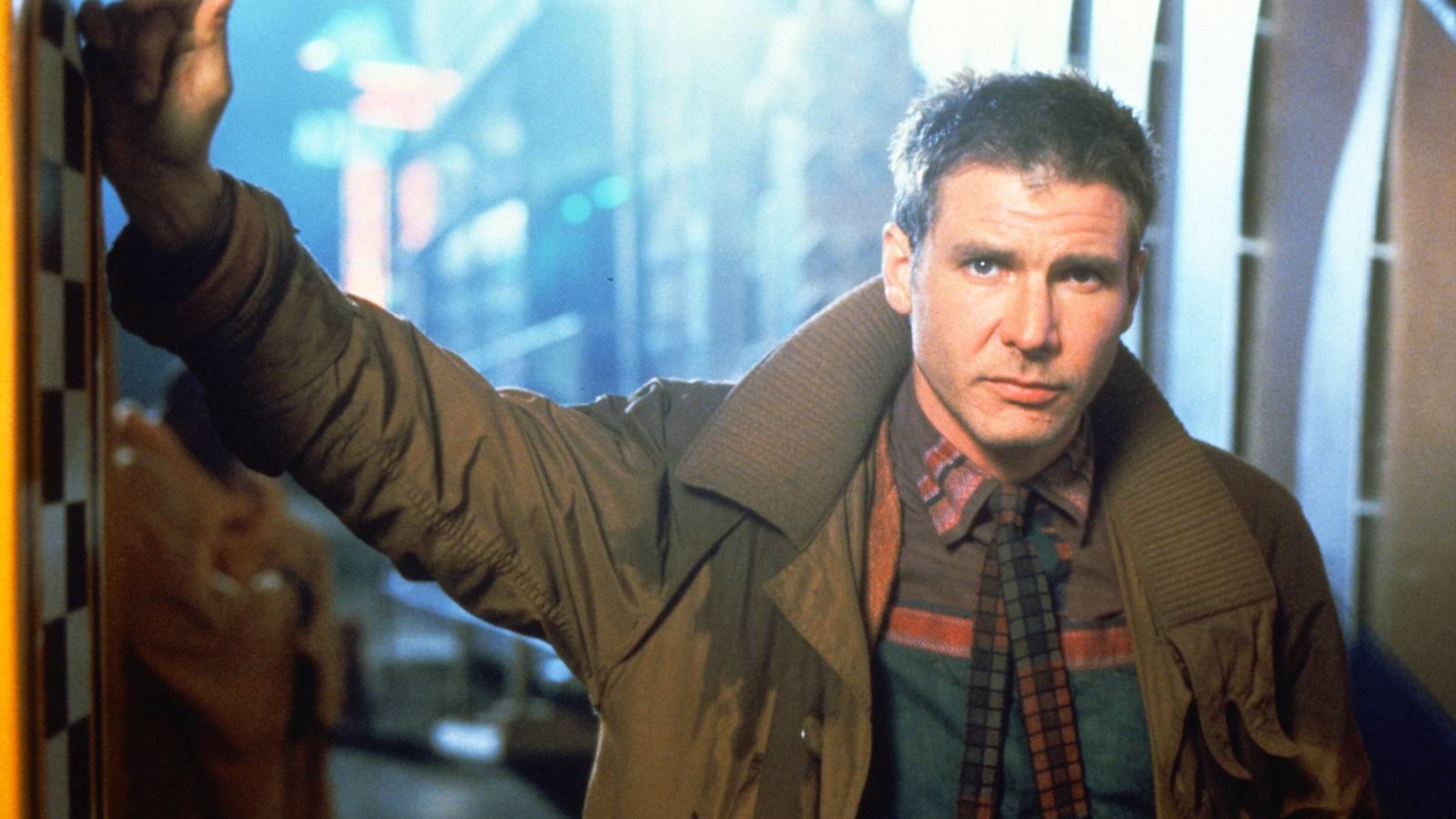
Published Sep 10, 2026, 9:07 AM EDT Ambrose Tardive is an editor on ScreenRant's Comics team. Over the past two years, he has developed into the internet's foremost authority on The Far Side. Outside of his work for ScreenRant, Ambrose works as an Adjunct English Instructor. There is so much more going on in Blade Runner's source material than in the movie, including the novel's most fascinating subplot. Author Philip K. Dick was an expert at weaving together multiple story threads, and his novel Do Androids Dream of Electric Sheep? is a great example of that. The key to Ridley Scott's Blade Runner was boiling down PKD's work to its essence, its sci-fi neo-noir vibe, but that meant losing a critical thread from Do Androids Dream in translation. Readers familiar with both the novel and the movie know Do Androids Dream and Blade Runner are radically different. Scott's movie is very much a loose adaptation, seizing on one aspect of the book: a bounty hunter going after human-looking androids. Around that premise, Ridley Scott largely built his own world. Inspired by Philip K. Dick, but not aiming to fully realize the future Earth of Do Androids Dream of Electric Sheep? Blade Runner's success is rooted in that decision. Still, that means the novel's most fascinating thread, the story of Mercer and Mercerism, didn't fit into Scott's vision of 2019 (from the vantage point of 1982) the way it did when PKD imagined the year 1992 back in 1968. Blade Runner's Lost Sci-Fi Subplot, Explained The first major sci-fi plot thread in Do Androids Dream of Electric Sheep?, the one Ridley Scott adapted, is the idea of robots, androids, made in the image of organic life. (Arguably, Scott's decision to call them "Replicants" in Blade Runner was his most inspired revision of the novel.) The book is set in the aftermath of "World War Terminus," a global conflict that didn't end human civilization, but did lead to the death of almost all animal life on Earth. This spurred an industry of robotic replacements, and that same technology is advanced enough to make human-like androids, who have become a servile caste. The second plot thread also centers around sci-fi tech, what PKD calls an "empathy box." Grabbing the box by the handles connects the user to a messianic figure named Wilbur Mercer, and also to everyone else using their box at the same time. Users collectively experience Mercer's physical ascent up a hill, a literalization of their conception of, or desire for, spiritual ascent. Oh, and Mercer is having rocks flung at him the entire time, and users feel each one that hits him, just like they feel every step up the hill. Why Ridley Scott Cut Mercerism & Empathy Boxes From Blade Runner Mercerism is a popular religion in Do Androids Dream? Which has implications for the book's plot, but even before that, for the immersive world PKD builds in the novel. For the religion to be widespread, empathy boxes have to accessible, affordable. In contrast to "electric" animals, like the eponymous sheep (which Rick Deckard and his wife own as a pet), which are expensive to purchase and costly to maintain. At the same time, comparing the two makes it obvious why Ridley Scott was drawn to one concept and omitted the other from Blade Runner. The idea of human-passing artificial life was alarming in the 1980s; it's only scarier now that the real world has surpassed Blade Runner on the timeline and real-world robotics technology has taken great leaps forward in just the last few years. The drama of the idea is grounded in some realism. The idea of a device that connects peoples' minds together in order to share an experience is a quantum leap into the fantastical, into tech that will probably never exist. (Let's not call it impossible, because who knows, but less likely than Replicants, or androids, or electric sheep.) One of the things that made Philip K. Dick a sci-fi master was that he could make these two different types of sci-fi concept fit together. Many writers aren't able to pull it off like he did, and many more are too hesitant to try. Most writing teachers will tell their students not to. Ridley Scott agreed. Androids and empathy boxes fit together in Do Androids Dream of Electric Sheep, but not Blade Runner. "Do Androids Dream" Answered Questions About Mercerism Philip K. Dick Posd Years Earlier Philip K. Dick cultivated the idea of Mercerism and empathy box technology years before writing Do Androids Dream of Electric Sheep? It originated in "The Little Black Box," a short story published in a 1964 issue of Worlds of Tomorrow, four years before Do Androids Dream came out. Mercerism is the focus of the story. In fact, "The Little Black Box" does explain where the empathy boxes come from. One character notes that "Wilcer, Incorporated" is the "organization that distributes" the boxes. That the boxes are being given out for free to spread the religion. It is a must-read PKD short story, just like Do Androids Dream is among the author's essential novels. (Don't sleep on Ubik, people.) In "The Little Black Box," there's some skepticism about Mercerism's origins and true purpose. A pivotal chapter in Do Androids Dream of Electric Sheep? gives an answer: "Mercerism is a swindle." Toward the end of the novel, TV personality Buster Friendly goes live with a shocking revelation, exposing Wilbur Mercer's journey as taking place on a soundstage. And Mercer's real name? Friendly alleges he's an actor named Al Jarry. Interestingly, Friendly is also revealed to be a secret android in this same scene, and his accusation is described as a "pitch," potentially casting doubt on the truth of it. In any case, the android Pris muses that she doesn't "think this will be the end of the cult of Mercer," and what is left largely unsaid is that even if Mercer's story were fabricated, the technology of the empathy boxes is very real, and potentially very dangerous. Could Mercerism & Empathy Boxes Finally Enter Blade Runner Canon In 2099? The Blade Runner franchise returns in just under two months with Blade Runner 2099, the TV follow-up to Blade Runner 2049 and the original film. It is the franchise's biggest jump into the future yet, and it is also a silver-platter opportunity to expand the world of the series to make it more like Philip K. Dick's vision than was possible in the movies. Much of 2099's plot is still tightly under wraps ahead of its debut, but if the series' showrunners are savvy, they will integrate empathy boxes and Mercerism into the show. 2099 reportedly flips the Replicant-human dynamic, making flesh-and-blood humans subservient to the artificial lifeforms they created. That is exactly the kind of societal upheaval that would breed a new religion, a religion based on suffering and losing oneself in the collective human consciousness. And there is one big sign that points toward this happening. It has been reported that the character of Buster Friendly is set to appear in Blade Runner 2099. Though the context of his expose on Mercerism might be different, this does make it seem like there's a good chance Blade Runner's "lost" empathy box subplot could finally be put on screen. Blade Runner TV Show(s) Blade Runner 2099, Blade Runner: Black Lotus Video Game(s) Blade Runner, Blade Runner 2033: Labyrinth First Film Blade Runner First TV Show Blade Runner: Black Lotus Cast Harrison Ford, Rutger Hauer, Sean Young, Edward James Olmos, Ryan Gosling, Ana De Armas, Jared Leto, Robin Wright, Mackenzie Davis Created by Philip K. Dick, Ridley Scott
Blade Runner Cut A Chilling Sci-Fi Subplot From The Original Novel
Full Article
Original Source
Read the full article at Screenrant →KhanList aggregates and links to publicly available news content. We do not host full articles from third-party sources. Always verify important information with original sources.