
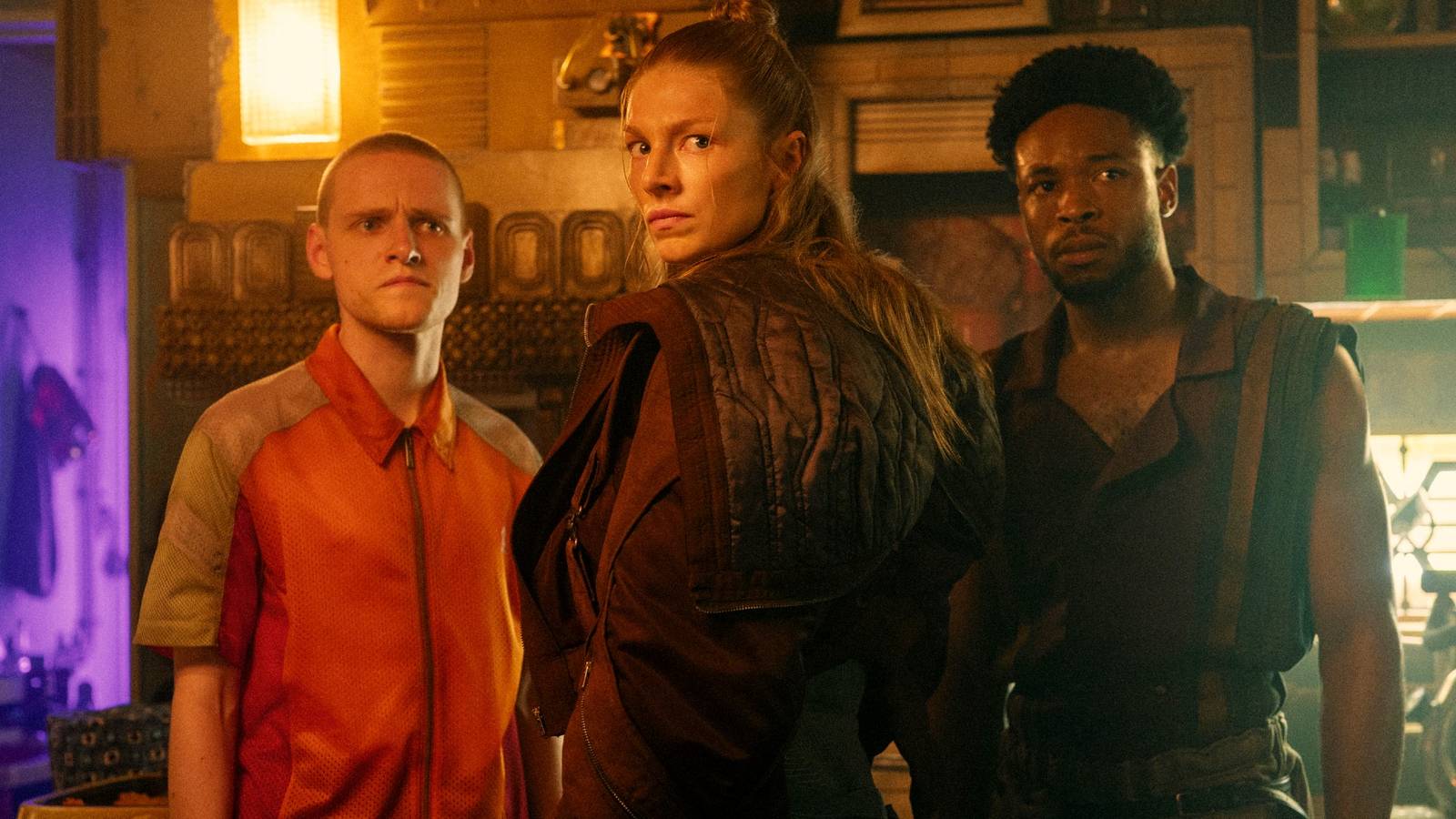
Warning! This article contains SPOILERS for Blade Runner 2099 episode 8.Cora and Olwen's journey ended somewhat ambiguously in Blade Runner 2099, and the fate of replicant immortality hung in the balance. Though Blade Runner 2099 set an unwanted Rotten Tomatoes record for the franchise and has been met with mixed reviews, it's incredibly important to the franchise's lore. After 44 years, two Blade Runner movies, and two animated shows, Blade Runner 2099 has left the fate of replicants in uncharted waters. In the finale of Blade Runner 2099, Cora and Olwen manage to stop Julius, the last remaining Nexus-1 replicant. Olwen prolongs her life and returns to the stars, Elias becomes a new figurehead for human revolution, Bebeto joins the remnants of the Tyrell Corporation, and more. The twisty mystery of Blade Runner 2099 came to an ambiguous ending, which could require some further explanation. What Happens To Replicant Lifespans After Blade Runner 2099 Explained Blade Runner 2099 is all about the search for the secret to replicant immortality, yet the show's ending didn't provide a definitive answer about whether their lifespans will increase or not. It is, however, implied that replicants will no longer have expiration dates going forward. Though Olwen shot and killed Julius, Clotilde proved she knew the process to turn replicants into Nexus-1s by doing it to Olwen. Clotilde alone is a strong indication that replicants will be immortal from now on, but she's not the only reason to think that. The ending of Blade Runner 2099 episode 8 also included a shot of Ray discovering Julius' body via a drone, and it also saw him smile as the word "transport" appeared on his screen. Ray and the remnants of the Tyrell Corporation should be able to reverse-engineer the genetic blueprint to develop new Nexus-1 replicants. There is also some doubt that replicants will be immortal, however. Clotilde may know how to end expiration dates, but given her change of heart at Olwen's speech about fear of death, she may not be willing to do it anymore. It's also not clear if Ray and the Tyrell Corporation will be able to turn existing replicants into Nexus-1s, or if Julius' body only allows them to create new units from scratch. On the whole, though, it seems replicant expiration dates are a thing of the past. Even if Clotilde or Ray don't end expiration dates, the future of replicant kind is still safe. Though Julius destroyed the massive birthing center, Olwen explicitly says that they'll be able to rebuild it, albeit not for a few years. They'll likely have more opposition from humanity after Elias' revolutionary turn, but replicants will almost certainly remain the dominant species on Earth after the ending of Blade Runner 2099. Why Cora Takes The Voight-Kampff Test Again In Blade Runner 2099 Episode 8 One of the more confusing parts of Blade Runner 2099's ending came when Cora returned to the LAPD building and took another Voight-Kampff test. Cora ostensibly had no reason to do this; she didn't have to pose as a Blade Runner anymore, it was actually a massive risk to return after killing Yahya, and she outright says she couldn't rescue Greta. As surprising as her decision was, she actually had a few reasons to return, both in-universe and from a narrative perspective. In-universe, Cora likely returned to take the Voight-Kampff test again specifically to comfort Greta, the girl who delivers the tests. Cora's emotional story this season has revolved around her developing the empathy she lost after years on the run. Returning to Greta is the culmination of that journey: she did so because she empathized with Greta's feeling of "forgetting how to be a person." Cora returned because she saw herself in Greta, and she wanted to remind her not to forget what it's like to be loved and to be human, and to warn her against becoming like Cora at the start of the show. From a narrative standpoint, Cora's return to the LAPD drives home the idea that she has developed a sense of empathy. As Greta says, Cora was completely different from the first time she took the test. At the start of the show, Cora is a shell of a person who can easily pass as an emotionless replicant. By the end, she puts herself in danger just to offer some small comfort to Greta. She goes through as much of a metamorphosis as the replicants, and this scene proves it. Why Elias Takes Credit For Destroying The Birthing Center Image via Prime Video Another confusing moment from the finale of Blade Runner 2099 came when Elias returned to the Mercerite temple and took credit for destroying the birthing center in a massive public broadcast. Elias obviously didn't destroy the birthing center, that was Julius and his lackeys. This act of open defiance to replicant rule should also paint a massive target on his back, so it's a bit unclear why Elias would take credit at all. Elias had a fairly simple reason for taking credit, though. By the end of the show, Elias is fully on-board with the human revolution. His original plan to help Ray destroy all replicants, however, turned out to be a lie. So, Elias pivots. Instead of directly attacking the replicants, he decides to inspire humanity. Taking credit for the birthing center was his way of showing humanity that replicants aren't all-powerful, inspiring them to join the revolution, and convincing them that humanity's time hasn't passed yet. Bebeto's Conversation With Ray Explained One of the most pivotal moments in Blade Runner 2099 episode 8 was a simple conversation between Bebeto and Ray about halfway through the finale. Ray revealed that he was a human working with the remnants of the Tyrell Corporation, and that he wanted Tyrell's memory so that he could do the same thing as Julius: learn how to turn Nexus-9s into Nexus-1s. The only difference was that Ray wanted to sell that procedure to replicants. Ray also offers Bebeto a chance to join the Tyrell Corporation if he provides Cora's location. Blade Runner 2099 doesn't explicitly state how Bebeto responded to that offer, but it does confirm that he accepted. Ray is later seen arriving at the launch site to retrieve Julius' body, which he wouldn't have been able to find if Bebeto hadn't provided the location. Evidently, Bebeto gave up on the idea of human revolution and decided to "buy back" what humanity once had, as Ray already has. Why Olwen Shoots Julius In Blade Runner 2099 Explained One of the most important but straightforward developments in the finale of Blade Runner 2099 came when Olwen shot and killed Julius, the last original Nexus-1. It was a bit surprising that she decided to do this, especially since she believed at the time that killing Julius would destroy her chances of extending her lifespan, but Olwen verbally explained why she chose to do it. As she said, Olwen didn't want to live in Julius' world. Olwen also explained what Julius' world was, though she did it in the previous episode. Olwen explained that Julius destroyed the birthing center because he wants to decide who gets to exist in his new world. Julius views himself as a god, as the next step in the chain of human evolution, and he inherently views the Nexus-9s as inferior. He essentially wants to commit genocide and position himself as the only replicant capable of creating new life, and Olwen thinks that's a horrible idea, so she killed him. Like Cora, much of Olwen's journey in this show has revolved around her developing a sense of empathy. Her interactions with Marek and Cora gave Olwen the ability to empathize with others, a fact that she clearly displayed when she was upset by Julius knocking Cora out. It's because of that empathy that Olwen had the ability to turn Julius down, even though she believed killing him was acting against her own self-interest at the time. Of course, Olwen wasn't actually condemning herself to expiration, as Clotilde also had the knowledge to extend replicant lifespans. Olwen takes her up and goes through the metamorphosis process, essentially granting her eternal life. She accepted Clotilde's offer because, as she said multiple times before, she wants to return to the stars and see new worlds. The final shot of Blade Runner 2099 confirmed that Olwen did exactly that. The Real Meaning Of Blade Runner 2099's Ending Explained As with its film predecessors, Blade Runner 2099 is a deeply philosophical and metaphorical tale. Though it centers around replicants this time, Blade Runner 2099 is primarily about how empathy is the defining trait that separates humanity from replicants. At every step, from start to finish, Blade Runner 2099 is about empathy, and almost all of its plot points can't happen if certain characters don't have empathy. Cora and Olwen's personal stories revolve around developing empathy. Both of them start this show completely self-involved, and they end it willing to die for one another. Side characters like Marek and Clotilde also have to have empathy; Marek needed empathy for Olwen to join Julius' cause, and Clotilde needed to develop empathy to turn against Julius and offer immortality to Olwen. Julius is the enemy of this series because he doesn't have empathy. It was robbed from him when Helena left, and he doesn't care about Nexus-9s, only about creating his new world. Empathy is the single most important idea Blade Runner 2099 explores. Change also goes hand-in-hand with empathy as Blade Runner 2099's core concepts. So much of this series is about metamorphosis, from Julius' procedure to turn replicants into Nexus-1s to Olwen and Cora's development of empathy. Like empathy, the ability to change differentiates humanity from replicants. In that sense, Olwen is as much a human as Cora is, because she had the ability to change how she views humanity and how she coexists with others. Blade Runner 2099 also has some big ideas about memory, especially as a literal and figurative key to immortality. Tyrell's memory is literally the key to extending replicant lifespans, but the show also takes a more metaphorical approach. Helena is dead long before the series starts, yet she has achieved immortality through Cora and Elias' memory of her as their mother. In a sense, Helena's kind of immortality is more permanent; Julius dies, but Helena lives on in the way she affects and changes her children and, through them, the world at large. Blade Runner 2099 is also a very conceptually dense show, so it's impossible to go through everything the series has to say about abstract concepts. The last one worth noting is that this series is a rumination on mortality. The entire show is about finding a way to postpone death, and about how to achieve immortality. Julius' route is literal immortality, but Helena's is figurative. What's clear is that Blade Runner 2099 is the kind of show that will stick with viewers for a long time. Release Date 2026 - 2026-00-00 Network Prime Video Showrunner Silka Luisa Directors Jonathan van Tulleken Writers Silka Luisa, Ryan Willison, Claire Kiechel, Kirsa Rein, Tom Spezialy Cast Franchise(s) Blade Runner Creator(s) Silka Luisa
Blade Runner 2099 Ending Explained: The Fate Of Replicant Immortality & Cora's Final Decision
Full Article
Original Source
Read the full article at Screenrant →KhanList aggregates and links to publicly available news content. We do not host full articles from third-party sources. Always verify important information with original sources.