
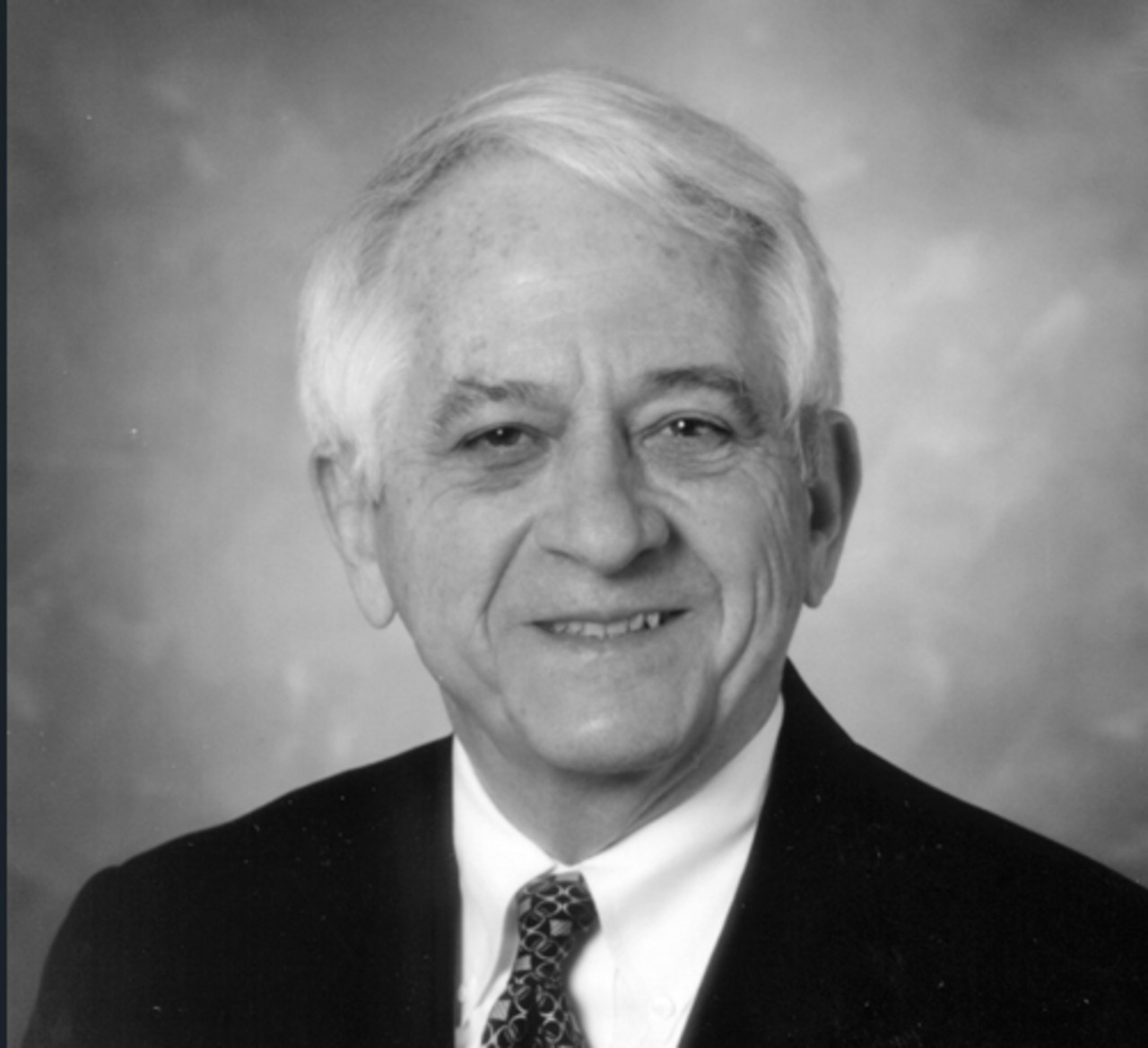
Longtime Birmingham attorney J. Vernon Patrick Jr., who played a key role during the Birmingham school desegregation crisis in 1963 by helping organize white moderates and liberals to ensure schools complied peacefully with federal integration orders, has died.He died Oct. 7 in Houston, according to family. He was 95.In the summer of 1963, as federal courts ordered Birmingham to submit a school desegregation plan, the city faced the threat of severe white resistance led by segregationist Public Safety Commissioner Bull Connor. Patrick helped organize and presided over meetings for a group called Public Education Peacefully.With Patrick presiding, about 350 people packed a courtroom in the Jefferson County Courthouse for one meeting. A steelworker told him, “Sit down, you don’t even live in Birmingham.”Patrick lived in Vestavia Hills at the time. Segregationists picketed outside the meeting, United Press International reported. Patrick received death threats for opposing those who wanted to close the public schools rather than integrate.Patrick served on the special Birmingham Bar Association committee that successfully recommended changing Birmingham’s city government from a commission model to a mayor-council model, creating a more cooperative local government environment for desegregation efforts.In 1964, he was one of three chairmen of the city’s Brotherhood Week, sponsored with the National Conference of Christians and Jews. He helped lead a Junior Chamber of Commerce petition drive to merge Birmingham with its suburbs, and was elected president of the Young Men’s Business Club. In 1966, he helped organize what became the American Bar Association’s Section of Civil Rights and Social Justice.Patrick was born on May 7, 1931, in Birmingham to John Vernon Patrick Sr. and Dorothy Gladys (Powell) Patrick, and grew up in Ensley. He was president of the student body at Ensley High School and went to Harvard University on scholarship, graduating magna cum laude in 1952 as a member of Phi Beta Kappa and vice president of the Harvard Glee Club. At Harvard Law School he was an editor of the Harvard Law Review, and he graduated magna cum laude in 1955.He clerked for U.S. Supreme Court Justice Hugo Black in 1955, after the court’s 1954 decision in Brown v. Board of Education that found state laws segregating schools were unconstitutional.Patrick served as a first lieutenant in the Army’s Judge Advocate General’s Corps in Germany from 1956 to 1959 and then joined the Birmingham firm of White, Bradley, Arant, All & Rose. In late 1961, he went to Washington as a program operations officer in the Near East and South Asia bureau of the newly created Agency for International Development.In 1965, he became a partner in a Birmingham law firm with Abe Berkowitz and future Birmingham Mayor David J. Vann, forming Berkowitz, Lefkovits, Vann, Patrick & Smith. He built a national practice in securities and complex litigation. He chaired American Law Institute and American Bar Association courses on securities litigation in the 1970s, served on the federal judiciary’s Advisory Committee on Civil Rules from 1978 to 1984, and was a life member of the American Law Institute. He argued cases in federal appeals courts across the country. He represented shareholders in Garner v. Wolfinbarger, the 1970 decision that defined when a corporation’s attorney-client privilege must yield to its own investors; the children who survived the 1975 crash of an Air Force transport carrying orphans out of Saigon; and steelworkers at U.S. Steel’s Fairfield Works who charged that their union negotiators had traded away jobs for their own pensions.In 1984, he founded his own boutique law firm, and from 1986 to 1996 practiced with his longtime friend Alexander S. Lacy as Patrick & Lacy. He later practiced with Haskell Slaughter Young & Rediker.He was president of the Jefferson County Association for Mental Health and in 1969 became president of the new mental health authority for Jefferson, Blount, and St. Clair Counties, whose incorporation papers he had drawn up.In 1965, he married Sylvia Joyce Brown, a Birmingham native who sang, danced, and taught the performing arts. Together they supported the arts and culture. They traveled widely; their home held Venetian glass made for them in Venice and a rug presented to him by the King of Afghanistan during his government service.Sylvia died in 2014, after 49 years of marriage. In 2016, he moved to Houston to be near his daughter Ginger and her family. He worked there consulting with his son-in-law, Michael DeGeurin, at Foreman, DeGeurin & DeGeurin.He is survived by his daughter Virginia “Ginger” Patrick DeGeurin and her husband, Michael DeGeurin; and by his daughter Kathryn “Kathy” Patrick Grimes; four grandchildren, Benjamin Patrick Grimes, Nicholas Jonathan Grimes, Hannah McGinnis DeGeurin, and Charles Reid Ross DeGeurin; two sisters, Carolyn Kahl and Dorothy “Dottie” Jackson; and many nieces and nephews.A memorial service will be held at Independent Presbyterian Church of Birmingham on a date to be announced. He will be laid to rest beside Sylvia at Elmwood Cemetery. In lieu of flowers, the family requests donations in his memory to the Muscular Dystrophy Association at mda.org. Arrangements are by Bradshaw Carter Funeral Home, Houston.Longtime Birmingham attorney Vernon Patrick Jr. died Oct. 7, 2026. He is pictured in 2011 at a fundraising gala for the Birmingham Music Club with his wife, Sylvia, who died in 2014. (Birmingham News/Butch Dill).Butch Dill
Birmingham lawyer who fought for 1963 school desegregation dead at 95
Full Article
Original Source
Read the full article at Al →KhanList aggregates and links to publicly available news content. We do not host full articles from third-party sources. Always verify important information with original sources.