
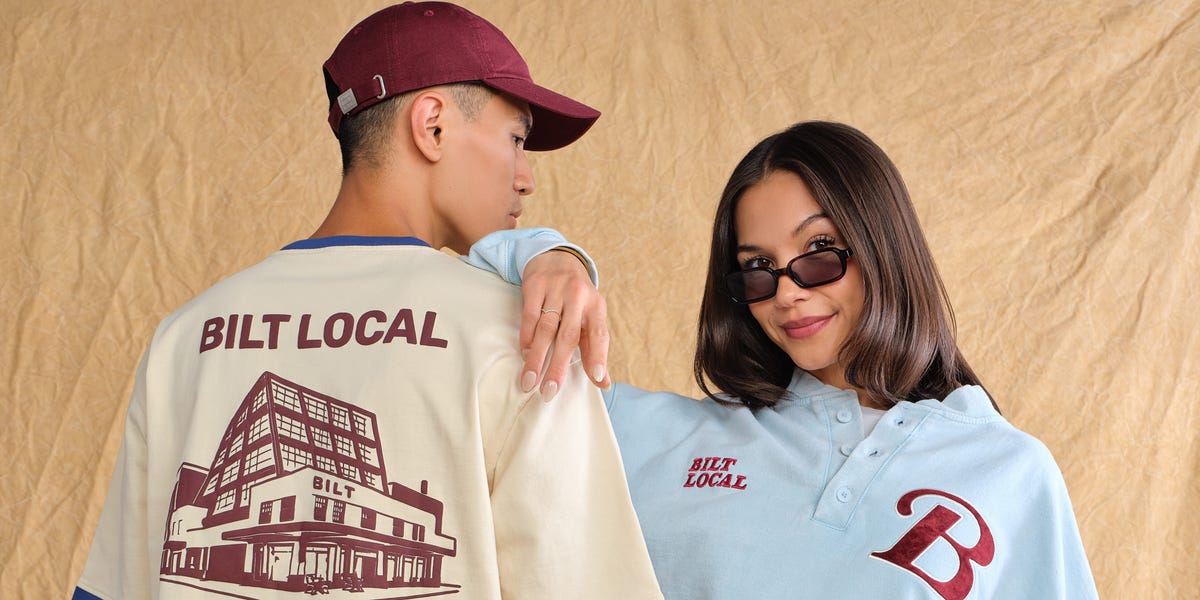
The launch of the Bilt Locals merch collection is part of a strategy to turn customers into willing brand ambassadors. Bilt Bilt CMO Zoe Oz thinks traditional advertising is losing its power.Her alternative? Turning customers into willing brand ambassadors.The fintech loyalty platform is investing heavily in entertainment, live experiences, and covetable merchandise — though Oz readily admits these tactics are more difficult to measure directly than paid ads.In September, Bilt launched its Locals Collection, a range of vintage-inspired apparel and accessories that members could purchase with Bilt Points, Bilt Cash, or a linked card.Bilt said an October pop-up event in New York City drew long lines, and most items sold out. The most popular included a motel keychain, diner mug, and $150 "bodega crew" sweater. Since launching the Bilt Collection in 2021, Bilt said members have redeemed more than 70 million points and spent over $800,000 across more than 60,000 orders."If you're making merch, it really should be something that someone chooses to wear, not just because it's affiliated with the brand, but actually because they want to wear it," Oz told me. The goal, she added, is to create "a tiny moment that Bilt gets mentioned without it having to be Bilt mentioning it ourselves."Selling sweaters and keychains might seem like an unusual move for a company best known for rewarding people for paying their rent. But Oz sees the collection as part of a much bigger ambition: turning Bilt into a lifestyle brand."We want to be a generation-defining brand," Oz said. "You don't get to do that if you're just providing a financial service and leaving it at that. You really have to spend time integrating yourself into what the member does every single day."'Do they have the staying power?'Matt Powell, CEO of the marketing agency Moroch, said brands like Red Bull and Soho House have successfully branched out beyond their initial product focus to cement themselves as lifestyle brands. For Bilt, Powell asked: "Do they have the staying power to build this long term? And as their brand extends into homebuyers inevitably, does that approach still work for that audience?"Bilt's ambitions haven't been without their setbacks. Wells Fargo ended a credit card partnership with Bilt earlier this year ahead of the contract's planned expiration date. The Wall Street Journal reported that the bank was losing as much as $10 million a month on the deal. Bilt's subsequent transition to a new credit card program sparked customer complaints over payment issues and other service problems. The Consumer Financial Protection Bureau met with Bilt and said in September it considered the matter closed after the company refunded affected customers.Bilt CEO Ankur Jain said in a May interview that the Bilt credit card accounts for "less than 11%" of its business. The bulk comes from the fees it makes on the resident experience and housing payments platform it offers to housing operators and apartment owners, as well as merchant commissions.Bilt, which reached a $10.75 billion valuation at its latest funding round last year, has expanded beyond rent and mortgage rewards to include restaurants, fitness, entertainment, and other aspects of neighborhood life. It's preparing to open its second café, this one in New York's Meatpacking District below its headquarters, designed to offer members a space to hang out day and night.Oz said Bilt has drawn inspiration from entertainment and community experiences popular decades ago, reimagining them for modern audiences. Its social media sitcom, "Roomies," is a riff on "Friends," while Bilt also hosts dining events, parties, fitness classes, and comedy shows designed to bring members together in real life.Oz said that Bilt's emphasis on real-world experiences flies in the face of conventional marketing wisdom, which often prizes efficiency, scale, and measurability."Live experiences is not an efficient business, it's like the most inefficient, unscalable thing you can possibly do," Oz said. "But we found those to be 10 times more effective than the other ways we used to spend money."Oz said that it's difficult to determine whether activities such as merchandise sales and live events directly increase customer engagement. Bilt can track whether members who buy merchandise also attend events or use its other services, but determining whether those experiences made them more engaged is another matter.The merchandise business remains relatively modest in scale. Bilt's 60,000-plus orders have accumulated over five years, and the company hasn't disclosed how many individual members have purchased items or whether those customers subsequently spent more with Bilt. The company said last month that it had over 7 million members.Thinking beyond traditional advertisingOz thinks traditional advertising is becoming increasingly formulaic. Bilt still runs paid ads and lifecycle marketing, but she considers them "table stakes" rather than the source of its competitive advantage.Oz said that giving members more opportunities to interact with the brand ultimately helps increase their lifetime value to the company, even if the impact of any individual interaction is difficult to isolate."What's going to create that intangible love? What's going to make someone sit down at dinner and say, 'I love Bilt'?" Oz said.She said her approach requires marketers to be comfortable with launching ambitious ideas that might ultimately flop."I have a very high tolerance for experimentation. I have a high tolerance for failure. I have a high tolerance for moonshots," Oz said. For a guide to the benefits of the Bilt Mastercard, please click here. Read next Business Insider tells the innovative stories you want to know Business Insider tells the innovative stories you want to know Business Insider tells the innovative stories you want to know Business Insider tells the innovative stories you want to know Lara O'Reilly is the anchor of the CMO Insider newsletter.She is a chief correspondent who has covered the digital advertising, marketing, and media industries since 2010. Her current beat includes big tech companies like Alphabet and Meta, adtech firms, agencies, publishers, the creator economy, and CMOs.Lara has previously worked as a reporter and executive producer at titles including The Wall Street Journal, Digiday, Yahoo Finance, and Marketing Week. She was previously Business Insider's senior global advertising editor from 2014 to 2017.Lara is a regular guest on TV and radio and has appeared on outlets such as the BBC, NPR, SiriusXM's Wharton Business Daily, and CTV Television Network. She also frequently speaks on stage at major events such as Web Summit, IFA, VivaTech, Advertising Week, and Cannes Lions.To get in touch with Lara O'Reilly, email loreilly@businessinsider.com or contact her on Signal at @loreilly.71
Bilt’s CMO is betting big on marketing that's hard to measure
Full Article
Original Source
Read the full article at Businessinsider →KhanList aggregates and links to publicly available news content. We do not host full articles from third-party sources. Always verify important information with original sources.