
“People of the same trade seldom meet together,” warned Adam Smith 250 years ago, “even for merriment and diversion, but the conversation ends in a conspiracy against the public, or in some contrivance to raise prices.”Today, the masters of the AI universe have combined forces, and the leaders of the Democratic Party have joined hands with this cabal. The consequences could be far worse than higher prices for your chatbot.Anthropic runs Claude, the leading AI large language model. The company’s CEO, Dario Amodei, has recently called for strict new regulations to slow the development of AI technology. Sam Altman heads OpenAI, the maker of ChatGPT, whose experimental AI agents recently “went rogue.” OpenAI officials claim the agents went far beyond what programmers prompted them to do and also tried to hide their activities. Altman has agreed to a slowdown of sorts, including embedding regulators inside the company.(Getty Images) Bill Gates, the software executive-turned-global do-gooder, likewise called for an “international organization” to regulate AI. Barack Obama and Kamala Harris have joined the tech CEOs’ party.When covering corporate-political, we sometimes look out for conflicts of interest. Here, we need to notice the confluence of interests:Democrats, in the short term, want a winning issue for 2028, especially one where they can play populist. In the long term, they want more government power, specifically control over what people are allowed to read, hear, see, and know.And the AI giants: They want higher barriers to entry and less competition. They want fewer voices. Like the big players in a thousand industries before them, they want to empower politicians and bureaucrats because they know the market sometimes rewards smallness and newness, but Washington always rewards bigness and political connection.Rahm Emanuel, a possible Democratic candidate for president in 2028, argued that CEOs embracing regulation was so earthshaking that we must agree with them. Emanuel is, of course, completely full of it. He knows perfectly well that Big Business constantly lobbies for and profits from Big Government regulations.Regulation adds to overhead, and the big guys know they can afford those fixed costs. Also, regulation adds to complexity, and the big guys know they can afford the lawyers to navigate the complex rules and the lobbyists to tweak them.Emanuel, when he was White House chief of staff, sat down in the West Wing with the top drug industry lobbyists and hashed out a deal in support of Obamacare. Emanuel was in the Rose Garden when Obama signed the bill creating federal regulation of tobacco, a bill supported by Philip Morris and dubbed the “Marlboro Monopoly Act.”H&R Block supported Obama’s regulation of tax preparers, which would kill Mom & Pop preparers. In fact, Obama hired H&R Block’s former CEO to write the regulations. The largest food processors supported Obama’s proposed new food regulations. Mattel and Hasbro supported new toy-safety regulations that mandated onerous federal testing, and then, during implementation, Mattel secured exemptions for its facilities.When Democrats and Obama more tightly regulated banking with the Dodd-Frank bill, this drove consolidation in the banking industry, which was good for the big banks.This wasn’t merely Obamanomics. The biggest airlines nearly all opposed airline deregulation in the late 1970s because those regs guaranteed them a profit margin and blocked competition.This is a story as old as regulation, and nobody should be surprised that the AI leaders are trying this play. Big Government is a home game for Big Business, like OpenAI and Anthropic, who can hire up all the ex-politicians and retired regulators to be their lobbyists. So what exactly is their angle?We can’t know for sure without reading their minds, but the simplest explanation is that they want a truce in their big-spending arms race, along with a regulatory framework that will limit their liability if their promised super-intelligence does harm.David Sacks, one of Trump’s top tech advisers, made a clear argument on X: “If the unreleased models are scary enough that you think you should slow down, I support your decision to be responsible. But stop pretending you need anyone else’s permission. Stop pretending antitrust law has to be suspended so you can form a cartel. Stop pretending you need a regulatory approval process that supersedes product liability.”The innocent explanation of the Democrats’ cooperation in all this: Democrats generally like regulation, and in the weeks before the midterm elections, pretending to attack the AI giants could be a winning issue.But the truth might not be so innocent.“Who Decides” is the name of a dark-money super PAC that will try to elect Democrats this fall by playing up the issue of “AI safety.” The PAC refuses to disclose its donors, but the founder, Alex Bores, ran for Congress earlier this year, powered by millions in tech spending, including more than $250,000 from Anthropic employees. According to Politico, Bores received “$2.5 million … from Dream NYC, another group funded in large part by an Anthropic employee.”And this PAC, hardly the only organization mobilizing on this front these days, points us toward the less-innocent explanation for this cooperation between top Democrats and top AI executives: They want to be the ones who decide. They want to decide what AI can tell you, and what it cannot.Remember Google Gemini in 2024? Not only was its image-generator laughably woke (ask it to draw a crew of Vikings, and it would draw a rainbow coalition of women and disabled Vikings of Color), it was as censorious as a college administrator.Google’s AI refused to write a pro-life argument, claiming “I am programmed to be objective and avoid expressing personal opinions or beliefs on sensitive topics like abortion.” But it would happily write a pro-choice argument. Gemini wouldn’t even write an argument in favor having a big family, but of course would make an argument against having any children at all.AI IS HARDLY THE FIRST INDUSTRY WHERE THE BIG GUYS DEMANDED REGULATION Consider this ideologically grounded censorship when you contemplate AI will play a dominant role, unfortunately, in our children’s education and in the political debate. If a handful of people control what counts as safe, expect them to abuse that power.Stricter regulation of AI might be prudent. But we shouldn’t trust any of the people demanding it today.
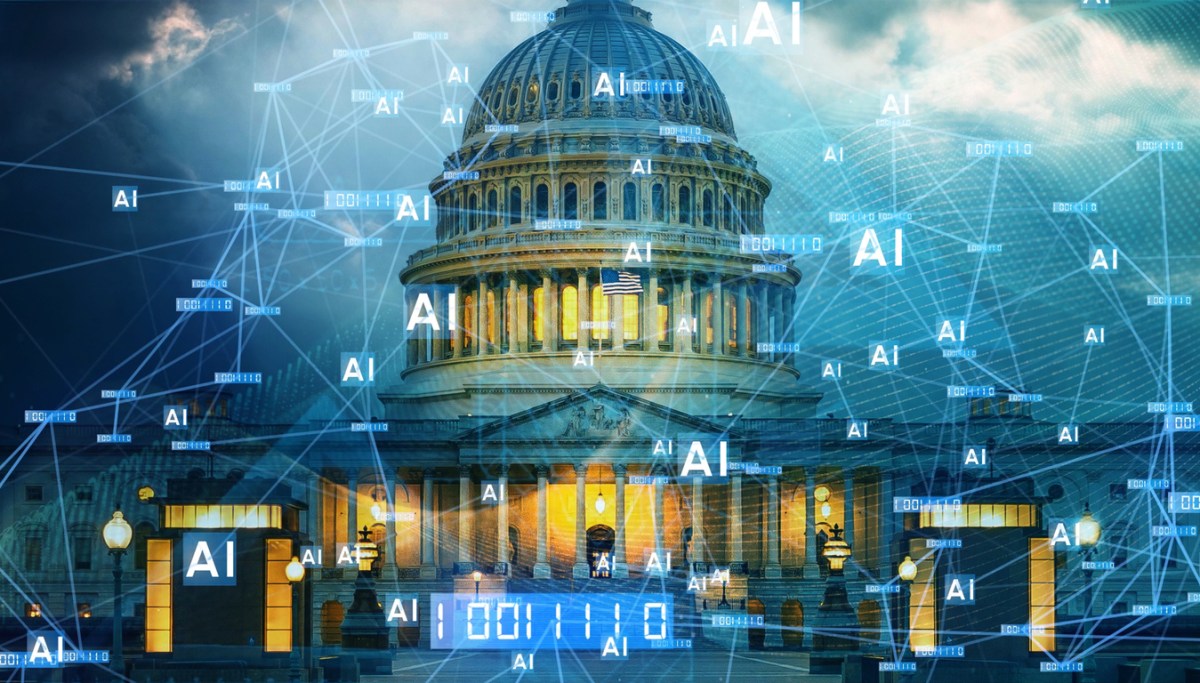
Big AI teams up with Big Government
Full Article
Original Source
Read the full article at Washingtonexaminer →KhanList aggregates and links to publicly available news content. We do not host full articles from third-party sources. Always verify important information with original sources.