
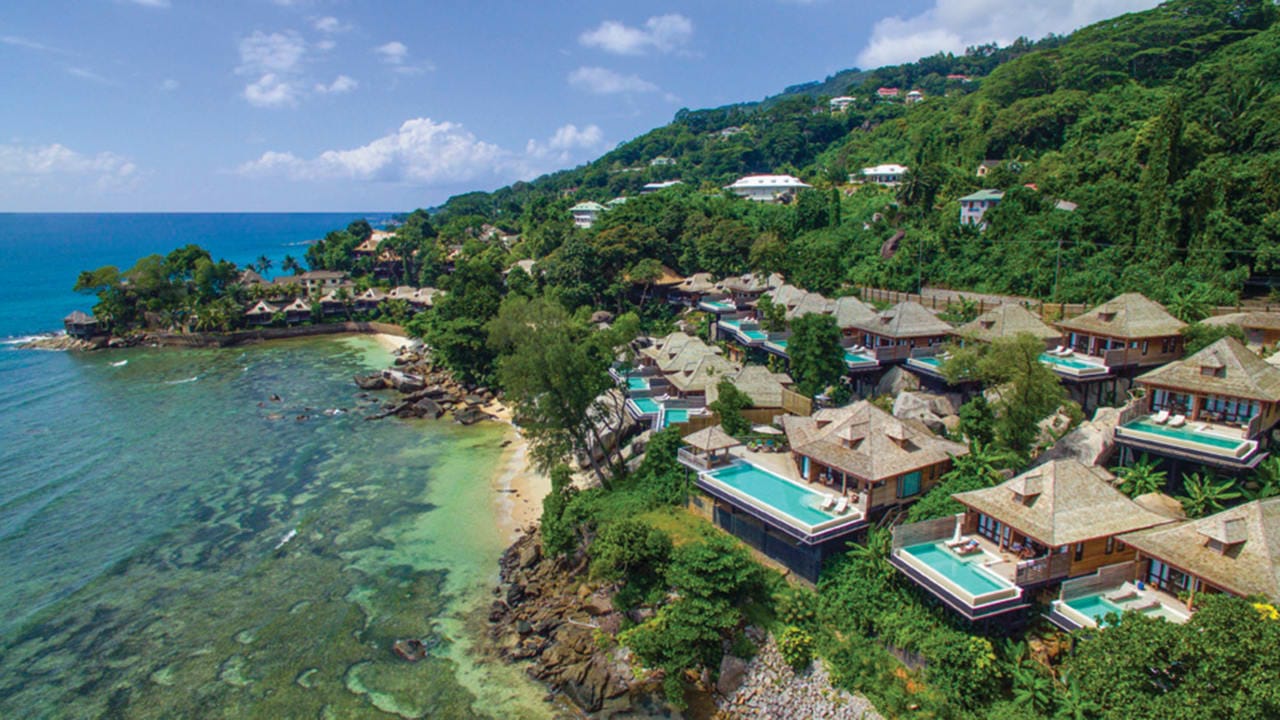
SEPTEMBER 13, 2026 17:18Updated: SEPTEMBER 13, 2026 19:05Massive granite cliffs plunging into the water, tropical forests, a unique coconut with an unmistakable shape, and some of the world’s most beautiful sunsets painted in deep red every evening. Just a six-hour direct flight away with Air Seychelles, wild natural landscapes await alongside luxurious hotel hospitality.At first light, we took off on the Air Seychelles flight, which resumed service from Israel this past August. The flight on a narrow-body aircraft is not cheap, but it compensates with full service: a blanket, a hot meal, a generous baggage allowance, and an entertainment app (SeyStream). Surrounding us were honeymooners, families, and a few celebrities. When Captain Eisenberg greeted us in Hebrew, it felt completely like home.There are also connecting flights to Mauritius. The schedule maximizes the vacation: you land at noon, and the return flight takes off at night, giving you an entire extra day.Landing at Mahé’s compact airport instantly immerses you in the island atmosphere. You step down the plane stairs straight into the tropical air, and within half an hour of efficient passport control service, you are already outside.Since taxis on the island are relatively expensive, we rented a car waiting for us at the exit. However, driving in the Seychelles requires concentration: you drive on the left, and the narrow roads are unforgiving, with no shoulders and bordered by ditches or rocks.ANSE SOURCE D’ARGENT (credit: Courtesy)What to do and see?The Seychelles is an archipelago. Mahé, the main island home to the airport and the capital, Victoria, is not large. You can base yourself in one hotel and take day trips within a couple of hours’ drive, including excursions to the islands of Praslin and La Digue.However, to vary the experience, we chose to split our stay between two Hilton boutique hotels: Mango House in the south of the island and Northolme in the north.The main attraction in the Seychelles is undoubtedly the sandy beaches framed by dramatic granite rocks. Beyond them, the island offers snorkeling cruises in the Sainte Anne Marine National Park, hiking trails, scenic viewpoints, a botanical garden, and a short tour of the capital, Victoria. Ultimately, this is a destination whose essence is resting and slowing down. It is an opportunity to enjoy the unique beaches, the pools, the spa, and one thing you absolutely must not miss: the island’s spectacular red sunsets.South Seychelles: Mango House Seychelles, LXR Hotels & ResortsWe began our stay at Mango House, a boutique resort in the former private home of Italian fashion photographer Gian Paolo Barbieri, named after the mango tree growing on the estate. At the reception, we were welcomed with drinks and lemongrass-infused towels while our luggage was sent to the room.The resort features just 41 rooms, suites, and villas, all surrounded by vegetation and facing the ocean. Our spacious room centered around a canopy bed facing the sea, with draped linen curtains. The large bathroom included a double sink, a wide rain shower, and a bidet. But what we loved most was simpler: lying in bed and listening to the waves.Mango House sits on a beautiful bay with three pools. We preferred the infinity pool beside the main building, which quickly became the heart of the resort. The building opens to the sea, with various workshops held throughout the day. In one workshop, I learned to fold towels into elephants and swans, while my partner worked out in the ocean-facing, air-conditioned gym. Chilled towels in the gym’s fridge were another small but thoughtful touch. In the afternoon, I visited Anpe Spa for a massage from a Balinese therapist in an ocean-facing room. It began with a foot-washing ritual and continued with a deep tissue massage, exactly what my muscles needed after the flight and hikes.At sunset, the hotel served a complimentary cocktail in the main house. It proved a pleasant opportunity to meet other guests from around the world. During the rest of the day, except at mealtimes, it almost felt as if the hotel were ours alone, offering quiet and space without any sense of crowding. The Seychelles sunsets were an added highlight, painting the sky in shifting shades of orange and red. There is a scientific explanation: proximity to the equator, high humidity, and clean air scatter atmospheric light, intensifying these warm tones.Guests also have access to snorkeling equipment and kayaks, including a transparent kayak. We took a short paddle to see the beach and the cliffs on which the resort is built. While less hydrodynamic than a standard kayak, the transparent model is remarkably photogenic.Mango House has four restaurants, all in the main building, serving Mediterranean, Asian, and Creole cuisine. We particularly liked the Creole restaurant, where we ate on the lower deck beside the beach by lantern light. On another evening, we opted for a private dinner on a secluded deck, with the table set in a small gazebo with subtle lighting and flowers. Two waiters attended to us while respecting our privacy, making it an ideal setting for a romantic evening, marriage proposal, or vow renewal.The location in southern Mahé makes it easy to combine a resort stay with exploring the area. From here, you can visit the island’s southern beaches, the Jardin du Roi botanical garden, or nearby hiking trails, including one that leads to a natural rock pool. Beaches worth including are Petite Anse, Anse Intendance, and Anse Takamaka, each with its own landscape and character.North Seychelles: Hilton Seychelles Northolme Resort & SpaWe spent the second part of our vacation at Hilton Northolme, a small and intimate adults-only hotel with a secluded, quiet atmosphere. Located in northern Mahé, it sits on a hillside among the granite rocks overlooking Anse Beau Vallon, one of the island’s most impressive beaches. It is also one of the Seychelles’ oldest hotels, originally established in the 1930s. Among its guests was author Ian Fleming, who is said to have drawn inspiration from the hotel for one of his James Bond books.The hotel is designed as a resort village, with private Creole-style wooden villas built on stilts among granite rocks, tropical vegetation, and the sea. All villas face the ocean and offer exceptional privacy. We stayed in a spacious villa with a private infinity pool, a huge bathroom with views of the pool and sea, a Jacuzzi tub, and a deck with outdoor seating. A yoga mat and fitness equipment were even waiting in the walk-in closet. The villa offered so much privacy and was so enjoyable that we found ourselves reluctant to leave it. One evening, we ordered a Floating Aperitivo: a floating tray of drinks and canapés delivered straight to our private pool just in time for sunset. Sitting in the pool with a drink in hand as the sun set over the sea was a particularly enjoyable way to spend the evening.Still, there were plenty of reasons to explore the rest of the hotel. It has a beautiful infinity pool surrounded by sunbeds and cabanas, as well as several small coves with sandy stretches between the granite rocks. At the adjacent marine center, guests can rent snorkeling gear, kayaks, and SUP boards. The center also supports marine conservation, including a coral restoration project on an artificial reef. We went snorkeling there with a hotel guide, and seeing the restored corals alongside vibrant marine life was a highlight of our stay.Later, my partner headed to the well-equipped gym with sea views, while I went to the Eforea Spa, built directly on the rocks. My treatment took place in a sea-facing room, accompanied by the sound of the waves. We also discovered the resort’s botanical trail, called Tropical Treasures, a quiet garden walk winding along the hillside. Information signs and QR markers explain the plants and trees along the route, including native species such as takamaka and coco de mer, as well as their ecological and traditional uses. One tree that particularly caught my attention was the Cannonball tree, whose large, fragrant flowers grow directly from the trunk alongside the heavy, round fruit that gives it its name.The culinary offering is another part of the experience. Breakfast at Mahé restaurant combines a varied buffet with made-to-order dishes such as Eggs Benedict and Florentine, omelets, sandwiches, desserts, and daily specials. The bar also serves lighter fare, including burgers, while the restaurants host themed evenings such as Spanish tapas and Italian nights, alongside live music at the bar. The day can end on the lower deck with a sunset cocktail overlooking the sea and granite rocks.Northolme’s location in northern Mahé also makes it a convenient base for visiting Victoria. In the capital, we stopped by the iconic clock tower before continuing to Arul Mihu Navasakthi Vinayagar, the island nation’s only Hindu temple. Its colorful South Indian-style entrance tower, decorated with dozens of mythological statues, is impossible to miss. If time allows, you can also browse the local souvenir stalls and visit the Sunday market.The area also features botanical gardens and nature trails. The Copolia Trail is a one-kilometer walk through tropical forest, with a challenging 500-meter ascent. In the high humidity, the climb feels demanding, but after about 45 minutes, it rewards you with a viewpoint overlooking the marina and surrounding islands. Another scenic stop is Mission Lodge, a heritage site established in 1876 to rehabilitate freed African slaves. Among the archaeological remains is a gazebo overlooking the landscape, where Queen Elizabeth II reportedly sat for tea during her visit to the island.Praslin, La Digue IslandsA visit to the Seychelles is incomplete without La Digue. The journey to the island takes about two hours by ferry, or 15 minutes by Air Seychelles to Praslin, followed by another 15-minute ferry ride. If taking the Praslin route, it is worth combining the transit with a visit to Vallée de Mai, home to the famous coco de mer palm and its remarkable fruit. As the largest seed in the plant kingdom, the coco de mer, which can weigh up to 25 kg., is known for its distinctive shape, resembling human buttocks. It has become one of the most recognizable symbols of the Seychelles.As soon as you step off the ferry in La Digue, you can feel the island’s different pace. Small and mostly flat, it is an island of bicycles, which can be rented near the port. After an early flight and breakfast at a local café, we set off for a leisurely ride. The route passes through L’Union Estate, a historic site with old workshops and vanilla plantations. Along the way, we also encountered the Seychelles’ giant Aldabra tortoises, stopping to feed them, before continuing toward Anse Source d’Argent.The beach is considered one of the world’s most beautiful, and it is easy to see why. Massive granite formations scattered along the shoreline create a dramatic landscape. You can spend hours here on the sand, but for me, one of the best ways to experience it was from a transparent kayak. Paddling between the rocks brings you closer to the formations and offers a different perspective of the beach. We also combined the kayaking with drone photography by Robert Agnes from La Digue Transparent Kayak, leaving us with not only the experience itself but also capturing unforgettable aerial photos and videos.The writer was a guest of Air Seychelles, Hilton, and La Digue Transparent Kayak.Follow us on Google
Beyond the postcards: The Seychelles’ wild magic - review
Full Article
Original Source
Read the full article at Jpost →KhanList aggregates and links to publicly available news content. We do not host full articles from third-party sources. Always verify important information with original sources.