
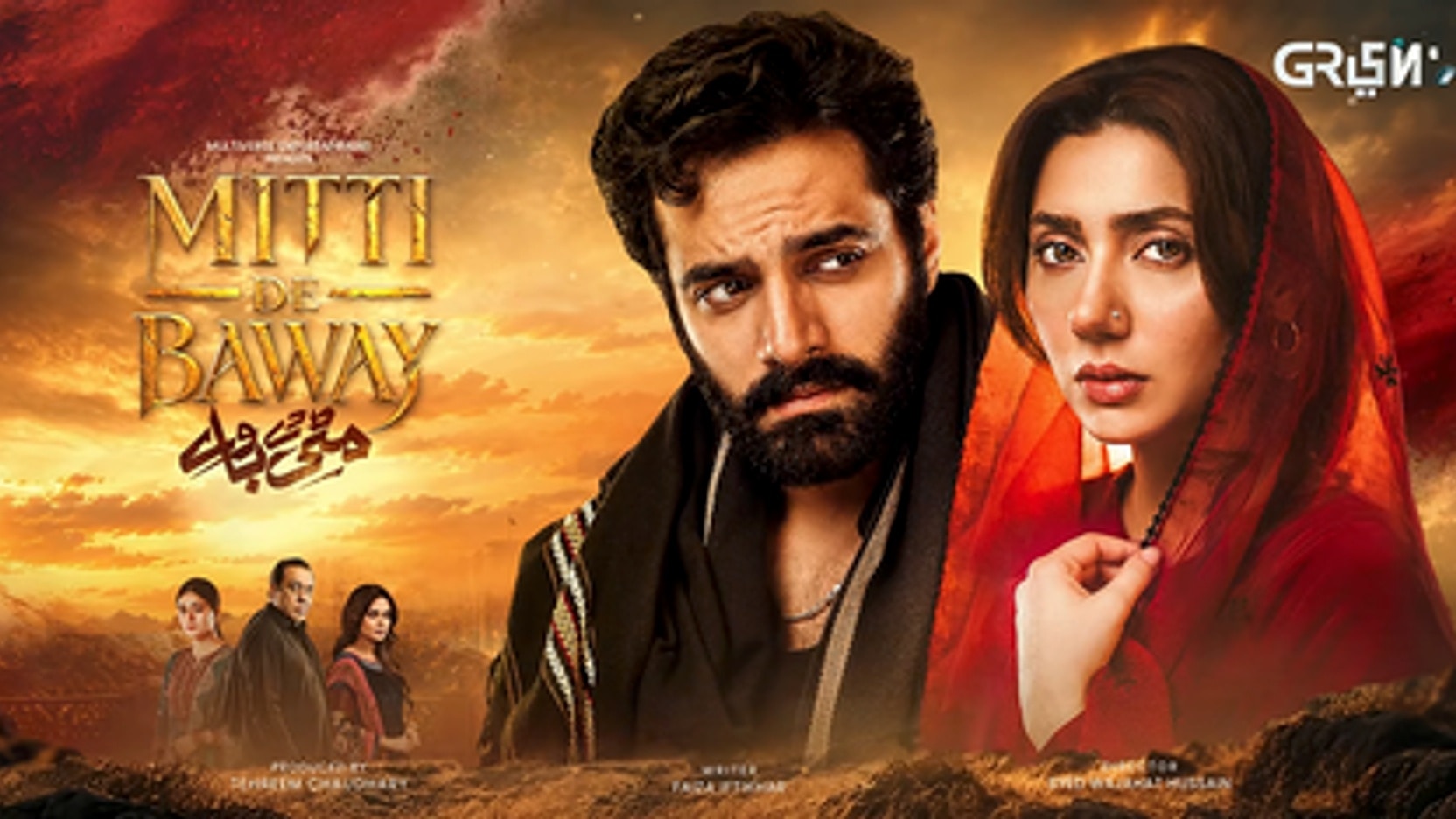
From Reshma and Nusrat Fateh Ali Khan to Dar-e-Nijaat, Mitti De Baway and Punjabi indie music, a new generation is discovering cultural kinship beyond political hostility.What makes a Pakistani television drama resonate with young Indian audiences? Why are Punjabi songs and Pakistani music finding listeners across the border, despite strained political relations?Something interesting is happening in the way young Indians are discovering Pakistani popular culture. While political relations remain strained, Generation Z on both sides of the border is finding common cultural references through music, television, fashion and social media. The growing Indian following for Pakistani dramas such as Dar-e-Nijaat and Mitti De Baway, alongside the circulation of songs such as Alfaz and Paar Chhanave, reflects how digital platforms are bringing Pakistani entertainment to a new generation of Indian audiences.For many young listeners and viewers, cultural discovery now happens through streaming platforms, reels and online conversations, often outside traditional channels of cultural exchange. From Reshma to Rahat: A shared musical inheritanceThis cultural connection is not new. In 1983, Reshma's haunting Lambi Judaai in Subhash Ghai's Hero became an Indian anthem of longing. Mehdi Hassan's ghazals, Ghulam Ali's Chupke Chupke Raat Din and Nusrat Fateh Ali Khan's extraordinary qawwalis crossed borders and found appreciative audiences in India.Later, Bollywood embraced Atif Aslam and Rahat Fateh Ali Khan, whose voices became inseparable from Hindi cinema's romantic imagination. Pakistani musicians were not perceived as outsiders; their songs became part of India's emotional landscape. Despite wars, diplomatic breakdowns and restrictions on artistic collaborations, music from across the border has continued to find listeners in India at different points in time. The reason lies partly in Urdu poetry, Punjabi folk traditions, Sufi music and Hindustani classical influences belonged to a cultural inheritance older than Partition.What has changed is the medium, the audience and, increasingly, how audiences discover and engage with this music.Pakistani dramas, Punjabi beats and the Gen Z connectionPakistani television, once introduced to Indian audiences through channels such as Zindagi, has found a new life on digital platforms. Earlier successes like Humsafar and Zindagi Gulzar Hai paved the way for renewed interest in Pakistani television among younger viewers.Dar-e-Nijaat, exploring faith, redemption and social contradictions, and Mitti De Baway, featuring Mahira Khan and Wahaj Ali in a Punjabi narrative rooted in class, love and revenge, are attracting attention across the border now. Their appeal can be seen in the conversations around their storytelling, performances and cultural settings.Music has travelled even faster. Ali Sethi and Shae Gill's Pasoori became a cross-border phenomenon, while artists such as Abdul Hannan and Hasan Raheem have helped shape a contemporary Pakistani sound. Songs such as Alfaz and Paar Chhanave evoke the wider Punjabi and Urdu musical vocabulary that resonates with young listeners across the subcontinent.For Gen Z, a song's nationality is often less important than its melody, lyrics and emotional appeal. A reel created in Karachi can become a trend in Chandigarh; a Punjabi lyric from Lahore can find its way into an Instagram story in Lucknow.Social media has made cultural discovery possible without the need for formal collaborations, concerts or official cultural programmes.The shared cultural DNAThe connection extends beyond entertainment. Lucknow's nawabi tehzeeb, Urdu poetry, chikankari, traditional silhouettes and culinary traditions share historical roots with Lahore's cultural aesthetics. Punjabi folk music predates the Radcliffe Line and continues to resonate across the region, while Sufi traditions continue to connect communities across the subcontinent.Pakistan’s regional cultural traditions, fashion and indigenous music offer another lens through which audiences can explore the country's diverse heritage. Its film and television industries, despite economic and institutional challenges, are experimenting with new subjects, visual styles and storytelling formats.Young Indians, meanwhile, are increasingly encountering Pakistani fashion, wedding aesthetics, traditional jewellery and digital creators. The exchange is not entirely one-way: Indian cinema, music and popular culture continue to influence Pakistani audiences.These cultural overlaps offer younger audiences familiar points of reference, from humour and slang to fashion, music and digital trends. They also show how popular culture can travel beyond the geographical and political boundaries with which it is often associated.When culture challenges political narrativesThis cultural interest, however, needs to be viewed in context. Terrorism, national security concerns, historical grievances and diplomatic mistrust remain serious realities. Cultural affinity cannot substitute for political accountability or national security.Nor does enjoying a Pakistani drama necessarily imply sympathy for Pakistan's political establishment. Young audiences can separate a country's people and artistic achievements from its government's policies.It is a distinction worth making when examining how audiences engage with entertainment from across the border.Earlier cultural exchanges depended heavily on Bollywood producers, music companies and television networks. Political tensions could interrupt collaborations and limit opportunities for artists to work together. Today, algorithms, streaming platforms and social media communities have created additional avenues for audiences to discover cultural content.These digital avenues have expanded the ways in which people encounter entertainment from across the border, although access to and visibility of such content can still be shaped by political and regulatory restrictions.The same platforms can host sharply contrasting conversations: political disagreements on one side, and discussions about songs, shows, fashion and performers on the other.A generation writing its own historyFor decades, India and Pakistan have largely viewed each other through Partition, wars, cricket and political confrontation. Gen Z is also encountering another dimension of this relationship through everyday cultural consumption.Unlike the generations that experienced Partition, today's young people inherit its memories rather than its direct trauma. Their cultural choices are increasingly shaped by digital discovery alongside the social and political contexts in which they grow up.An interest in Pakistani music, television or fashion does not necessarily translate into a political position. It can just reflect curiosity about stories, sounds and styles that audiences find familiar or appealing.From Reshma's Lambi Judaai to Nusrat's qawwalis, from Atif Aslam's Bollywood melodies to Dar-e-Nijaat, Mitti De Baway and contemporary Punjabi music, the cultural conversation has never entirely stopped. It has evolved with changing platforms and audiences, with digital media introducing a new generation to cultural works that might otherwise have remained unfamiliar to them.Popular culture cannot resolve the political differences between India and Pakistan, nor should its influence be overstated. But the growing interest in Pakistani entertainment among young Indians offers a useful insight into how cultural connections continue to find audiences, even when official relations are strained.For Gen Z, discovering a Pakistani song or television drama may not be a statement about politics or borders. It could just be about finding a story worth watching, a melody worth repeating or a cultural reference worth sharing. And that, in itself, is a story worth exploring.- Ends(The author is a film policy expert and media commentator.)
Beyond borders: How Gen Z is rewriting the India-Pakistan cultural story
Full Article
Original Source
Read the full article at Indiatoday →KhanList aggregates and links to publicly available news content. We do not host full articles from third-party sources. Always verify important information with original sources.