
A good cutting board is an essential kitchen tool that provides a layer of protection between your knife and your countertop. But the best cutting boards do more than just protect your counters during food prep—they provide a stable surface when you’re vigorously chopping and act as a protective surface that prevents prematurely dulling the blades of your kitchen knives. Cutting boards come in a variety of materials: plastic, wood, rubber, even glass and metal for inexplicable reasons. After testing dozens of boards of all sorts of materials over the course of six years, we have found five favorites. Read on to find out which might be best for you as well as how we tested and what we look for in the cutting boards we want to use every day.The best wooden cutting board overall: Boardsmith Maple End-Grain Cutting BoardBest wood cutting board for most people: John Boos Maple Wood Edge-Grain Reversible Cutting BoardBest board to prep and serve: Sonder Los Angeles Alfred End Grain Walnut Cutting BoardBest mini cutting board: Material Midi MK Free BoardBest plastic cutting board: Oxo Good Grips Plastic Utility Cutting BoardAn easy-to-sanitize rubber board: Yoshihiro Hi-Soft High Performance Cutting BoardNew in this update: After much consideration and years of testing different boards, we decided to shift our top recommendations for wood boards to feature only end-grain options. They’re easier on knives and more beautiful to keep on the counter. And our new top pick is reasonably priced as end-grain boards go. For more on what makes end- and edge-grain boards different, click here. And if you’re looking for a quality (but truly inexpensive) wood board, we’d encourage you to look at these two Boos boards. They’re edge-grain, so they’ll wear your knives more quickly, but Boos makes almost universally great cutting boards.The best wooden cutting board overall: Boardsmith End-Grain Maple Cutting BoardBoardsmithMaple End-Grain Cutting Board (18" x 12")Pros:Super stableGentle on knife bladesBeautiful enough that it never needs to be put awayCons:Requires upkeep a plastic board does notHigh priceMaterial: Wood (maple)Juice groove: YesSize: 18" x 12" x 2.5" (with the feet down), 18" x 12" x 2" (with the feet facing up)More sizes available: YesDishwasher-safe: NoA butcher block board from Texas’s Boardsmith won’t come cheap, but we think a large and sturdy wood cutting board is a worthy kitchen investment. A good wood cutting board can last decades and decades, and since it will likely live permanently on your counter, function as a key aesthetic component of your kitchen. Our editors have used this heavy-duty piece for over a year in their home kitchens, and even after daily use, it shows little to no wear and only minimal staining.What we love: The craftsmanship on the board is apparent as soon as you take it out of the box. The offset pattern of the individual pieces of wood is striking (as it is on most end-grain boards). And its construction feels smooth and solid.As an end-grain board, it’s easy on knife blades, leaving them sharper than a less expensive edge-grain board. The real highlights, beyond the pure aesthetics, are in the small design features, though. Senior shopping editor Noah Kaufman has been using it in his home kitchen since June of 2025 and has found it the most stable board he’s ever used. That’s thanks to the addition of four grippy silicone-tipped feet on one side (you can order a Boardsmith without the feet, but you’d be giving away that stability). Those feet also raise the board up a little higher on the counter—which prevents the underside from retaining moisture and warping—and for Noah, they elevate the board to a very comfortable cutting height. It’s also reversible, with an effective, though not too deep, juice groove on the side of the footed side.Boardsmith’s end-grain boards are very customizable. They come in four sizes (we tested the 18" x 12" x 2", but the largest—24" x 18" x 2"—would make a beautiful always-out piece), three wood types (in addition to the maple, we tried walnut and cherry), and you can opt for features like juice and finger grooves. The feet are also optional, though they’re included by default, so you have to check a box if you want a board without feet.What we’d leave: Again, this board is heavy, which makes it sturdy, but also a bit of a chore to clean. Because it’s wood, it also requires some upkeep in the form of oiling and buttering (the brand’s Board Butter has kept the surface of the Noah’s board in tip-top shape through months of use). Finally, while the feet are a vital feature, they do make the board a little less attractive if left on the counter with the juice groove facing up. But using the groove is a less frequent use than regular slicing and chopping, so you’ll be more likely to leave it feet side down—or at least turn it back over after you’re done cutting and cleaning.In the long run: With long-term testing of a full year, the Boardsmith has stood up in a way that justifies its high price. It’s held on to minimal stains, and with a bit of oil and wax every three to four weeks, the board looks as beautiful as it did when it arrived.Best wood cutting board for most people: John Boos Maple Wood Edge-Grain Reversible Cutting BoardJohn Boos & Co.R-Board Series Rectangular Wooden Maple Cutting Board, 18”x12”Pros:Thick, durable maple woodVery nice cutting surfaceModern lookCons:HeavyHarder to clean and sanitize than other materialsMaterial: Wood (maple)Juice groove: NoSize: 18" x 12" x 1.5"More sizes available: YesDishwasher-safe: NoBoos boards, as they’re commonly called, are pretty much the gold standard for wood cutting boards, and this relatively affordable maple cutting board is a dream to cut on.What we love: Though maple is a hard wood, the cutting surface is smooth and has the perfect amount of give. In our testing, it seemed to almost embrace the knife blade with each chop. The board didn’t retain any food odors and it was easy to hand-wash (never put a wood board in the dishwasher!). Even beet juice disappeared after a good cleaning.Boos Blocks come in many different sizes, we’ve found that the 18x12" size is just right for most home kitchens. This board is from the brand’s R-Board series, and it’s substantial without being too big. There’s plenty of room to carve a roast chicken, but it’s small enough to slide into the cabinet where you keep your sheet pans (a half-sheet is 18x13") as long as you don’t have too much else in there. At 2.25" it’s the tallest (thickest) cutting board we tested, and it will add significant height to your cooking zone, which is something shorter home cooks should always keep in mind when choosing a chopping board.What we’d leave: Though not necessarily a negative, this board is on the heavy side (10 lb.), and it does require frequent oiling to keep it in tip-top shape. Boos recommends their proprietary Mystery Oil and Board Cream, and if you buy directly from the brand, you can bundle the care products with the board.Best board to prep and serve: Sonder Los Angeles Alfred End Grain Walnut Cutting BoardSonder Los AngelesAlfred Cutting BoardPros:End-grain constructionGrippy feet on both sides of the boardJuice groove and built-in compartments for prepped foodAmerican-made using American woodBeautifulCons:Requires upkeepStill pricier than plastic or rubber optionsMaterial: Black WalnutJuice groove: YesSize: 17" x 13" x 1.5"More sizes available: YesDishwasher-safe: NoWhat we love: Sonder’s board is beautiful, and like the Boardsmith, it features end-grain construction, which is easier on knives because they slide between the wood fibers, avoiding friction with the hard surface. End-grain boards also “self-heal,” which means that the fibers come back together after having been sliced—and I found that after rigorous use in a week of endless chopping tests, this board came out looking as beautiful as it had when it came out of the package. This board is made of American walnut and constructed in the US.The Sonder board also has some clever design elements: It’s hard to find an end-grain board that features a juice groove at this price point (the Boardsmith below, for example, costs almost $100 more). Flip the board over, and on the other side, it features three carved-out compartments, so you can slide chopped food to the side as you prep, keeping ingredients contained, separated, and out of the way. Those compartments can also be used for a fun charcuterie board setup: Use them to hold sauces and condiments or as a landing place for olive pits. Both sides of the board feature grippy rubber feet, and I found that this board stayed steady and level on the countertop even during heavy-duty chopping.This board was less cumbersome to take to the sink and hand wash than many of the large end-grain boards we tried. It has ergonomic handles carved into the sides, which makes for easy transport despite its heft and size. And because it’s a dark-colored wood, it shows less sign of staining than other wooden boards.What we’d leave: There’s not much fault to find in Sonder’s board beyond the standard caveats that an end-grain cutting board requires maintenance in the form of regular oiling and must be hand-washed. The prep grooves are a nice feature, but they aren’t as useful if you’re used to using a bench scraper, since it can’t fit in them. At $179, the Sonder is a bit pricey, but the benefits of end-grain over a cheaper edge-grain board are worth the bump up. If you’re concerned about price primarily, you should opt for the plastic Oxo board recommended below. Because of the carved-in prep containers on one side of the board, you have limited chopping space (but you always have the option to use the other side, which offers a full surface).Best mini cutting board: Material Midi MK Free BoardMaterialThe Midi MK Free BoardPros:Lightweight and easy to maneuverGrips to prevent movement while choppingEco-friendly alternative to conventional plasticComes in cute colorsCons:Only available in a small sizeMaterial: Bioplastic materials including clay, without fossil fuelsJuice groove: NoSize: 13" x 9.25" x 0.28"More sizes available: NoDishwasher-safe: YesWhat we love: Senior reviews editor, Olivia Tarantino, owns three types of cutting boards (wood, composite, and the MK Midi), and the Midi is the one she grabs for anything short of a full dinner. “It’s closer to midsize than small, which makes it more versatile than a mini board that’s only good for smashing garlic. I can dice a whole onion, slice a tomato, and even fit a mise en place of scallion, ginger, and garlic. Because it’s nonporous, it’s my pick over wood for wetter ingredients, since I can toss it in the dishwasher when I’m done,” she says, noting that she owns the white color and there’s no staining after eight months. The one downside worth noting is that the surface is a bit harder, which can be tougher on knives.Adding a smaller board like this to a kitchen that already has a large wood cutting board can help for small prep work like slicing fruit, vegetables, or ingredients like garlic without having to clean your big board in between.What we’d leave: We wish that Material would add feet to the larger version of the board. If it’s all you’ve got, a small cutting board can be frustratingly limiting. Also, after years of working with Material’s cutting boards in their homes, our editors noted that they will show visible wear and tear in the form of slice marks and small stains. This is inevitable for any plastic (or similar) cutting board.Best plastic cutting board: Oxo Good Grips Plastic Utility Cutting BoardOxoGood Grips Plastic Utility Cutting BoardPros:Doesn’t slip aroundDouble-sided with juice grooveNonporous constructionCons:Doesn’t have the same curb appeal as a wood cutting board (no color options)Plastic is prone to damagePlastic is not as ideal as end-grain wood or rubber for preserving knife sharpnessMaterial: PlasticJuice groove: YesSize: 14.75" x 10.4" x 0.5"More sizes available: YesDishwasher-safe: YesWhat we love: This plastic cutting board from Oxo is very popular in the BA Test Kitchen. It’s budget-friendly and dishwasher-safe and comes with a juice groove. At 14.75" x 10.4", it’s a good size for meal prep, the plastic cutting surface is nonporous, and silicone strips run the length of both short sides to help keep it in place on the counter when cutting. It’s also reversible with one side offering a channel to catch meat juices.What we'd leave: The Oxo isn’t very attractive, so you wouldn’t want to use it as a serving board. Also, the longevity of a plastic board like this is only a couple of years, and if you chop too rigorously, the board has been known to shed plastic particles. If you are concerned about plastic use in the kitchen, this isn’t your board.An easy-to-sanitize rubber board: Yoshihiro Hi-Soft Cutting BoardYoshihiro CutleryYoshihiro Hi-Soft High Performance Professional Grade Cutting BoardPros:Incredibly durableDoesn’t slip aroundRubber is one of the best materials for preserving your knives.Cons:Doesn’t have the same curb appeal as a wood cutting boardMight stain a little more easily than a plastic cutting boardPriceyMaterial: RubberJuice groove: NoSize: 17.3" x 9.8" x 0.8"More sizes available: YesDishwasher-safe: NoRubber cutting boards are seen more often in professional kitchens than home ones, but if you’re looking for something large and durable, and you don’t want to have to bust out your knife sharpener regularly, consider this Hi-Soft rubber board by Yoshihiro. It’s very knife-friendly, and cutting on it feels nice. It stays in place on the counter, and unlike another rubber board we tested, it doesn’t have a rubber tire odor.What we love: There are a couple of reasons chefs like food-safe rubber cutting surfaces. For starters, because rubber has a little give, the cutting surface flexes ever so slightly to the knife edge versus wearing it down like a hard surface would. Both synthetic and natural rubber are also nonporous, so they’re easier to sanitize than wood boards and are often used by sushi chefs for that reason (conversely, wood cutting boards are actually health-code violations in some cities).What we'd leave: Though sanitizing the surface is easy, large rubber boards can be harder to wash because, in addition to being big, they are also heavier than, say, plastic, and the rubber material must be washed by hand. Rubber cutting boards can also hold on to stains more easily than plastic.In the long run: With its light color this board has shown a bit of staining and evidence of knife blades running across it. But all things considered, it’s cleaned up very well and proven an excellent companion to an always-out end-grain wood board.How we tested cutting boardsBefore getting the knives out, we researched chopping boards and narrowed down a selection that included a wide range of plastic, rubber, and various types of wood boards that ranged from about $10 to almost $300.To assess the boards’ durability and stability, testers chopped a pound of carrots, diced a large onion, and minced fresh ginger. Testers also cut steamed beets on each board so they could see how much (or how little) each board held on to stains. We chopped lots of garlic on the boards and watched out over the course of the days and weeks of testing for odor retention on the boards. Finally, we washed each board according to the directions and oiled the wood boards that called for it.Here is an example of the kind of staining you can expect with a wood cutting board. A good scrub with some coarse salt and lemon juice will help take care of this. Megan WahnWhat makes a good cutting boardThese are the qualities we looked for in the best cutting boards.We recommend that home kitchens have one large cutting board, ideally around 20" x 15". Additionally, it’s useful to have some supplemental smaller plastic or wood cutting boards (in the 16" x 12" and 12" x 8" ranges) that are easier to transport to the sink for washing or that fit in the dishwasher. You’ll have your bases covered when you have a large board that can take on any large cooking prep task without risk of vegetables flying all over the kitchen, or upon which you can plop a giant piece of meat for carving—but also some small boards that can be used daily for lighter prep, eliminating the need for a daily full-scale clean of your large board.During testing, I also looked out for board height; if your board is too tall, it adds too much height to the counter, making it awkward for shorter home cooks to get a good angle when cutting. A too big or too heavy board is also hard to clean and move.We recommend rubber, wood, and plastic cutting boards. There’s a trade-off involved in selecting the right hardness level for a cutting board. A material that’s too hard will have you busting out your knife sharpener more often than you should, while a board that’s too soft will end up with cut marks so deep you may no longer have a smooth surface—and it will be harder to clean and sanitize. So you want a durable surface that will feel nice to cut on and have some give. For wood cutting boards, we prioritized boards made with American materials. That’s particularly important because wood sourced abroad is often less sustainably sourced, first because it needs to be shipped overseas, and second because the US has more rigorous forestry regulations than some other countries. For a pro-and-con comparison of the various cutting board materials, scroll farther down the page.If the board had a special feature, like grippers or a juice channel, we evaluated how functional the features actually were. We measured the amount of liquid the juice grooves held and used any prep compartments.Other cutting boards we likedJohn Boos & Co. Chop-N-Slice Reversible Block Cutting BoardJohn Boos & Co.Chop-N-Slice Series Rectangular Wood Maple Cutting Board, 18" x 12"If you have your heart set on a Boos Board but don’t have a lot of space or want to spend a lot of money, this reversible board from the John Boos Chop-N-Slice series is a high-quality board with a pretty low price tag. It’s made of durable maple wood and arrives oiled (it only barely held on to stains from steamed beets). It’s only 1.25" thick, which contributes to its low price. Though it’s not too big or heavy, it has handle grooves on both ends, which can be helpful if you’re carrying a loaded board. Right out of the box, we felt the board was a little rough, but with a touch of seasoning, it significantly improved.John Boos & Co. Rectangular Wood Maple Cutting BoardJohn Boos & Co.Rectangular Wood Maple Cutting BoardThis end-grain cutting board was a joy to chop on thanks to its soft and responsive surface—it genuinely felt the best of any of the wood boards we tested. Chopping feels ergonomic and your knife feels protected. The board is also beautiful and would stand proudly in a permanent place on anyone’s kitchen counter. When it arrived, it felt dry and chalky, so it immediately needed to be oiled and treated, whereas the winning end-grain boards felt more ready to go out of the box. And unlike the Boardsmith and Sonder boards, it doesn’t have a juice groove.It also seemed slightly uneven or warped from the beginning: The board wobbled back and forth ever so slightly during rigorous chopping, making a slight clanking noise. This was almost imperceptible, and since we’ve used Boos boards over the years and loved their stability and durability, we think it’s likely the flaw of the particular board we tested. So we’d still absolutely recommend Boos end-grain boards.Ironwood Gourmet Large End-Grain Prep Station Acacia Wood Cutting BoardIronwood GourmetLarge End Grain Prep Station Acacia Wood Cutting BoardThis inexpensive end-grain board comes highly recommended by other review sites, and at $72 at the time of writing, it’s an excellent value for an acacia wood board. Its dark color makes it resistant to showing stains, and after being put through its chopping paces, it had no scratches. However, the board did arrive with a visible scratched-up patch on its lower right corner. Even though it was an end-grain board, I didn’t find it as soft or responsive as the Boos above or either of our winning boards. And the wood isn’t sourced domestically. Still, this is a solid value option.TeakHaus Heavy-Duty Reversible BoardTeakhausHeavy-Duty Reversible BoardIf you’re looking for a large and inexpensive board, this 20" x 15" option from TeakHaus is a good choice. The high-quality edge-grain teak looks great, and the darker wood won’t show stains like lighter-colored wood boards do. Cutting felt comfortable, and one side of this reversible board features a juice groove. It’s an inch-and-a-half tall, and that combined with the size makes it pretty bulky. Also, the smell of ginger lingered on this one a bit after we hand-washed it.Prepwell Chef Station MaplePrepwellChef Station MapleThis Kickstarter-funded design isn’t just a cutting board; it’s a whole modular prep station. The cutting board has magnetic sides, onto which snap carved wood prep bowls fitted with stainless-steel containers (or silicone liners, depending on which package you opt for). Those bowls also stack nicely on top of the board for storage, and everything can be arranged and rearranged at the cook’s convenience.The design here is clever: It’s satisfying to move the board and containers around because everything fits together in a delightful little puzzle, and attaching the prep bowls produces a satisfying click. The magnetic connection is very secure, and it’s helpful and convenient to have little prep bowls available for sweeping away items as you chop them.You can select various attachable container sizes, and there’s even a large one that runs the whole length of the cutting board that can be used to set up a dredging station for chicken cutlets. You can also buy lids that fit the containers so that they can go right in the fridge to store leftover prepped items, or sauces you made ahead of time for a dinner party.We like a lot of what’s going on here, but the board’s edge-grain maple construction doesn’t feel high-quality—it was chalky and rough upon arrival. The system is available in a variety of wood types, so maybe the walnut or Brazilian teak that we didn’t test would fare better. But the system is pricey ($519 for a 13-piece set), and the space you’re offered on the actual cutting surface is limited, so there’s not a ton of room for actual chopping—you dedicate a lot of the counter real estate to the attachable containers. If you’ve been in the market for nice prep containers just as much as you have been for a cutting board and love the idea of a smartly designed holistic system, you’ll like the Chef Station. We love the design in theory, but on the merits of the cutting board alone, it’s not a test winner.JK Adams Maple Wood Kitchen Basic Cutting BoardJ.K. AdamsMaple Wood Kitchen Basic Cutting BoardThe JK Adams Maple Wood Basic Cutting Board is made of durable maple. It has a minimal design with no embellishments and won’t add too much height to your prep zone. At just ¾" thick, it’s the thinnest wood board tested. The 17" x 14" footprint also offers a decent amount of space for cutting and chopping but is compact enough to keep in a small kitchen.JK Adams Pour Spout Cutting BoardJ.K. AdamsPour Spout Cutting BoardThe JK Adams Pour Spout Cutting Board stands out because it has a juice groove and a pouring spout on both sides, making it truly reversible for cutting meat. Though this is a sizable board at 20" x 14", the groove and spout do take up a significant portion of the surface area available for cutting, so keep that in mind if you’re looking for something to use for really large cuts of meat. The wood is light-colored and will show stains from something like beets, but keeping it treated with beeswax and mineral oil will provide some stain resistance.Material Kitchen’s MK Free Board is made entirely of plant-based materials ("100% plant-based biocomposite of natural clay minerals and biodegradable biopolymers," according to Material’s website). That last part is important—especially if you're concerned about microplastics—because this board has none, hence the name. It's dishwasher-safe and has a loop that makes it easy to pull out of a cabinet or hang from a hook. Overall, it’s a totally fine cutting board you can feel very good about using, but without some plant-based bumpers on the bottom, it won’t get a top spot in our rankings. While the microplastic-free material is wonderful in theory, it feels a bit harder on your knives, and because it doesn't have silicone corners, it’s more prone to sliding around on a quartz countertop. And without anything to soften its landing, the thinner, harder material is also fairly loud.Lifticon Silicone Cutting Mat SetLifliconSilicone Cutting Boards Mats, Set of 3If you’re looking for a nonporous alternative to plastic, rubber is our first pick. But both natural and synthetic rubber cutting boards are pricey, so you might want to consider a silicone cutting board. It’s important to note that these are mats, not actual boards. But even at ⅛" thick, the material provided a reasonable barrier between the knife and counter. Silicone is flexible so it’s easy to fold into a U-shape to transfer ingredients to a pot or scraps to the trash. These mats are also dishwasher-safe even though they’re very easy to hand-wash. And since the entire mat is silicone, it’s very nonslip. These also have built-in grooves around the entire perimeter and a hole in the corner for hanging and so far, they haven’t held on to any stains (even from steamed beets) or shown any knife marks (even when we tried to make some). That said, some users on Amazon have reported knife damage to their mats, which could be a result of the silicone degrading. Though silicone is durable and heat tolerant, repeated exposure to high heat or sudden temperature changes can weaken its structural integrity, and it can hold on to stains.Great JonesGreat Jones All AboardThe All Aboard cutting board from colorful cookware brand Great Jones is like the original Material reBoard’s bigger, curvier cousin. At 16" x 12", it’s big for a plastic board, and it has a nice loop/handle for hanging. It’s made of BPA-free recycled plastic, and the textured surface is nice to cut on. It doesn't have any sort of silicone grip to keep it in place on the counter when cutting, but it does have a juice groove.These double-sided boards come in three sizes; one side has a juice groove and the other has an indentation along the top intended to hold Caraway’s tiny Dot & Dash containers. The boards are made from eco-friendly birch, which is lightweight compared to other woods but feels more like maple when cutting. These boards are also pretty thin, so I have concerns about warping, though limiting exposure to moisture can help with that. The board also comes oiled, though it did hold on to some strawberry and beet stains—as we’d expect any wood board to do.ArchitecArchitec Original Gripper Cutting BoardThis 14" x 11" polypropylene (plastic) cutting board is fine but nothing special. It comes in a variety of fun colors, it has a handle hole you can use to hang it, and it’s dishwasher-safe. One side has small rubber feet (a.k.a. the “nonslip gripper” base), which does keep the board stationary but also makes it so you can only use one side for chopping.Cutting boards we don’t recommendAs much as we love Epicurean’s multipurpose cooking utensil, the brand’s cutting board is a no-go. There’s much to like; the nonporous wood composite is dishwasher-safe and won’t warp or splinter like wood. Plus, it looks so much nicer than plastic. But one reason it’s so durable is that it’s so hard, which made everyone who tried it worry about their knife blades. It was also very loud to use. The pricier nonslip version (which also has a juice groove) was slightly more pleasant to use, but still not recommended.At 14.9" x 19.6", this versatile bamboo carving board from Meater (the wireless thermometer brand) offers great surface area. One side is solid and free from embellishments, while the other features a sizable juice groove and pouring spout. But the light-colored wood stained fairly easily in testing and required intense scrubbing after we cut beets on it. And we no longer recommend bamboo cutting boards because the surface is extremely hard on knife edges.The Steelport Steelcore cutting board is a thin, sexy board from the maker of the also sexy Steelport knives. It’s a dual-sided board; one side is thin, perfectly smooth end-grain walnut, and the other is a durable recycled paper composite material. Embedded between the two is a steel core to prevent the board from warping. The surfaces are incredibly smooth, and the composite side has a juice groove, which maintains the modern look of the end-grain side. Unfortunately, the board we received had hairline cracks which, without the steel core, would have probably knocked three corners off of this board. For such a pricey piece of gear, it wasn’t well-packaged for cross-country transit. But the fact that the board stayed fully intact even with three cracked corners is a testament to the strength of the steel core.Made In’s tableware, cookware, and kitchen tools have a lot of fans at BA, and I wanted to love Made In’s edge-grain Butcher Block. One side is a solid butcher block surface without any grooves or embellishments, while the other features a juice groove. At 17.75" x 11.75", it’s also a nice size for big cuts of meat or to use as a charcuterie board. Unfortunately, even though it’s “steamed for durability” and appeared to come oiled out of the box, the surface really showed marks from the chef’s knife we used in testing, and beet juice seeped into and stained the knife marks.The Totally Bamboo Kauai bamboo board is totally fine. It looks nice enough, it’s lightweight, and it doesn’t stain as easily as other wood cutting boards. But the surface is harder than comparable boards, and in testing, it slid around quite a bit on the counter. It’s also a little high-maintenance for bamboo; you’re supposed to treat it with a food-grade mineral oil every few days for a month, then re-oil “as needed.”The Angled Board from Material, which is generally available in FSC-certified walnut or carbon wood (the latter is actually stained white oak), would certainly make an attractive addition to a modern kitchen. But in testing we found that the smooth laminate coating shows knife marks quite easily. It was also surprisingly slippery when we were cutting vegetables.Despite its name, the Farberware Nonslip Cutting Board didn’t stay put on the countertop during testing. On the other hand, though it’s not entirely stable, it is a nice size (14" x 10"), and the plastic construction makes it dishwasher-safe.Cutting boards (especially plastic ones) have one job, and that is to provide a protective layer between your knife and your counter. These flimsy “cutting board mats” didn’t, well, cut it in that department. They also slid around a lot when we were testing. If pressed, I’d say this type of cutting board (er, mat) could be handy to have around to put on top of a wood cutting board or butcher block countertop to help keep the wood clean and avoid cross-contamination when handling raw meat, but wouldn’t use this for chopping, slicing, or dicing directly on a stone countertop.Cutting board materials comparisonThe first thing you need to decide on when choosing a cutting board is which material you prefer. Here’s a rundown of what's good and bad about eachPROS: Plastic cutting boards are useful as a supplement to a larger wooden board because they are lightweight and easy to carry around the kitchen. They are inexpensive, and they can go in the dishwasher. According to food director Chris Morocco, plastic is also a less absorbent material than wood (and about the same as rubber), which means they won’t harbor bacteria as easily. They’re a great choice for cutting raw meat.CONS: Plastic boards are harder on your knives than wooden or rubber boards. They will also get dinged up after heavy use, which makes them prone to trapping bacteria. Plastic boards will need to be replaced more often than their wooden counterparts. Some research shows that microplastics in food could be linked to plastic cutting board use, but the research on the long-term health effects of microplastics remains unclear. You do run the risk of your cutting surface moving around a bit unless you go with one that’s designed to stay put like our top pick here. Chris recommends laying a damp dish towel, paper towel, or nonslip rubber mat under your plastic board to keep it steady. Again, we recommend using your plastic cutting boards supplementally, for less rigorous chopping tasks than your wooden chopping blocks.WHO SHOULD BUY IT: If you’re the kind of home cook who is a dishwasher devotee, isn’t quite ready to invest in a cutting board, or wants to cut up raw chicken one day and mince garlic the next and needs a board that can be a totally clean slate each time, then plastic boards are the pick for you.PROS: In general, wood is soft enough to protect your chef’s knife but still hard enough for smooth cuts, making it perfect for prepping everything except raw meat, Chris says. (Though you can do that, too, if you’re willing to give them a thorough soapy hand-washing afterward.) Another thing we love about wood boards is that they tend to “heal” themselves (i.e., they close up those knife marks after use), which prevents germ-harboring grooves from forming and keeps them in good shape for longer.CONS: These boards require the most maintenance because wood is the most absorbent board material out there. They’re prone to retaining odors and stains, which means cleaning and caring for them is extra important—and requires more work than plastic or rubber. Scroll to the end for more on how to perform that care. We'll also note that an exception to the “easy on knives” rule is teak, which is a dense hardwood containing silica, a substance known to dull blades. So make sure to check which wood your board is made of, especially because teak boards tend to be less expensive.WHO SHOULD BUY IT: Wood boards are best for those who care about beautiful objects and are game to give their kitchenware the care and attention it deserves—you know, the people who are regularly sharpening their knives, maintaining the seasoning on their cast-iron pans, and deep-cleaning their Dutch ovens.End-grain wood vs. Edge-grain woodWood cutting boards come in two styles: edge-grain and end-grain. In edge-grain cutting boards, the wood grains are aligned horizontally. In end-grain boards, the wood fibers are aligned vertically. End-grain boards are easier on your knives, because the knife blade slips between the fibers of the board rather than sliding across them. End-grain boards also self-heal better than edge-grain boards, because the fibers can come back together. End-grain boards dry more quickly than edge-grain boards because the individual fibers are more exposed to air. This means they require more regular oiling. However, they are also far less likely to crack than edge-grain boards.In previous versions of this review, we recommended edge-grain cutting boards because they tend to be less expensive. However, in our most recent update we found plenty of end-grain boards that were within $20 to $30 dollars of their edge-grain competitors. Because the research really shows that end-grain boards offer better longevity and are better for knife care, we’ve opted to recommend boards only in that style for our top picks this time around. Even if you invest in one that’s expensive (our favorite from Boardsmith), it will last you a very, very with proper care—the cost per use just makes sense.Rubber cutting boards used to be found only in restaurant supply stores, but they have become more available on the market for regular home cooks in recent years—though they are still as expensive as wood boards.PROS: The rubber boards were some of our favorites in testing, because the material is so responsive. It’s lovely to slice on this springy surface. Rubber is soft, so it’s extremely easy on knives. The material is also non-porous, and therefore won’t absorb bacteria easily and is scratch resistant. They tend to have slightly textured surfaces, which is helpful for keeping them steady on the countertop. They’re super durable. While they aren’t usually dishwasher-safe, they don’t need any mineral oil applied (unlike wood cutting boards, which do); just wash them with mild detergent and leave them to air-dry.CONS: The only real cons here are that rubber cutting boards don’t have the luxe look and feel you get from a wood board. They also tend to be heavier and pricier than plastic ones.There’s a reason these boards are so commonly found in sushi restaurants—the bouncy, softer surface supports a slicing motion rather than a rocking motion, making it optimal for ultra thin-bladed Japanese knives. If you like a heavier Western-style knife and use a rocking motion while chopping, this might not be the right board surface for you. Rubber boards are also quite heavy and difficult to maneuver around the kitchen, and they don’t look as nice as wooden boards.WHO SHOULD BUY IT: Rubber cutting boards are great for people who like to use Japanese knives and want to invest in a piece of equipment that will last them for years to come, but doesn’t require a whole lot of upkeep.Cutting board materials we don’t recommendGlassCeramicBambooStoneHow to clean and care for your cutting boardHow do you clean a plastic cutting board?As mentioned above, plastic cutting boards are the most low-maintenance option, as you can simply pop (most of) them in the dishwasher. Though, if you’re cutting meat or fish, you need to scrape off any remnants under cold water before throwing it in. In restaurant kitchens, people often have a metal scraper that looks a bit like a palette knife for this; your stainless-steel bench scraper or plastic pastry scraper can also work. It prevents the proteins from cooking into the board’s nooks and crannies in hot water.How do you clean a rubber cutting board?Use that same cold water scraping technique if you have a rubber board, then follow with a hot, sudsy soap-up. Both rubber and plastic boards can be left to air-dry because they aren’t prone to warping.How do you clean a wood cutting board?Wood cutting boards are a different story than any of the above materials. They’re high-maintenance–but also beautiful, long-lasting, and soft on your chef’s knife. Since you’re using your plastic or rubber board for raw meat (right?), a scrape-down followed by a warm, soapy hand-wash is usually enough for wood boards. Just don’t forget the underside. If you constantly get only one side of the board wet, you are unevenly hydrating the wood. Keep that same idea in mind when cutting: If your board is reversible, try to use both sides of it. If not, chop in different zones of your board to keep the surface evenly worn. That might sound like a lot, but if you chop in the same 2" quadrant daily, the angle on your board will quickly change, which can cause slippage and, eventually, dull knives. Drying is the last, crucial step. With a clean dish towel, dry your board as thoroughly as possible. Then prop it up on its side until bone-dry to further guard against warping or cracking.Because knife-friendly wood can harbor bacteria and is prone to staining, an occasional sanitizing session is necessary—and if you are using your wood board for meat, those sessions should be more frequent. Sprinkle any stained areas with coarse salt and rub them with the cut side of half a lemon. To disinfect, dilute some white vinegar with water and spray the surface of your board. Let it sit for a couple minutes before washing and drying. If necessary, you can also sanitize your wood board with a bleach solution, but be sure to dry and then oil it really well after.POST-CLEANING CARE: Beyond washing, wood boards need to be treated with some TLC. Step right this way for an in-depth explainer on how to clean and care for it, but here’s the gist: At least once a month, pull out a clean microfiber cloth, a food-grade mineral oil, and a food-safe board sealant that combines oil with a protective beeswax. This is just as true if you have an inexpensive teak, acacia wood as it is if you go with something pricier, like a cherry or walnut cutting board.Rub a small bit of the oil onto every surface of your dry, clean board. (You want the board to be really dry before you do this, so as to not seal in moisture.) Follow with the balm, which will buff into a creamy consistency. Don’t wipe that away just yet. Leave your board to deep-condition overnight, and then in the morning, gently wipe away any extra with a cloth or paper towel.John Boos & Co.Mystery Butcher Block OilJohn Boos & Co.Block Board CreamMr. SigaMicrofiber Cleaning Cloths, Pack of 12Your other everyday kitchen upgradesThe best knife set only actually has 3 knivesDon't get duped by nonstick cookware setsThe best silverware sets for all kinds of tastesAdditional testing by Emily Farris, Noah Kaufman, and Alaina Chou.
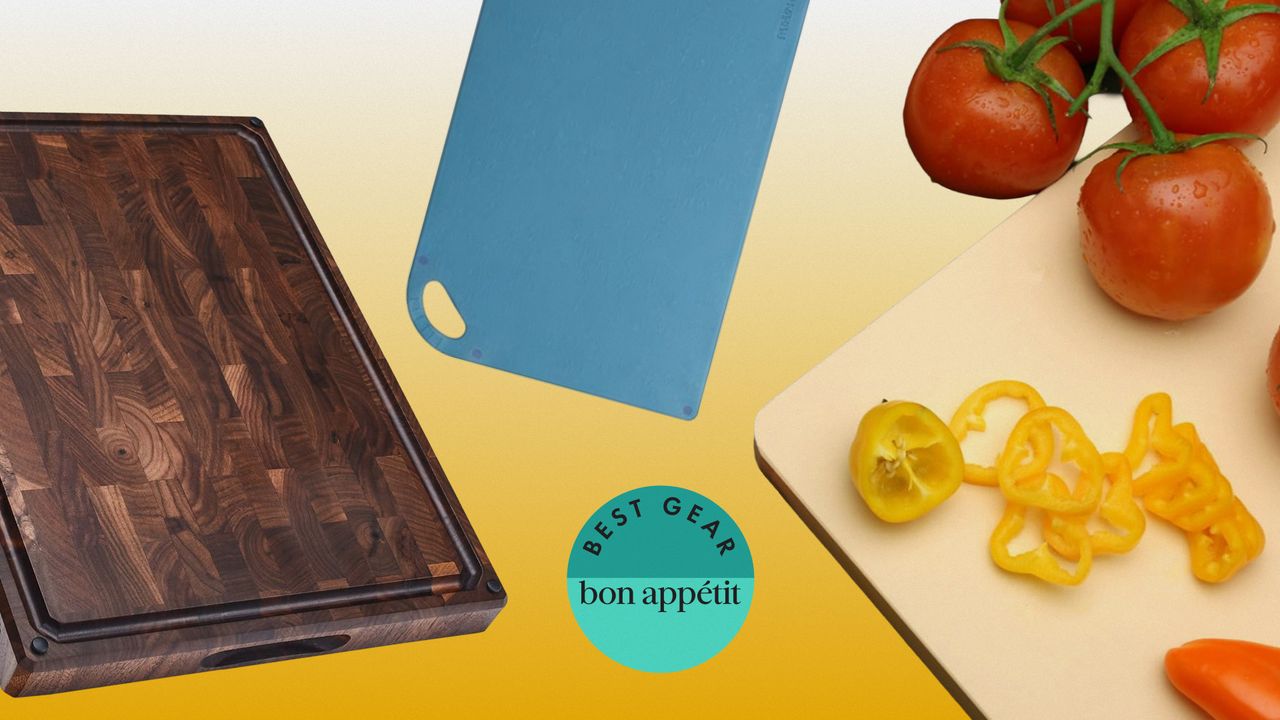
Best Cutting Boards for Slicing, Dicing, and Chopping (2026)
Full Article
Original Source
Read the full article at Bonappetit →KhanList aggregates and links to publicly available news content. We do not host full articles from third-party sources. Always verify important information with original sources.