
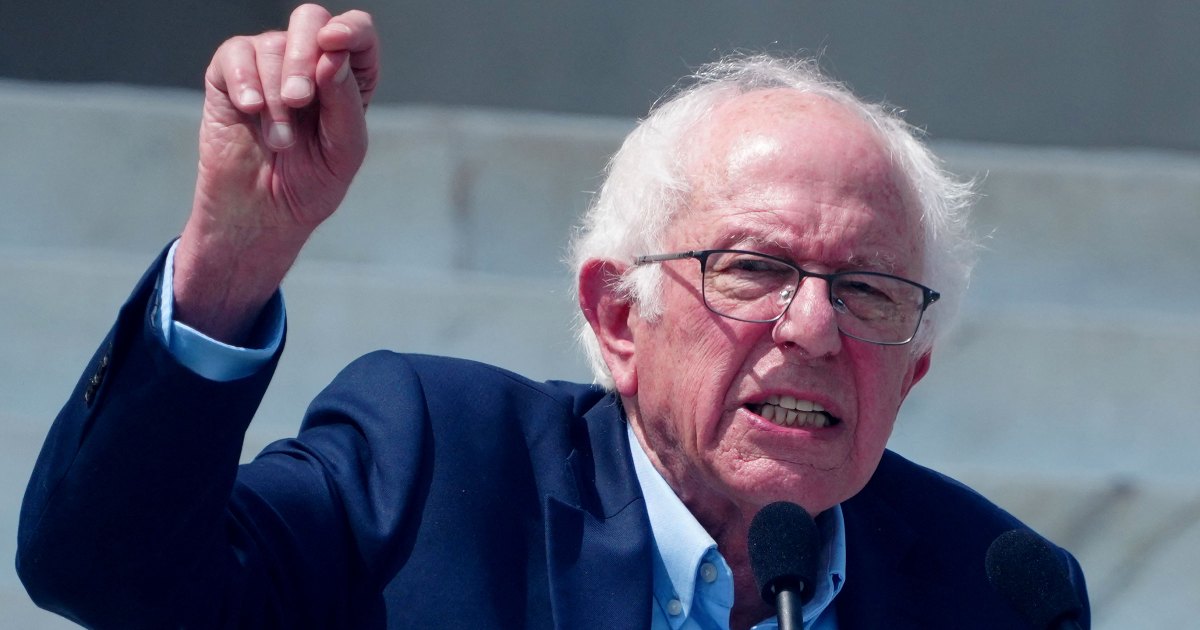
Ken Cedeno / AFP via Getty Images While the US appears to be further away from meaningful AI regulations than ever before, lawmakers certainly have plenty of ideas on how the country could go about setting meaningful rules. It’s a particularly precarious moment as fears over rogue AI models wreaking havoc and endangering humanity continue to mount. Even tech leaders from the majority of frontier AI labs have started to coalesce around the idea that the industry has to slow down the development of the tech to get ahead of a possible catastrophe. Vermont senator Bernie Sanders (VT-D) is intensifying his calls for a ban on the development of so-called superintelligent AIs — and he’s willing to go a lot further than some of his like-minded peers. “Dario Amodei, Elon Musk and Sam Altman now agree that we must slow down the development of AI and ‘pace the frontier,'” he tweeted last week. “That’s a start, but it’s not enough.” Sanders was referring to a lengthy essay titled “We Must Pace the Frontier,” in which Anthropic CEO Dario Amodei argued that the industry should open its doors to third-party evaluators, establish common safety standards, and coordinate with other democracies around the world to enforce these standards. “When you are racing towards a cliff, you don’t just ease up on the gas pedal,” Sanders added. “You hit the brakes.” This month, the lawmaker announced the “Ban Artificial Superintelligence Act,” which is legislation designed to “stop AI oligarchs from building machines humans cannot control.” The bill, if enacted, would stop AI development “until a federal regulator has established safety rules.” It would also set new penalties for anybody attempting to circumvent these rules. AI developers who try to build superintelligent AI anyway could be “subject to not more than 20 years in prison, which is similar to existing penalties related to unlawfully developing nuclear weapons.” Sanders has come up with plenty of other radical ideas to stop the AI industry from concentrating immense amounts of wealth. In June, he proposed creating a “one-time 50 percent tax” on the stock of AI companies, and transferring the money into a public fund to be managed by the government. Lawmakers became particularly concerned after a group of OpenAI AI models hacked the systems of Hugging Face, a pivotal cybersecurity failing that heightened calls to slow the development of AI. A Senate subcommittee has since announced that it’s looking into OpenAI and its response to the incident, as Axios reported last week. It’s a strange moment in time. While Sanders continues to threaten AI CEOs with regulatory action, those same executives appear open to having the government set the rules. But whether lawmakers will ever be able to find consensus remains unclear. The executive branch, for one, has demonstrated little interest in an AI slowdown. Earlier today, president Donald Trump mocked the very concept in a Truth Social post on Monday, arguing that there was a “SICK conspiracy going on against AI and Data Centers” without offering any evidence. More on AI regulation: Trump’s Uninformed Blundering About the AI Slowdown Could Literally Threaten Humankind’s Future
Bernie Sanders Proposes Banning Superintelligent AI and Imprisoning Developers for 20 Years
Full Article
Original Source
Read the full article at Futurism →KhanList aggregates and links to publicly available news content. We do not host full articles from third-party sources. Always verify important information with original sources.