
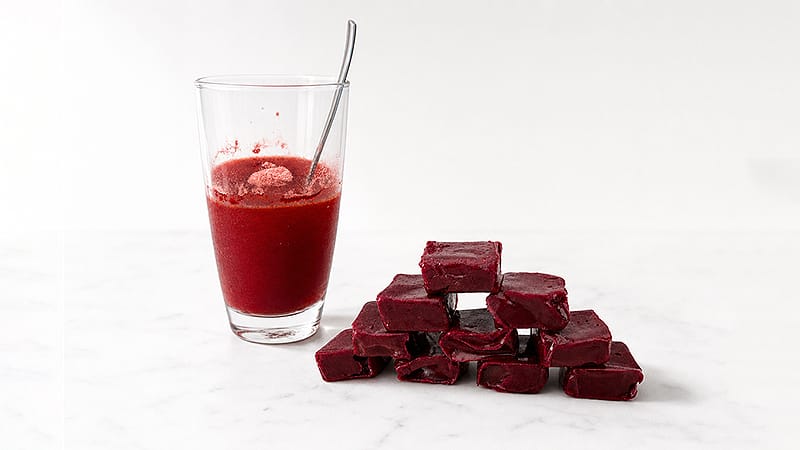
Melissa Walton-Shirley, MDMuch of the $68 billion/year we spend on supplements ends up down the toilet as pricey pee. Thankfully, most alternative therapies are merely fool’s gold, but some aren’t so benign. Ephedra-containing ma huang, promoted for weight loss, has been implicated in adverse cardiovascular events, including deaths. Conversely, folic acid supplementation in early pregnancy prevents 1300 neural tube defects annually.Beets Boost NO Since legitimate health benefits are rare, I was intrigued by the suggestion that boosting nitric oxide levels with beet supplementation can have a positive impact on hypertension, but I should have been more careful. I admit I have lingered at “beet booths” at medical meetings. I once purchased the powder, but because my immersion mixer isn’t a centrifuge, it stubbornly floated atop every liquid. I tried to push it off on my athletic husband Tony, who likes to sneak the latest miracle cure into the house. But after he tried my beet “burgundy,” the best he could say was, “Well, it’s not completely horrible,” The powder languished in the cabinet for a month, crowding our MiraLAX and granola, until our garbage disposal was the beneficiary of the $40 worth of Beta vulgaris rubra. Beet “burgundy” and beet chews.But as the years progressed, the siren call of the beetroot continued, fueled by ads touting its natural nitrate content metabolized to nitric oxide as a powerful vasodilator. “Couldn’t most humans use a little extra vasodilatation?” I reasoned. Plus, its bioactive pigments, or betalains, have demonstrated anti-inflammatory and antioxidant activity via in vitro studies, so what’s not to love?BP Lowering Then I did a deep dive for more legitimate studies. There were those small but well-structured beetroot trials that measured vasoreactivity as well as the impact of supplementation on blood pressure. I was emboldened by a 12-week randomized placebo-controlled trial in 16 postmenopausal women. As nitrite levels rose in the treatment group, there were objectively measured improvements in peripheral artery flow-mediated dilatation and microvascular reactivity. Additionally, human umbilical vein cells demonstrated improved angiogenesis potential which seemed an added bonus. I read a nice meta-analysis of supplementation trials, many of which showed a 5- to 6-mm Hg decrease in systolic blood pressure in men and a 2- to 3-mm Hg decrease in women. I recalled that for every 10-mm Hg reduction in systolic blood pressure, major cardiovascular events decrease by 20%, with reductions in stroke and heart failure of over 25% and in some populations studied all-cause mortality was also lowered. So when my blood pressure hit 155/80 mm Hg on 100 mg of losartan and diltiazem CD 120 mg, I chose another vehicle to boost my nitric oxide levels: beet chews. I have genetic hypertension that was exacerbated by a serious bout of preeclampsia 30 years ago. When my blood pressure rose to 230/130 mm Hg, I was made to sweat and “pee like a racehorse” for 5 days on an intravenous magnesium drip. I was prescribed dihydropyridine for a month. My blood pressure normalized for over 15 years, but hypertension returned necessitating maximal losartan and the addition of diltiazem. I justified my $35 beet chews as a gesture of kindness to my left ventricular wall thickness and cerebral vasculature. My personal N-of-1 chew trial, sans randomization and P values, produced a few point drops in systolic blood pressure (I think). Plus, those chews were surprisingly yummy! I soon found myself looking forward to them q.h.s. as my dessert.In my defense, a lifelong low heart rate (slightly above that of a box turtle) means beta-blockers aren’t ideal for me and I was concerned that uptitrating the diltiazem would invite worsening peripheral edema. Diuretics aren’t a great option because I work in an environment with the humidity of an historic preservation vault. When I tried hydrochlorothiazide 12.5 mg, my tongue felt like dust, so I quit.I also implemented lifestyle modifications. I cut out diet sodas, gave up my nightly frozen Greek yogurt bar and, most reluctantly, my precious Trü Früs. I’m active and I avoid sodium like the plague. (Surely my portrait hangs in the Morton’s board room in honor of my decades-long investment in their salt substitute). With all mainstream medicine options exhausted, could beet chews be my over-the-counter solution? Baffling Neurologic Symptoms So what went wrong? During adolescence, I developed migraines with many bouts of left visual field scintillating scotoma. When I started taking calcium supplements 3 years ago, the frequency increased. When slowly spreading tongue, hemifacial, right arm and right leg numbness began occurring, I sought urgent medical attention and underwent a normal MRI and CT angiography of the brain. The neurologist was “almost certain” the etiology was atypical migraine. I stopped the calcium a few months ago, and for a while, things were normal. Within just a few short months though, things got really weird. I experienced a 90-second episode of whiteout blindness that was terrifying, seemingly bubbling up from the lower left visual field then slowly spreading to the right upper visual field. I developed sudden bouts of severe ataxia. One episode was accompanied by transiently slurred speech. I reviewed my imaging data to see if there was anything my neurologist (or I) had missed. “Maybe I needed a loop?” I questioned. I didn’t rush back to the ED, though, because I’d already had a pretty complete workup. Honestly, I was baffled. Then one evening, as I was unwrapping my beet chews, I remembered the temporal relationship between their addition to my regimen and my perplexing neurologic symptoms.When I “OpenEvidenced” the potential side effects of boosting one’s nitric oxide, I found a “plausible mechanism“ for the development of motor symptoms in people with migraine, due to boosting cyclic guanosine monophosphate (cGMP) and starting the trigeminovascular cascade, the common neurologic and vascular pathway that plays a role in migraine onset. In pharmacologic models, phosphodiesterase 5 inhibitors such as sildenafil raise cGMP and can induce migraine. I immediately stopped the supplements and voilà, within a few days, the weeks-long symptoms stopped. Of course, the best trial design would be to resume the supplement and wait for a return of the symptoms, but I said, “No thanks. I’m good”. I then did what I should have done to begin with and increased my diltiazem dose, and my blood pressure improved. There was no increase in peripheral edema either. Lots of lessons learned.Anecdotal Case Report I know what you’re thinking. This “case report” is completely subjective and anecdotal. But I’ve shared my experience for many reasons. Women’s Health recently featured a discussion of a small, 2-week placebo-controlled crossover trial of beetroot juice given twice daily that resulted in a 4-mm Hg decrease in systolic blood pressure in older participants (67-79 years). There was also a notable change in the oral microbiome; the authors suggested this may be a key mechanism for conversion of nitrate to nitric oxide. I’m willing to bet that many more people will reach for the beet. So, on the off chance that you or your patient is having unexplained neurologic episodes despite a normal workup, consider more than the usual prescription medications. Anything that comes in a bottle or a wrapper is a potential medication. If clinically appropriate, trial your patients off these compounds and monitor for improvement. I’ve now confessed all and I guess I’m looking for a little self-absolution. I fully admit that “physicians who treat themselves are (indeed) fools.” Perhaps I should have said NO to beet chews!Melissa Walton-Shirley, MD, is a native Kentuckian who retired from full-time invasive cardiology. She enjoys locums work in Montana and is a champion of physician rights and patient safety. In addition to opinion writing, she enjoys spending time with her husband and daughters, and sidelines as a backing vocalist for local rock bands. Her Heartfelt column was the 2022 northeast regional gold and national silver Azbee award winner.
Beet Supplements: A Cardiologist Confesses All
Full Article
Original Source
Read the full article at Medscape →KhanList aggregates and links to publicly available news content. We do not host full articles from third-party sources. Always verify important information with original sources.