
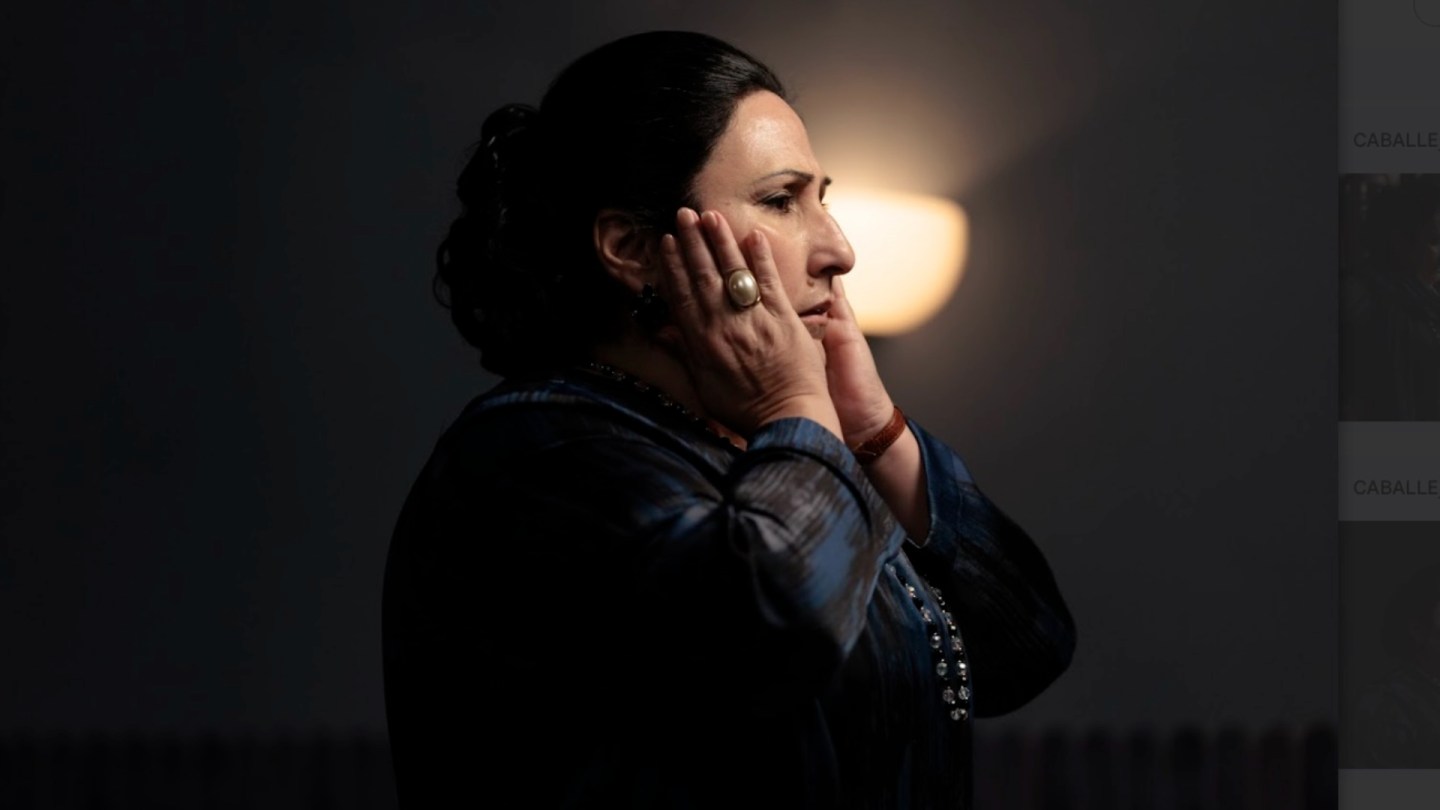
This year, Tallinn Black Nights Film Festival (PÖFF) is letting Basque cinema bask — pun intended — in the spotlight. Through dedicated investment over the last 10 years, the Basque film and TV output has never been stronger. The region has attracted productions from all over the world thanks to an alluring 60 percent tax rebate — increasing to 70 percent for projects shot in the Basque language, Euskara — allowing the area to lay claim to Catherine Zeta-Jones’ Kill Jackie and Nanni Moretti’s It Will Happen Tonight, among a slew of Spanish projects that catapulted the region to a record 45 Goya nominations earlier this year. This week, Tallinn’s Spotlight section represents the booming Basque audiovisual in territory not yet conquered. “It opens different doors,” begins Laura Lizuma, a Latvian producer based in San Sebastian who comes to the festival as part of the Basque delegation this year. “If the Basque country was in the spotlight in Argentina and Spain, that would be understandable — but the Basque industry is very small and when we think about global cinema… It’s a great place to discover new possibilities of co-production because [when else] would a Basque producer come to Estonia or the Baltic states?” Lizuma arrives in the Estonian capital as a producer on The River Woman, one of three Basque projects selected as part of the Tallinn Spotlight to receive development support. The feature film, directed by Tamara García Iglesias and co-written with Jon Bilbao, is described by Lizuma as “a rather unconventional western — one that takes the familiar codes of the genre and turns them around to tell a story from a woman’s perspective.” García’s film is one of many Basque films hitting this Tallinn edition, joined by the likes of Daniel Romero Bueno’s debut feature The Daughters (Las Hijas) in the Midnight Shivers section and Joana Moya Blanco’s La Koreana from the festival’s industry program. But the buzziest title of all competes in Tallinn’s official competition selection. Caballé, from Venezuelan filmmaker Patricia Ortega, is a biographical portrait of Spanish opera diva Montserrat Caballé that shot mostly in Bilbao. The movie is a Spain-led co-production between Set Màgic Audiovisual, La Claqueta, Basque company Amania Films, La Charito and Belgium’s Menuetto Film, with Film Factory Entertainment handling international sales. “I was interested in her contradictions,” Ortega begins to The Hollywood Reporter about what drew her to the famed opera singer, depicted in the film by Begoña Alberdi. “Her strength and vulnerability, her doubts and insecurities, but also her determination to make her way in a world dominated by men.” Ortega describes the Basque contribution as “an essential part of bringing Caballé to the screen.” This doesn’t just refer to the production side of things, but also to the talent, commitment and “generosity” of those who worked on the film. “Montserrat Caballé was not only a legend, she was also a deeply multicultural woman,” explained the director. “She spoke several languages and worked with people from all over the world. In a way, that is something we experienced while making the film in the Basque Country: people from different places and backgrounds coming together around a shared creative vision. I think she would have appreciated that spirit of collaboration.” From left: Tamara García Iglesias and ‘The River Woman’ producer Laura Lizuma. Publicity She vouches for the work of the Basque crews and support from the region’s government, saying that Bilbao’s logistical strengths made the filming process “much easier.” Ortega added: “There was also the experience of living in the city for several weeks. We found a place that welcomed us with open arms, with its remarkable variety of landscapes, the generosity and warmth of its people, and its rich and diverse cultural life.” Those virtues are on display and then some in Tallinn, where international producers are able to get a sense of the strength of the Basque audiovisual industry and production capabilities. That’s according to Esther Cabero Gonzalo, the shorts programmer at Zineuskadi, a company that works strategically to promote the Basque audiovisual sector, partnering with every production output in the region and working with the local government to help facilitate co-productions, distribution and sales deals, as well as securing films a coveted slot at major film festivals. “Having a delegation in Tallinn creates opportunities to meet people, establish direct contacts and develop potential collaborations,” says Cabero, who adds that a representative for the Etxepare Basque Institute, the organization leading the promotion of Basque culture internationally, will be talking in Tallinn about the tempting tax incentives. “I think all these elements help demonstrate just how much can be achieved in such a small territory,” says Cabero. The Basque shorts program, Kimuak, had one film — Raúl Barreras’s Meanwhile, Then — premiere in the PÖFF Shorts section over the weekend. Barrera’s feature follows five researchers from the future who arrive in a valley in the Basque Country to record gestures and emotions that have disappeared over time. Through interviews and observations of daily life, they delve into the private lives of the inhabitants — but soon the framework underpinning their research begins to crumble. Six shorts from previous editions are set to screen through the rest of the festival as part of the Basque Spotlight. Cabero is full of pride showcasing such a broad range of work from male and female filmmakers, as well as documentaries, animations and more, to the crowds in Tallinn. “We can promote our culture, our language, our identity, and make connections with international audiences,” she says. “But it’s also a way to promote those names, the directors, so they can find opportunities abroad and co-productions.” For Cabero, it isn’t just the draw of Basque talent, production companies, studios and technical facilities that has helped make the Spanish region a thriving film and TV hub, but the historic towns, industrial environments, as well as forests and dramatic natural scenery. Interestingly enough, it’s also Lizuma’s appreciation for the Basque Country’s sweeping landscapes that will help The River Woman achieve high-scale cinema at a lower cost. “With this project, in particular, the first idea is to shoot in the Basque Country because of the nature,” says Lizuma. “We are planning to shoot between the Basque Country and Navarre, but this project is developed from the beginning to be an international co-production. So we are looking for other territories that we could film [in], […] and we really have the intention to get those woods or those rivers here in [the] Basque Country or the Baltic states,” she says. Basque cinema, she adds, often capitalizes on its “pretty strong” relationship with nature. Lizuma has lived in Spain for 10 years now and can measure in great depth the success of the concentrated backing of the Basque film and TV sector. “There are a lot of projects coming [to the] Basque Country […] because they can get this tax incentive. So there are a lot of projects that come there with this interest, but also for Basque directors and producers, there are a lot more projects that are not so small anymore. When I came, there were a lot of self-discoveries — very small, very local. Now there are projects that raises three million [euros] in funding. That was impossible before.” From left: Patricia Ortega and Begoña Alberdi on the set of ‘Caballé.’ La Claqueta And while Ortega’s award hopeful filmed mostly in one of the region’s busiest and most vibrant cities, what strikes her about Basque cinema is its ability to simultaneously straddle a particular place and culture while speaking to audiences far beyond it. “There isn’t just one Basque cinematic voice,” she says, “there are many filmmakers with distinct sensibilities, and that diversity is one of its great strengths.” She touts the work of David Pérez Sañudo, who recently presented the brilliant Sacamantecas, Alauda Ruiz de Azúa with the five-time Goya Award-winning Los domingos, and Estibaliz Urresola’s 20,000 Species of Bees, shortlisted for best international feature at the 2024 Oscars. “They are examples of the quality of the work coming out of the Basque Country,” says Ortega. “I would also like to mention Nerea Torrijos, who was the head of costume design on Caballé. She is a wonderful example of how Basque talent extends across every area of filmmaking,” Ortega adds. This particularly personal testament is indicative of the kind of relationships the Basque audiovisual industry has so far managed to cultivate. Will Tallinn also succumb to the region’s undeniable charm?
Basque Cinema Expands Its (Rapidly) Growing Footprint in Tallinn
Full Article
Original Source
Read the full article at Hollywoodreporter →KhanList aggregates and links to publicly available news content. We do not host full articles from third-party sources. Always verify important information with original sources.