
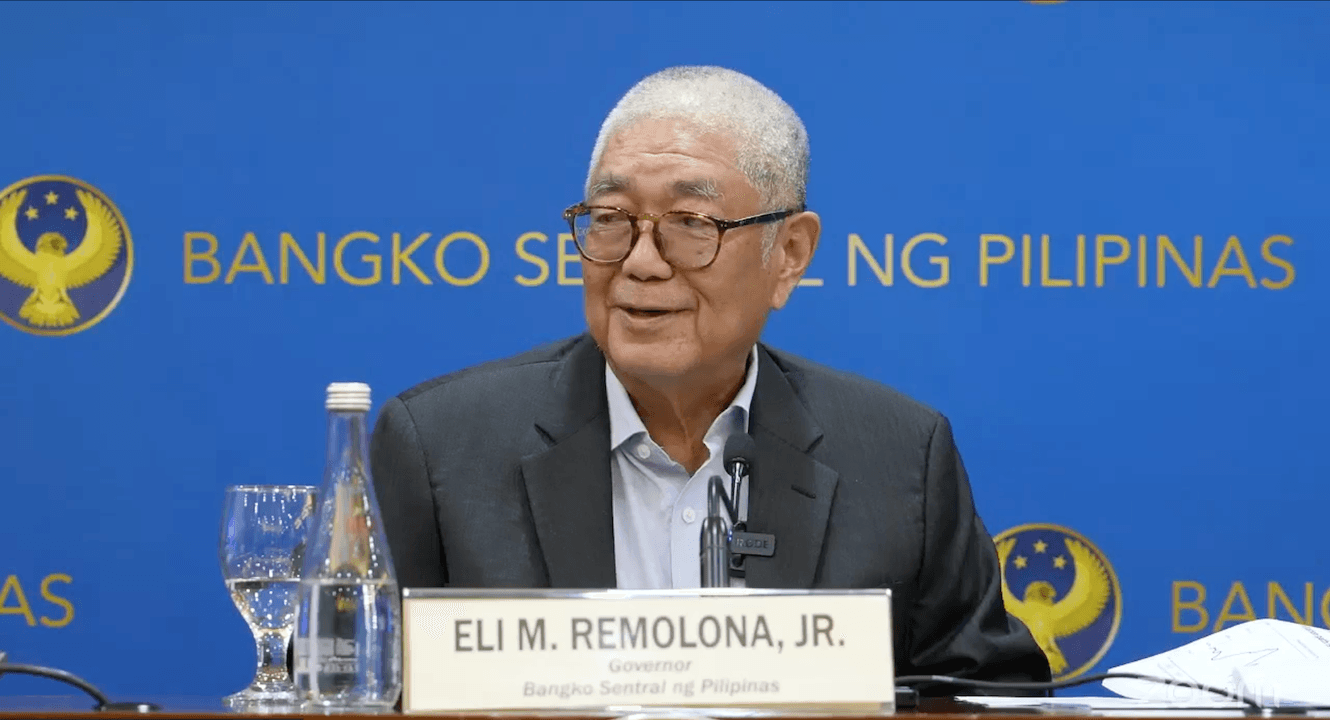
BSP CHIEF. Bangko Sentral ng Pilipinas Governor Eli Remolona Jr. announces the reduction of policy rates to 5% at the Monetary Board's policy meeting on August 28, 2025. Bangko Sentral ng Pilipinas The central bank flags persistently high oil prices, a looming El Niño, and potential wage increases as key inflation risks to watch MANILA, Philippines – The Bangko Sentral ng Pilipinas (BSP) on Thursday, August 27, raised its key policy rate by another 25 basis points to 5%, saying persistent risks from oil prices, a possible severe El Niño, and wage increases require “preemptive monetary action” even as headline inflation eases. This marks the third consecutive rate hike by the Monetary Board, following increases in April and June as the central bank moved to contain inflation that has remained above the government’s target range. The rates on the BSP’s overnight deposit and lending facilities were likewise raised to 4.5% and 5.5%, respectively. Inflation eased to 6.2% in July from 6.4% in June, its third straight month of deceleration, but remained well above the BSP’s 2% to 4% target range. Core inflation, which strips out volatile food and energy items, also slowed to 4.2% from 4.4%. Still, the BSP said underlying price pressures were broadening. “Headline inflation has eased, although oil prices remain volatile,” the Monetary Board said in a statement. “The possible impact of severe El Niño conditions on agricultural prices poses further upside risks to inflation.” Potential wage adjustments also warrant close monitoring, according to the central bank, including the recently approved Metro Manila wage hike, although its implementation has since been challenged in court and temporarily paused. The BSP warned that higher labor costs, if eventually implemented, could be passed on to consumers and contribute to broader price increases or so-called second-round effects. The BSP still expects average headline inflation to breach the 4% upper end of its target range in both 2026 and 2027, before declining close to its 3% target by 2028. Central banks use interest rates to help control inflation. Raising rates makes borrowing more expensive, which can temper spending and demand, although tighter monetary policy can also weigh on economic growth. The latest hike comes as the Philippine economy is already growing at its weakest pace in years. Gross domestic product expanded by only 2.3% in the second quarter, slowing from 2.8% in the first quarter. Investment, measured through gross capital formation, contracted 9.2% year-on-year in the April-to-June period. The BSP, however, said the economy’s “fundamentals for growth appear to be intact over the medium term,” adding that fiscal measures should help strengthen growth in the second half. Looking ahead, the Monetary Board said it is prepared to take further action “as warranted” to bring inflation back toward its 3% target. Bank of the Philippine Islands lead economist Emilio Neri Jr. had similarly flagged broadening inflation risks, pointing to possible crop damage from monsoon rains and flooding, elevated fertilizer prices, a potential “super” El Niño, and higher labor costs. Neri argued that monetary policy has limited ability to address supply constraints. He also warned that further peso weakness could amplify imported inflation. – Rappler.com How does this make you feel? Loading
Bangko Sentral raises key rate to 5% as inflation risks remain
Full Article
Original Source
Read the full article at Rappler →KhanList aggregates and links to publicly available news content. We do not host full articles from third-party sources. Always verify important information with original sources.