
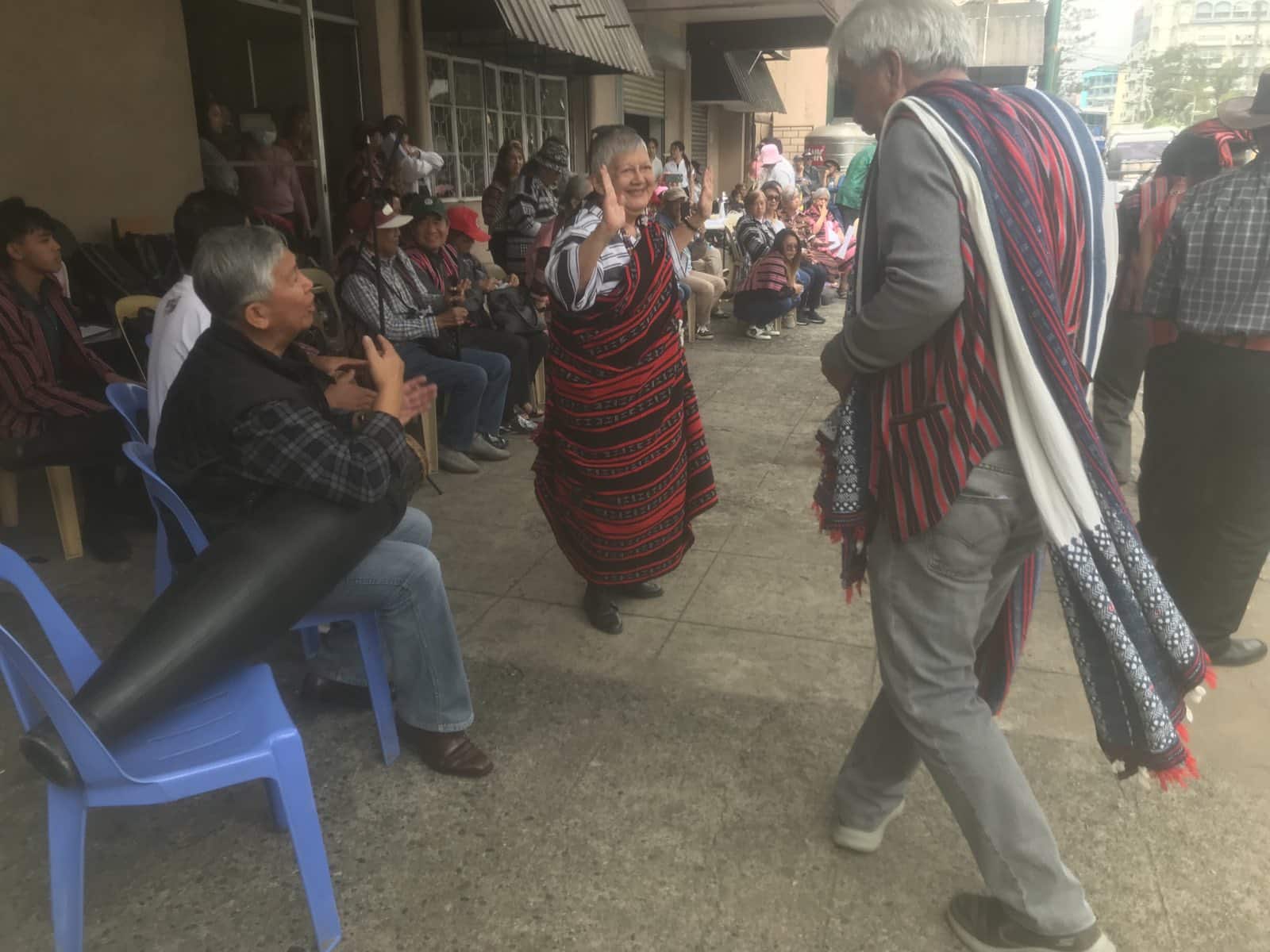
Baguio Ibaloys celebrating the city’s Ibaloy Day in 2025. Photo by Vincent Cabreza BAGUIO CITY — Baguio Ibaloys will gather with fellow residents of indigenous Cordilleran descent to discuss policies and legal developments that have impacted their communities, which the Baguio City Council on Monday described as a confederation of indigenous peoples’ forum. Slated for October, the assembly would tackle pending legislation like a new Cordillera autonomy bill, said Councilor Jose Molintas, a prominent human rights lawyer who is Ibaloy. More importantly, the forum would assess the Council’s decision, together with the National Commission on Indigenous Peoples (NCIP), to amend the 1997 Indigenous Peoples’ Rights Act (Republic Act No. 8371, also referred to as IPRA) to remove Baguio City’s exclusion – and, by extension, all Baguio Ibaloy – from the country’s only indigenous Filipino protection law. Article continues after this advertisement READ: Baguio council backs Ibaloy opposition to ancestral land bill But one approach that had been contemplated was to alter IPRA by amending the summer capital’s charter, which is not legally possible, Baguio Rep. Mauricio Domogan told the Inquirer on Tuesday during the commemoration of Baguio’s 117th founding anniversary. RA 8371, or IPRA, has a special provision, Section 78, which says the distribution of Baguio lands is dictated only by its charter. Section 78 says: “The City of Baguio shall remain to be governed by its Charter and all lands proclaimed as part of its town site reservation shall remain as such until otherwise reclassified by appropriate legislation: provided, that prior land rights and titles recognized and/or acquired through any judicial, administrative or other processes before the effectivity of this Act shall remain valid.” Baguio created as a townsite reservation Article continues after this advertisement In 1909, the American colonial government created Baguio as a townsite reservation, where the entire territory is alienable and disposable, and put it for sale through an auction-like townsite sales application (TSA) system that still operates today. Several Supreme Court decisions cite Baguio’s exemption from IPRA, particularly Section 78, when it nullified controversial Certificates of Ancestral Land Rights awarded in 2010 to Ibaloy clans. Article continues after this advertisement READ: Ibaloy Day pays tribute to ancestral lands, rights To date, the government has recognized 657.9 hectares of Ibaloy ancestral properties, including its only ancestral domain at Barangay Happy Hallow inside Camp John Hay, according to a Baguio government tally recorded for the new city land use plan. A joint resolution passed in 2025 by the Baguio City Council and the NCIP sitting en banc pushed for the repeal of IPRA’s Section 78. Some lawyers at the Council suggested deleting Section 78 in a provision to be inserted into Baguio’s modern charter. Baguio charter cannot amend IPRA But Domogan, chair of the committee on IP concerns, nixed the idea, saying laws of local application like the Baguio charter can not amend a national law like IPRA. Instead, NCIP, which enforces IPRA, could set clear rules as to how Ibaloys may still benefit from the IP law, he pointed out. Most Cordillera lawyers are wary of pursuing direct amendments to IPRA over fears that interest groups would manipulate the process. RA 8371 was subjected to a constitutional challenge by a former justice and the mining sector, and was finally enforced in 2001 when the high court dismissed the lawsuit. Molintas said on Tuesday that amendments can still be introduced to the modern Baguio charter (Republic Act No. 11689), which would instead declare explicitly that all indigenous peoples’ ancestral lands within the Baguio townsite would be recognized and honored. This way, no one needs to tamper with IPRA, he said in an interview. READ: Baguio Ibaloys may bring ‘unjust displacement’ to international court The modern revision of the city’s 1909 charter, which lapsed into law in 2022, will still undergo amendments to correct serious errors that affect how the city is run, Domogan said. The council and the Baguio Ibaloy community have fought to overturn Section 78, primarily because Baguio is where the Native Title Doctrine originated. Your subscription could not be saved. Please try again. Your subscription has been successful. The Doctrine is the landmark 1909 United States Supreme Court ruling that legitimized the Native Land rights of Ibaloy leader Mateo Cariño over what is now a portion of Camp John Hay. The Native Title ruling has been a legal and policy foundation for IPRA alongside other protections enforced by the 1987 Constitution./coa
Baguio charter amendment cannot undo city’s IPRA exemption
Full Article
Original Source
Read the full article at Newsinfo →KhanList aggregates and links to publicly available news content. We do not host full articles from third-party sources. Always verify important information with original sources.