
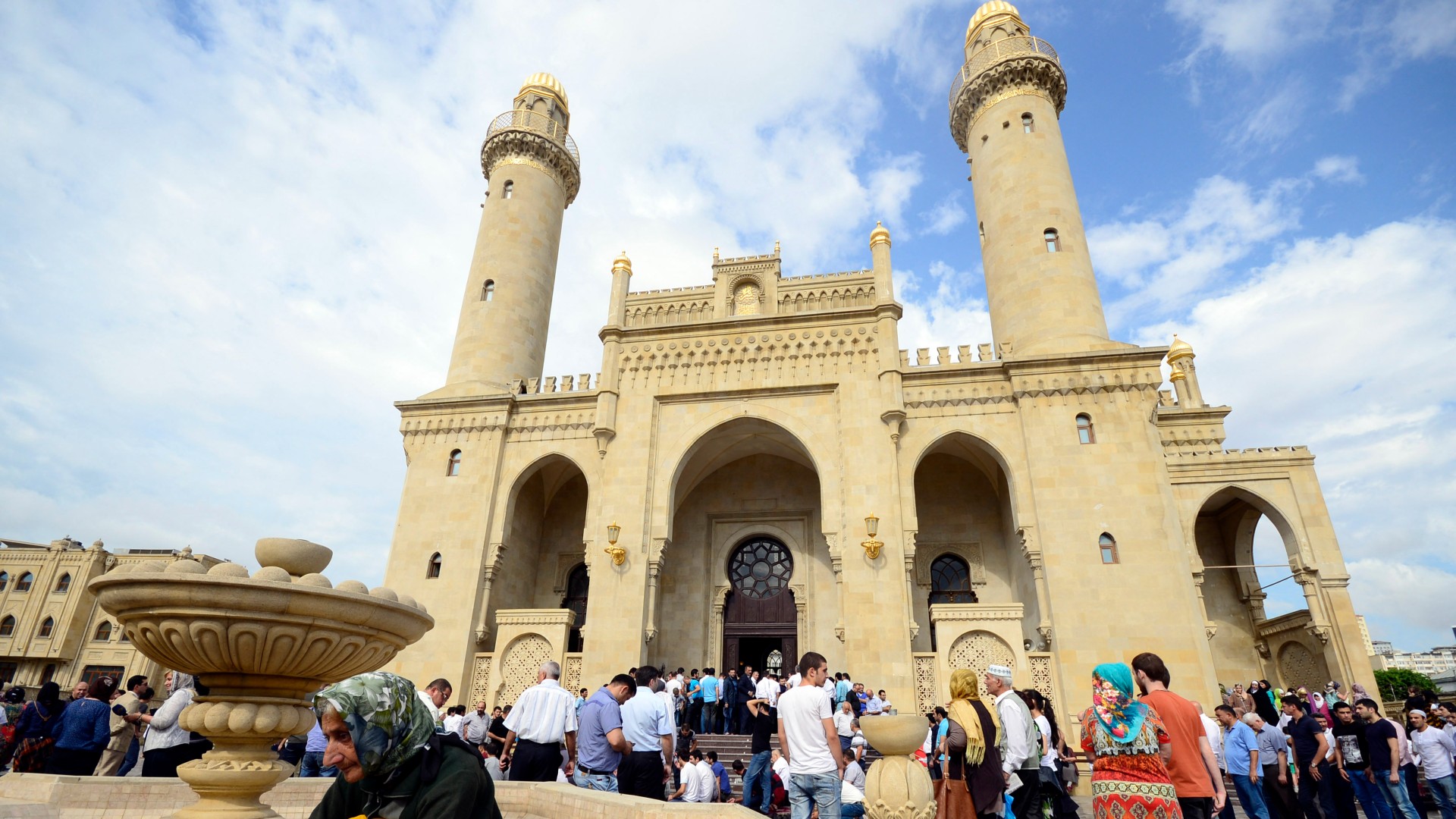
In Azerbaijan’s schools, the past few weeks have brought scenes of distress and defiance. Children have clung to their teachers in tears, as those teachers faced dismissal for wearing the hijab. Girls who refused to remove their headscarves have been turned away from classrooms. Other pupils have protested beside their classmates, and parents have demanded that their daughters be educated without surrendering their convictions. Gulshan Aliyeva, an English teacher with 23 years in the profession, was denied entry to her school in Baku. Her daughter was turned away, too. Their offence was covering their hair, in a country where the overwhelming majority of the population identifies as Muslim. The dispute reaches far beyond school uniforms. It exposes a political system in which the state has long claimed sweeping authority over its citizens’ lives, from their politics and livelihoods, to their practices of worship and sense of identity. New MEE newsletter: Jerusalem Dispatch Sign up to get the latest insights and analysis on Israel-Palestine, alongside Turkey Unpacked and other MEE newsletters For more than three decades, Azerbaijan has been governed by one family. Ilham Aliyev succeeded his father as president in 2003, after an election widely criticised for serious irregularities. Centralised authority and hostility towards independent political organising persisted, as Azerbaijan embraced capitalism, oil wealth and foreign investment. Under Ilham Aliyev, opposition parties have been severely restricted, journalists and activists imprisoned, and the space for dissent steadily narrowed. Political connection has become the gateway to economic opportunity. Corruption allegations At the centre of this system stands a striking concentration of family power. In 2017, Aliyev appointed his wife, Mehriban Aliyeva, as first vice president, placing her first in the constitutional line of succession. She belongs to the influential Pashayev family, whose interests span banking, insurance and construction. The president holds the highest office, and his wife the second, while their relatives hold stakes in some of the country’s most lucrative businesses. This fusion of political authority and family wealth has drawn persistent allegations of conflicts of interest and the capture of the economy by those closest to power. It is this establishment that now claims the authority to decide whether a Muslim girl, or her teacher, may enter a classroom in a headscarf. Having taken command of its citizens’ political and economic lives, it is extending its reach into their consciences. A dynasty that commands a nation's politics, wealth and institutions finds itself threatened by schoolgirls who refuse to uncover their hair Yet the traditions it presumes to regulate are far older than the state itself. Long before the Soviet Union existed, the lands of present-day Azerbaijan belonged to a rich Islamic world of learning. The Juma Mosque of Shamakhi traces its foundation to the eighth century and is among the oldest mosques in the Caucasus. Ganja gave Persian literature Nizami, one of its greatest poets, and Shirvan gave it Khaqani. Farther south, in the historic Azerbaijan of present-day Iran, Bahmanyar became one of Avicenna’s foremost pupils, and Nasir al-Din al-Tusi founded the Maragheh Observatory in the thirteenth century, one of the most sophisticated centres of astronomical research of its age. Across Shirvan, Arran and beyond, mosques, madrasas and scholarly circles sustained religious learning, philosophy, poetry and science. Faith and enquiry flourished together, and the mosque was among the institutions through which knowledge passed from one generation to the next. By the early twentieth century, Baku had become a centre of Muslim reform. Oil wealth financed newspapers, theatres, schools and charities, while reformist intellectuals pressed for education, social change and wider opportunities for women. In 1901, philanthropist Haji Zeynalabdin Taghiyev opened a school for Muslim girls in Baku, among the first of its kind in the Muslim lands of the Russian Empire. Here was a Muslim society answering the demands of modernity on its own terms, with no need of enlightenment delivered by an outside power. The independent republic founded in 1918 grew from this ferment. It built parliamentary institutions and gave women the vote, while several European states still denied it. The experiment lasted less than two years. In April 1920, the Red Army invaded. Dismantling religious institutions The Bolsheviks regarded religion as an obstacle to the creation of a socialist society. Belief was to be displaced by official atheism, and any institution capable of exercising authority beyond the Communist Party was to be subdued or destroyed. Mosques were closed and demolished, or turned into cinemas, clubs and warehouses. Religious schools were dismantled, endowments confiscated, and Islamic legal institutions abolished. Atheist propaganda entered the classroom, and the League of the Militant Godless campaigned against belief and practice alike. Of roughly 1,369 mosques operating in Azerbaijan in 1928, only 17 remained open by 1933. Baku’s Juma Mosque became a carpet museum. In 1936, the historic Bibi-Heybat Mosque was demolished. The Stalinist purges devastated Azerbaijan’s religious leadership, with clerics and scholars arrested, exiled or executed. The campaign reached into the fabric of memory itself. Azerbaijani writing was moved from Arabic to Latin script in 1929, then to Cyrillic a decade later. These changes belonged to wider Soviet language and nationality policies, and served purposes beyond the war on religion - yet their effects on inherited traditions were severe. Within a generation, many Azerbaijanis could no longer read the religious scholarship, poetry and family documents their grandparents had read with ease. Religious education was crushed, and the handful of functioning mosques could not freely teach children. For party members, teachers and other public employees, visible observance could cost a career and a reputation, and sometimes freedom itself. The message was unmistakable: safety and advancement in the Soviet order required conformity to the ideology of the state. Yet Islam survived, because ordinary people refused to let it die. Stripped of its mosques and madrassas, the faith retreated into the one space the state could never fully enter: the home. There, after dark and behind drawn curtains, grandmothers taught their grandchildren the Fatiha and the short suras, syllable by syllable, in an Arabic many of those children would never learn to read. Prayers were memorised by sound and handed down by voice. Children learned two lessons at once: the words of the prayer, and the importance of never repeating them at school, where a careless remark could bring questions to the family. A prayer mat might be unrolled only once the door was firmly locked. Qurans that had escaped the closures were wrapped in cloth and hidden in trunks, beneath floorboards and inside walls. Many were kept by families who could no longer read them and would not surrender them, because the book was a bond with the dead and with a faith the state had forbidden them to teach. Generations accepted that risk and kept their faith alive with no mosque, no school and no permission, so that it might reach those who came after them. The girls now turned away at the school gates in Baku are their descendants. Muslim women gather to pray in the Azhdarbek Mosque, also known as the Blue Mosque, in central Baku on 1 October 2017 (AFP) Even when Stalin relaxed parts of his anti-religious policy during the Second World War, the concession came under strict supervision. In 1944 the Soviet authorities established the Spiritual Administration of the Muslims of Transcaucasia in Baku, a body through which officially recognised religious life could be regulated. Its successor, the Caucasus Muslims Board, still plays a central role in Azerbaijan, and its chairman, Allahshukur Pashazadeh, has held his post since 1980. An institution built for Soviet religious control remains influential in an independent state more than eight decades later. Dominant narrative Women’s clothing became a symbol of the Soviet project of remaking society. Communist activists organised unveiling campaigns, treating the abandonment of the veil as a visible sign of emancipation and of loyalty to the new order. A century separates the Soviet activist who pulled a veil from a woman’s head, and the official who today turns a hijab-wearing girl away from her classroom. Their circumstances differ, as do the laws and institutions they serve. But the premise is disturbingly familiar: the state assumes the authority to decide how a Muslim woman may appear in public. Azerbaijan's headscarf row: Were the girls excluded from school asked what they think? Read More » That premise has drawn little condemnation from western governments and much of the western media. Azerbaijan is a valued partner, supplying oil to Europe and Israel, and buying billions of dollars’ worth of Israeli weapons. Had these scenes unfolded in Iran, with girls and teachers forced to cover their hair, the denunciations would have been swift and loud. Women’s freedom to choose, it seems, extends only to the choice to uncover. The dominant narrative in the West presents secularism as synonymous with tolerance, pluralism and democracy, and reserves the charge of authoritarianism for religion, dogma and theocracy. In this tidy moral geography, tyranny wears a cleric’s robe, and freedom wears a suit. Azerbaijan shows how secularism can become intrusive and coercive in its turn, imposing particular values, worldviews and ways of life by force. Despotism can certainly be rooted in appeals to the sacred. It can just as readily grow from secular ideologies. Persecution, repression and ethnic cleansing have been carried out by religious regimes and secular totalitarian ones alike. Stalin waged war on the mosque and the church in the name of scientific progress, and Enver Hoxha declared Albania the world's first atheist state in 1967 before suppressing public worship with unmatched ferocity. Many regimes in the region that wrap themselves in the language of secularism, enlightenment and modernisation are authoritarian and interventionist to their core. Their enlightenment arrives with a police escort. They have reduced secularism to an instrument for legitimising state control over society and its interference in the beliefs and choices of individuals and communities. A century after the Bolsheviks set out to emancipate Muslim women by stripping them of their veils, their political heirs are still telling women what to wear Ataturk was a staunch secularist whose modernising project relied on a great deal of coercion: the fez was outlawed, Sufi lodges were shut and the call to prayer was ordered recited in Turkish. The Turkish state inherited those habits. Its ban on headscarves in universities and public institutions was lifted only within the past 15 years. Across the former Soviet south, many Muslim majority states inherited the same authoritarian secularism. In 2024, Tajikistan banned what it called “alien clothing”, a measure widely understood to target the hijab. Since then, women have reportedly been stopped in the streets and made to retie their headscarves in the approved national style. The state no longer asks whether a woman covers her head, only how she ties the knot. For all this pressure, these countries have seen a religious revival among women and young people, and the result is a continuing confrontation between governments and their own societies, waged in the name of enlightenment, secularism and the fight against extremism. The women and girls resisting these restrictions are challenging the very premise upon which this authoritarian secularism rests: that emancipation can be imposed from above. They are students, teachers and professionals, and they are claiming the right to define themselves against the state’s definition of the modern Muslim woman. A century after the Bolsheviks set out to emancipate Muslim women by stripping them of their veils, their political heirs are still telling women what to wear. The Soviet empire has vanished, and the faith it sought to extinguish has endured. Now a dynasty that commands a nation’s politics, wealth and institutions finds itself threatened by schoolgirls who refuse to uncover their hair. The views expressed in this article belong to the author and do not necessarily reflect the editorial policy of Middle East Eye.
Azerbaijan revives Soviet-era repression in school headscarf ban
Full Article
Original Source
Read the full article at Middleeasteye →KhanList aggregates and links to publicly available news content. We do not host full articles from third-party sources. Always verify important information with original sources.