
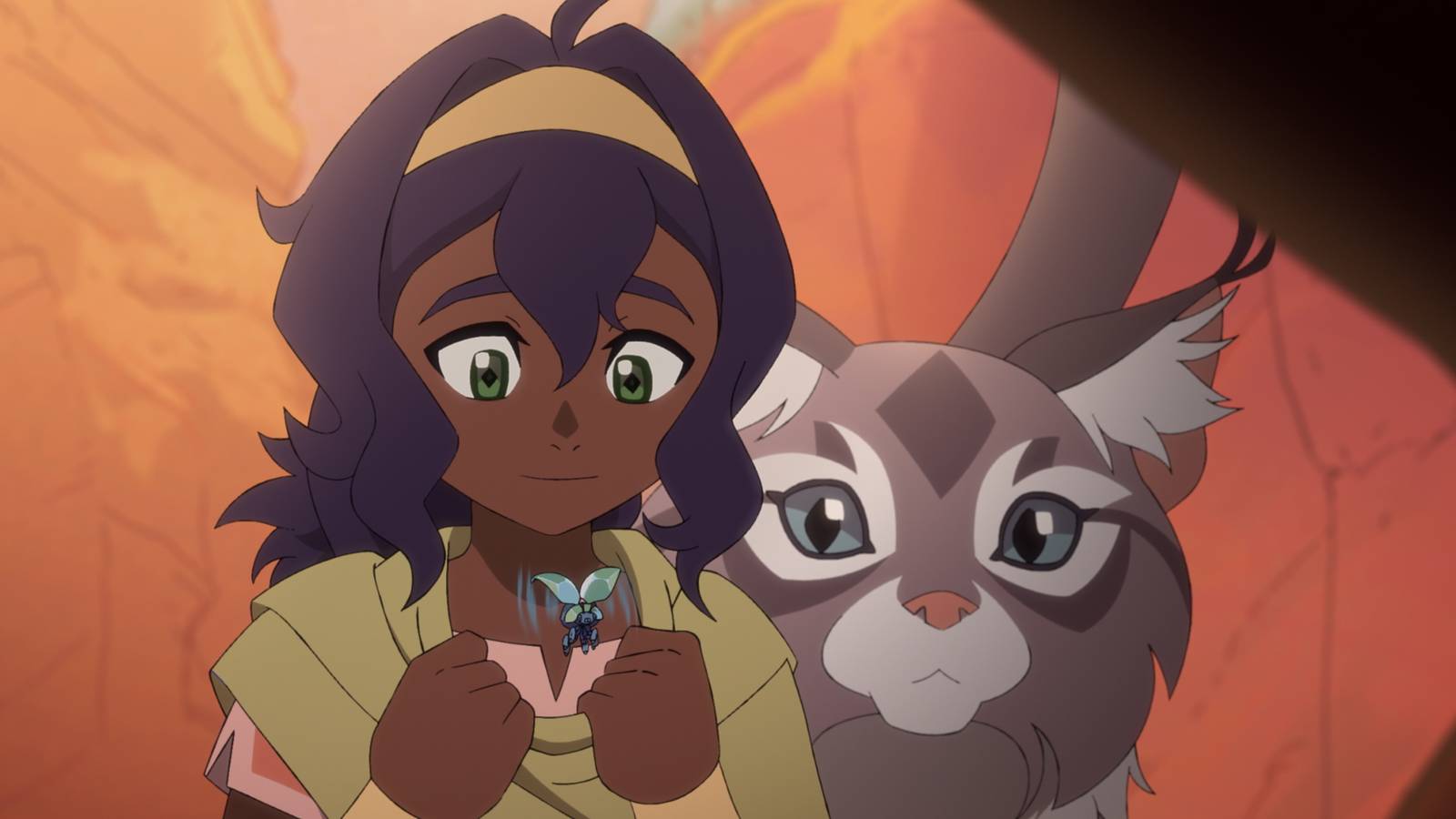
Credit: Parmount+ Avatar: Seven Havens pushes the Avatar franchise in a whole new direction with creativity, heart, and genuine bravery. Everything is about to change. Published Oct 9, 2026, 3:00 AM EDT El is a Junior TV Features Editor for ScreenRant, with previous experience as The Mary Sue's UK and Weekend Editor. She holds a Bachelor's in International Media and Entertainment Management, as well as an MA and Ph.D. in Creative Writing. There is little she loves more than discussing her favorite TV shows with fellow fans. One day, she hopes to publish an original fantasy novel. A dangerous new era dawns for Avatar: The Last Airbender, as the franchise returns with Avatar: Seven Havens. Set further in the future than any previous Avatar show, comic, or movie — 225 years after Korra's adventures in The Legend of Korra, according to executive producer Sehaj Sethi — Avatar: Seven Havens is a different kind of story. Rather than trying to stop a global war or revive people's connection to the spirit world, the Avatar is seen as a destroyer, responsible for humanity's near-extinction. Enter Pavi (Saheli Khan), the next Avatar after Korra, a young earthbender surviving alone on the streets of Ellora, one of the seven titular walled Havens sheltering society's last remnants. It isn't until Pavi meets her long-lost twin sister, Nisha (Aishu Devan), that Avatar: Seven Havens' story begins in earnest, as the duo resolves to figure out what happened to them and their missing parents. They're helped by young, idealistic airbender Jae (Major Curda), his superior brigade officer, Captain Karthik (Akshay Khanna), and, of course, their loyal animal pals, cat monkeys Geet and Ruhi (Dee Bradley Baker). Because of Seven Havens' placement in the Avatar timeline, the show has a markedly different visual aesthetic than both Avatar: The Last Airbender and The Legend of Korra. The animation is, as expected, endlessly creative and wonderfully colorful. Pavi's and the other benders' skills remain a highlight, even if the show features much less bending than usual (after all, there are fewer benders). The high-speed trains, racing cars, agile planes, and mecha suits of Korra's tenure are long gone. While some technological gizmos remain, mostly as relics of a bygone era, Ellora struggles to survive, especially when faced with terrifyingly massive tornadoes, sandstorms, vengeful spirits, and faceless bandits. The first six episodes of Avatar: Seven Havens prove the series is a genuinely enjoyable fresh start for the franchise. This separation helps Avatar: Seven Havens establish itself as its own show. While there are obvious lore connections between Avatar: Seven Havens, Avatar: The Last Airbender, and, of course, The Legend of Korra, the first six episodes of Avatar: Seven Havens prove the series is a genuinely enjoyable fresh start for the franchise, an interesting mix of post-apocalyptic storytelling, a mystery narrative, fascinating fantasy worldbuilding, and compelling, relatable new characters. Avatar: Seven Havens Needs Time To Find Its Groove Given the background set up by Avatar: The Last Airbender and The Legend of Korra, Avatar: Seven Havens could have jumped straight into the action. Instead, the show chooses to build up this new version of the Avatar world with great care and attention, introducing Pavi's life on the streets of Ellora, including an "Ember Island Players" type of play to showcase what happened with Korra (or at least, what the world believes happened with Korra), and what life is like for all benders in this new reality. Despite a gorgeously animated sequence in which Pavi shows off her earthbending and airbending skills with great finesse in the ravaged wasteland beyond Ellora's borders, the first episode's pacing feels a little off, as though it's purposefully slowing itself down to avoid revealing the show's biggest twist too soon. Some characters also need time to find their voice. Captain Karthik, for example, while a brave, noble, paternal figure for Pavi, Nisha, and even Jae, is still a little one-dimensional, even six episodes in. The first few episodes are also missing some of the fun, childhood charm of the original series. Part of Avatar's strength has always been its ability to balance silly shenanigans and heavy, emotional topics. As Pavi and Nisha become more comfortable with each other, that becomes a bigger part of the story, but other characters, like Jae, who is otherwise lovingly loyal and caring, lack that same sense of fun. The show has, however, set up some interesting romantic pairings between the older characters; the Avatar's presence in Ellora will test the strength of their connections, and I'm excited to see how those dynamics unfold. Avatar: Seven Havens' New Avatar Is A Great Addition To The Franchise While the Avatar franchise has already seen a young Avatar take on the monumental task of saving the world — Aang was technically only 12 when Katara and Sokka freed him from the ice, and Korra was 17 when she traveled to Republic City — Pavi is even younger. She's endearingly strange and resourceful. She suspects she's the Avatar but is forced to hide her power, trawling the streets for scraps of food. Even the slightest display of bending could mean capture by the brigade or worse, being chased by Ellora's most desperate, angry, paranoid citizens. What makes Pavi's story so interesting, though, especially compared to Aang's or Korra's, is her sibling dynamic with Nisha. They're not just sisters; they're twins. While Aang and Korra had a troupe of friends they could rely on, many of whom became like siblings to them, Pavi and Nisha's relationship is the heart of Avatar: Seven Havens. Pavi is cautious, whereas Nisha is impulsive. Nisha encourages Pavi to take care of herself. They're free to be emotional with one another. They make each other whole, and they don't have to face the world alone. Their shared history also adds a new dimension to Avatar's storytelling. While Aang and Korra's stories both dealt with past issues and family relationships, there was never any real mystery as to who they were or where they came from. By contrast, Pavi and Nisha are an enigma. Why were they separated? Why couldn't they remember each other? Who were their parents? How did Pavi lose her leg? Much like the audience, they have to work for the answers. Avatar: Seven Havens is about to change what audiences think they know about the Avatar cycle forever, and it deserves to. Because being the Avatar is so dangerous in this new dystopian world, this narrative thread gives the twins something to work toward, as Ellora's leadership unravels, dealing with desperate citizens and dwindling resources. After a somewhat slow start, the show fuses the two storylines with ease; by the end of the sixth episode, it's clear they'll soon come together in the most explosive and potentially emotionally devastating way. Avatar: Seven Havens is about to change what audiences think they know about the Avatar cycle forever, and it deserves to. The show's biggest twist doesn't feel tacky or unearned. It's a natural progression, and if anyone can do it justice, it's creators Michael Dante DiMartino and Bryan Konietzko. After six episodes, I'm truly excited to see what's next for Pavi and Nisha. So far, at least, Avatar: Seven Havens is a worthy addition to the Avatar franchise. The first three episodes of Avatar: Seven Havens are streaming now on Paramount+. New episodes drop weekly on Fridays. Release Date October 9, 2026 Network Paramount+ Series Avatar: Seven Havens Episodes 13 Pros & Cons Interesting new post-apocalyptic setting Pavi and Nisha's twin relationship is the heart of the show Gorgeous animation and worldbuilding The introduction is a little slow Some characters need more time to be developed
Avatar: Seven Havens - The Avatar Franchise Enters A Brave New Era In This Creative Sequel Series | Review
Full Article
Original Source
Read the full article at Screenrant →KhanList aggregates and links to publicly available news content. We do not host full articles from third-party sources. Always verify important information with original sources.