
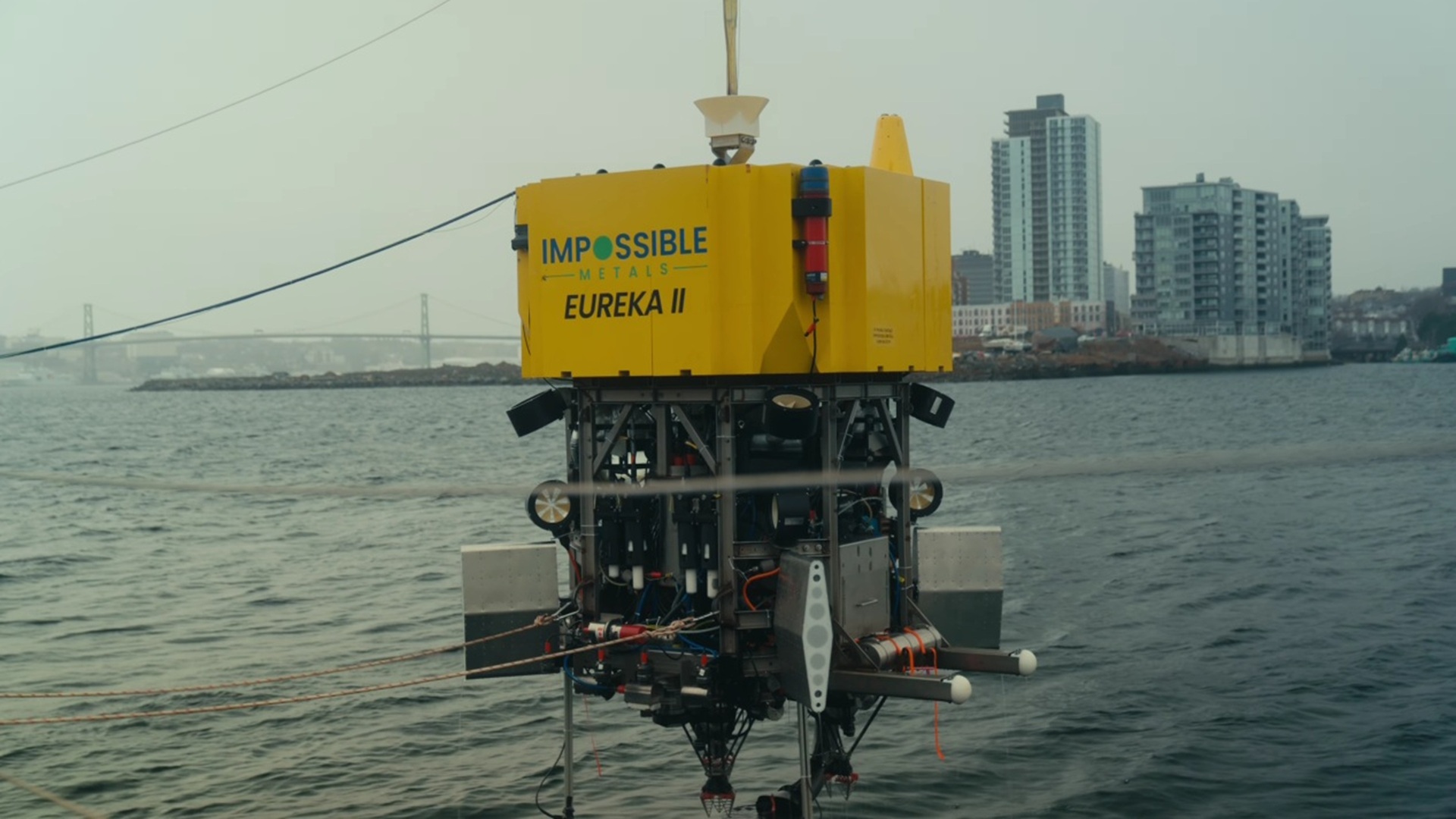
A US ocean-technology company has recently unveiled footage showing that its autonomous underwater robot can find its surface vessel and recover itself from the open ocean without human intervention. Impossible Metals’ Eureka II autonomous underwater vehicle (AUV) accomplished the recovery in an offshore demonstration in Halifax, Nova Scotia. The California firm unveiled footage of the test on Tuesday, August 25. The smart robot spotted its surface vessel, navigated toward it, aligned itself, and attached to it with an integrated SmartHook system. It then returned to the deck on its own, all without human control. Jason Gilham, Impossible Metals chief technology officer shared that autonomous recovery could make underwater robots easier to use for commercial operations. “Autonomous recovery is a gating function,” Gilham shared. “If a subsea platform cannot reliably retrieve itself in real ocean conditions, outside a lab, it cannot scale.” Finding its way back Recovering autonomous underwater vehicles could be challenging, particularly in open water. Waves, currents, and the movement of the recovery vessel make the process even more difficult. That’s why Eureka II relied on several technologies during the return journey. The first was acoustic positioning to locate its surface vessel while beneath the wave zone. It then switched to computer vision for more precise navigation during the final approach. The Eureka II SmartHook technology.Credit: Impossible Metals / Screenshot Impossible Metals revealed that the vehicle had AprilTag visual markers on its top plate to guide the recovery. Once in position, a mechanical SmartHook connected to the vehicle and secured it. The system then retrieved Eureka II from the water and returned it to the vessel. According to the company, the entire process was autonomous, with no operator controlling the robot at any point. “Halifax shows it working in open water, and it shows it working the way it will have to work every day in the field,” Gilham said. Cheaper subsea operations Eureka II is a large autonomous underwater vehicle that can operate at depths of up to 19,685 feet (6,000 meters). The robot measures 10.5 feet (3.2 meters) long, 6.4 feet (1.95 meters) wide, and 6.3 feet (1.93 meters) tall. It weighs approximately 8,710 pounds (3,950 kilograms) on land, and carries a 14.4-kilowatt-hour (kWh) battery. The vehicle also features three sets of robotic arms designed to collect mineral nodules from the seafloor. The technology could greatly cut the cost of underwater operations. Traditional recovery often requires crews to step in. This takes time, labor, and further puts personnel at risk at sea. In contrast, a smart robot that can recover itself could be deployed more often with less downtime. Impossible Metals argued that the achievement comes as global interest in critical minerals, subsea infrastructure, and ocean data continues to grow. Environmental concerns are becoming more important for ocean operations. Steve Curnutte, Impossible Metals executive chairman, stressed that the future of ocean technology will depend on greater autonomy and precision. This would let companies do more and reduce their environmental impact. “That is the standard we are building to, and it is how responsible access to the ocean should be earned,” Curnutte concluded in a press release. Get the latest in engineering, tech, space & science - delivered daily to your inbox.Based in Skopje, North Macedonia. Her work has appeared in Daily Mail, Mirror, Daily Star, Yahoo, NationalWorld, Newsweek, Press Gazette and others. She covers stories on batteries, wind energy, sustainable shipping and new discoveries. When she's not chasing the next big science story, she's traveling, exploring new cultures, or enjoying good food with even better wine.
Autonomous US robot finds its ship underwater and returns to the deck on its own
Full Article
Original Source
Read the full article at Interestingengineering →KhanList aggregates and links to publicly available news content. We do not host full articles from third-party sources. Always verify important information with original sources.