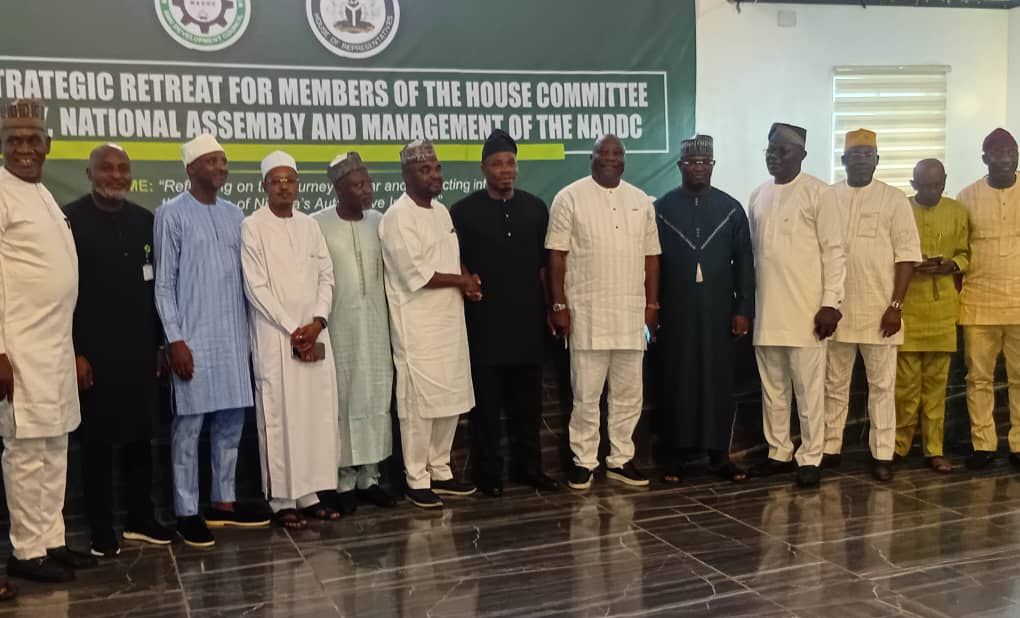
*Automotive sector vital to industrialisation, job creation, tech-transfer, says council DG Omon-Julius Onabu in Asaba The House of Representatives Committee on Industry and the National Automotive Design and Development Council (NADDC) have expressed desire to mid-wife a process towards strengthening the legislative powers of the automotive industry sector to meet contemporary global challenges and the Nigerian economy. They are unanimous that urgent steps and proactive measures are required to reinvent the automotive sector in Nigeria, including a review of law presently regulating the sector, against the backdrop of unprecedented technological flux and business challenges on the global industrial stage. A legislative reform for the automotive sector formed a key item on the agenda of a four-day strategic capacity building retreat taking place in Asaba, the Delta State capital, for members of the House of Representatives Committee on Industry and the functionaries of the NADDC, themed “Reflecting on the Journey So Far and Projecting into the Future of Nigeria’s Automotive Industry.” Director-General/CEO, National Automotive Design and Development Council (NADDC), Otunba Oluwemimo Joseph Osanipin, in a welcome address, noted that the automotive sector remains the cornerstone of not only industrialisation but also serves as a veritable channel of realistic today’s technology transfer and job creation, thereby assuming a very significant aspect of the country’s economy. According to him, a lot of investors often complained about policy sustainability in Nigeria, saying that an act of parliament to address that problem as well as building investor confidence in the sector was inevitable in the light of the numerous changes that have occurred since the passage of the current automotive industry law more than a decade ago. He, therefore, advocated stronger and thorough legislative oversight in order to safeguard local investments in the sector, adding that a total legislative overhaul could be recommended if amendments to the subsisting act turned out to be inadequate, adding that the role of the national legislature in achieving that goal could not be over-emphasised. The NADDC Director-General said, “This retreat provides us with an indispensable quiet space away from daily administrative routines (in Abuja) to undertake a frank stocktaking exercise, review global industrial shifts, and realign our strategic compass. “The automotive sector remains a cornerstone of industrialization, job creation, and technology transfer under the Federal Government’s economic agenda. “Over the past few years, the NADDC has driven major reforms from expanding local vehicle assembly capacity and advancing clean energy transitions (EV and CNG) to upgrading technical training infrastructure nationwide. However, sustaining this momentum requires robust legislative backing, agile policy adjustments, and continuous oversight. “Over the next three days, our deliberations are structured around three core objectives: Global Trends & Local Impact: Reviewing emerging global automotive trends such as vehicle electrification, local content integration, and alternative fuels and examining their direct implications for Nigeria’s industrial growth. “Performance Stocktaking And Bottlenecks: Evaluating the progress made by the NADDC, evaluating our mandate implementation, and identifying persistent operational, legislative, and structural bottlenecks. Osanipin noted that the retreat’s action plan involved “Developing a practical, synchronized One-Year Joint Action Plan between the Council and the House Committee with actionable goals, clear tasks, and firm monitoring indicators.” He explained that the agenda for the exercise was rigorously crafted so as to address all levels of the value chain, from mandate frameworks and strategic player mappings to legislative effectiveness and investor dispute mechanisms. However, Osanipin harped on the invaluable place of collaboration between the national legislature and the Executive in positioning the sector to effectively future challenges and to exact its competences at bothe local and international levels. He said, “Policy success cannot be achieved by the executive branch in isolation”, he observed, adding that “a thriving automotive industry requires a seamless partnership between the regulator and the legislature. “Indeed, it is through your legislative leadership, policy advocacy, and rigorous oversight that we can safeguard local investments, enforce patronage of locally manufactured vehicles, and create an environment where indigenous assemblers and component manufacturers can flourish.” He expressed the hope the hope that the strategic building retreat would afford the participants an opportunity to appraise the current state of the sector and rigorously interrogate emerging trends in the world regarding the automotive industry as well as determine Nigeria’s appropriate response in a sustainable way. He said that vehicle electrification, local content development and alternative fuel technologies are among the critical areas that the country could not afford to take lightly to encourage more investors and grow the country’s economy for competitive global performance. Nonetheless, Osanipin expressed appreciation for the enthusiastic response of the stakeholders, especially the honourable members of the House of Representatives Committee who exercise oversight the NADDC, and the African Parliamentary Resource Centre (APRC) for co-facilitating, urging every participant “to engage openly, challenge assumptions, and contribute constructively across all brainstorming and plenary sessions.” The Chairman of the House Committee on Industry, Dr Eitan Dolapo Badru, represented by the Deputy Chairman, Hon. Sa’ad Wada Taura, while declaring open the event, commended the organisers, describing the retreat as a timely and proactive initiative in the face of rapid global technological development vis-a-vis Nigeria’s expanding economy. He said that the country’s automotive sector has widened in content and scope, assuming a significant aspect of the local economy, and also needing lgreater egislative empowerment and oversight to enhance its competitive advantages on the global industrial landscape. He indicated the willingness of the House Committee to collaborate with committee of the whole house and others in the National Assembly to ensure the proposed bill’s smooth sail, adding that the complaint about policy sustainability by investors innthe sector would be duly addressed within appropriate legislation. According to him, the retreat was also an opportunity for stakeholders to assess the current state of Nigeria’s automotive industry and examine how ongoing efforts by President Bola Ahmed Tinubu’s administration and relevant government agencies could be translated into sustainable growth, employment and economic opportunities for Nigerians. The House Committee on Industry remained “committed to the growth of Nigeria and the automotive sector” and aligning the automotive sector with Nigeria-First policy of the Tinubu administration, he said, noting that the retreat offered and ample “opportunity for creating proactive measures to inject practical dimensions to the sector.” Badru said, “We are here for stock-taking on environmental skyline, auto industrialisation and job creation agenda. Civil institutions cannot deliver this alone. For us to succeed, we must work as partners and hold ourselves accountable for the results of this retreat.” The Executive Director of the African Parliamentary Resource Centre, Mr John Ebikeseye Mutu, said that the retreat would help participants develop a common understanding of the challenges facing the automotive industry sector in Nigeria as well as improving their capacity to contribute meaningfully to its development especially through oversight. The retreat was meticulously and realistically designed to build capacity and help participants and stakeholders to have valuable insights into the dynamics of the automotive industry, access relevant information and collectively chart a sustainable future course. He explained that participants would use the retreat to undertake a comprehensive stocktaking exercise, identify critical gaps and More importantly, the exercise would explore ways of strengthening collaboration among the National Assembly, NADDC and other institutions involved in the automotive sector while identifying gaps and frontiers in the industry, Mutu further said. In his remarks, he Clerk of the House Committee on Industry, Dr Ibrahim Musa, stressed the importance of collaboration, identifying the National Assembly as comprising key stakeholders in the entire process. Dr Musa said, “Its going to be a collaborative effort. It’s not possible for the NADDC, no matter how efficient they are, to pilot their affairs in the Act that was passed in 2014. To move the sector to the next level, there must be a partnership; there must be collaboration. “So, all the proposals that are coming from the NADDC will be received and processed by the House Committee on Industry. And, from the D-G’s proposal, he said that their document, which is making them to work, is fairly defective and an amendment is required. And this amendment is to the effect that the automotive sector itself should be properly captured within the legislation. “In the event that this legislation is already encumbered, that no other amendment can be done, then a new proposal will be brought to again fresh, to take charge of the automotive industry. And, that the House Committee is ready to work with them.”
Automative Industry: Reps, NADDC Mull Stronger Legislative Muscle
Full Article
Original Source
Read the full article at Thisdaylive →KhanList aggregates and links to publicly available news content. We do not host full articles from third-party sources. Always verify important information with original sources.