
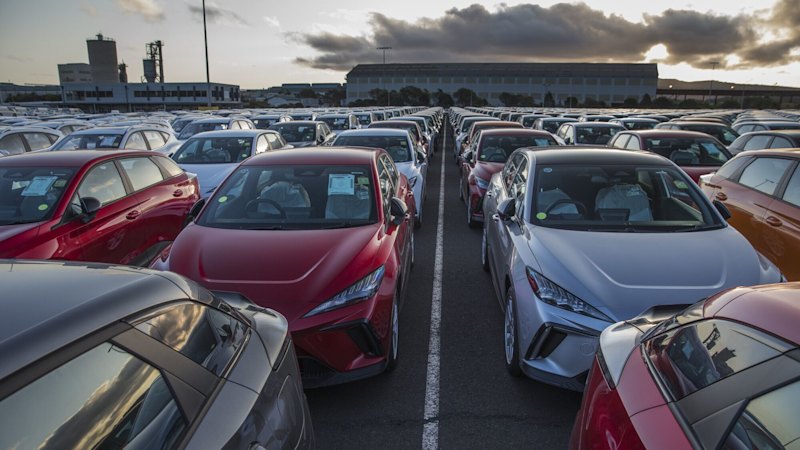
September 2, 2026 — 11:58amThe Australian economy grew by 0.4 per cent through the June quarter as consumers spent more on electric vehicles as they dealt with the fallout from the war in Iran.The Australian Bureau of Statistics this morning reported that annual growth eased through the 2025-26 financial year to 2.1 per cent.Household spending grew by 0.4 per cent in the quarter, accounting for half of the overall boost to growth.But the growth in spending was largely driven by cars – specifically electric vehicles and hybrids. The bureau noted that there was a record sale of EVs and hybrids as people sought to avoid the surge in oil prices caused by the US’s war against Iran and the closure of the Strait of Hormuz.It said other areas of discretionary spending were “subdued” due to rising cost-of-living pressures. This was most evident with a sharp drop in international tourism.Essential spending also fell, particularly on electricity and gas caused by the warmer-than-normal winter.People buying EVs and hybrids was a major contributor to GDP growth in the June quarter.BloombergThe bureau’s head of national accounts, Grace Kim, noted that economic growth remained subdued as households continued to behave cautiously.“While increased spending and business investment occurred in pockets of the economy, imports supported much of the growth, moderating its contribution to overall GDP growth,” she said.The bureau said there was also growth due to public demand and net trade due to a lift in exports. It was the first positive contribution to growth from the trade sector since late 2023.Private investment, which was a key factor in the March quarter, was flat in the June quarter due to a sharp fall in the imports of data processing equipment used in new data centres.But business investment was flat despite firms continuing to construct new buildings for data centres. There was also a lift in engineering construction for new renewable and mining projects while dwelling construction rose due to the ongoing pipeline of work on new homes.At the state level, growth was strongest in the Northern Territory (with state final demand up by 1.4 per cent) and Queensland (1.1 per cent). It actually fell by 0.3 per cent in Victoria due in part to a sizeable fall in private and public investment.Cut through the noise of federal politics with news, views and expert analysis. Subscribers can sign up to our weekly Inside Politics newsletter.From our partners
Australians’ splurge on EVs keeps the economy ticking
Full Article
Original Source
Read the full article at Smh →KhanList aggregates and links to publicly available news content. We do not host full articles from third-party sources. Always verify important information with original sources.