
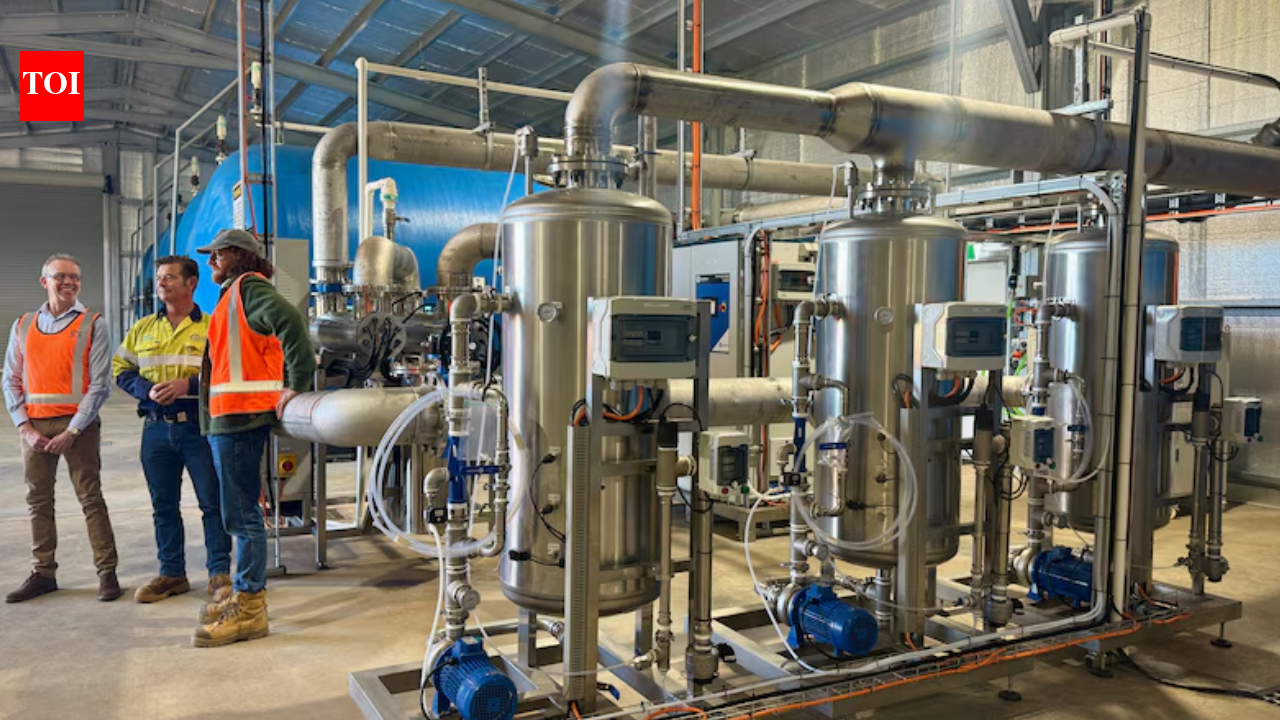
Australia has switched on a new advanced wastewater treatment plant in regional New South Wales that could turn discarded sewage effluent into a valuable source of recycled water. The $7.8 million facility in Dubbo can process up to 700 megalitres of wastewater a year, roughly the equivalent of 280 Olympic-sized swimming pools, as the region looks to strengthen its water security. ABC News reported the facility was switched on this week, while Squadron Energy, which helped fund the project, confirmed its capacity and cost.A new approach to treating difficult pollutantsAt the centre of the project is a wastewater treatment technology developed by water treatment scientist Troy Warry. According to Warry, the system can break down stubborn pollutants around 16 times more efficiently than conventional advanced oxidation systems.The technology uses a titanium-dioxide-based catalyst that remains permanently fixed inside the reactor while continuing to be activated by light. Unlike processes that simply filter contaminants out of wastewater, the system is designed to chemically break down pollutants.That includes difficult-to-remove substances such as pesticides, petroleum hydrocarbons, pharmaceutical residues, antibiotics, hormones and other persistent organic compounds, according to the technology’s developer. ABC reported that the system was previously trialled in Germany, Spain and Norway.Warry’s claimed efficiency advantage is significant, but it remains his assessment of the technology rather than an independently established performance benchmark. University of Sydney civil engineering professor Stuart Khan told ABC that the approach was relatively uncommon at this scale and that results would need to be assessed before its broader impact could be determined.Why Dubbo is betting on recycled wastewaterThe plant has been built beside Dubbo’s existing Sewerage Treatment Plant through a public-private partnership between Dubbo Regional Council and renewable energy company Squadron Energy.Squadron Energy contributed $3.6 million towards the project, with the arrangement initially allowing the company to access recycled water for construction associated with its renewable energy developments in the region. The company’s investment was framed as part of a wider effort to reduce pressure on local water supplies.The facility’s 700-megalitre annual capacity represents about 11% of Dubbo’s annual water use, according to Squadron Energy. The company and council have said the infrastructure is intended to provide a longer-term water-security benefit beyond the construction of renewable energy projects.From wastewater to a new water resourceThe recycled water is not yet approved for every proposed use. Dubbo Regional Council is working through approvals for applications including dust suppression and concrete batching, while further testing is being undertaken with the University of Newcastle to assess other potential uses, including irrigation of sporting facilities.The technology could be particularly relevant to inland communities because it offers an alternative to membrane-based treatment such as reverse osmosis. Professor Khan noted that such filtration processes can leave behind concentrated salty waste, creating another disposal challenge in inland areas.For Dubbo, the bigger idea is not simply treating sewage more efficiently. It is changing the role of wastewater itself, from something to be discarded into a resource that can supplement supplies when drought, population growth and increasingly unpredictable rainfall put pressure on conventional water sources.
Australia opens $7.8m wastewater plant that treats 700 megalitres a year
Full Article
Original Source
Read the full article at Timesofindia →KhanList aggregates and links to publicly available news content. We do not host full articles from third-party sources. Always verify important information with original sources.