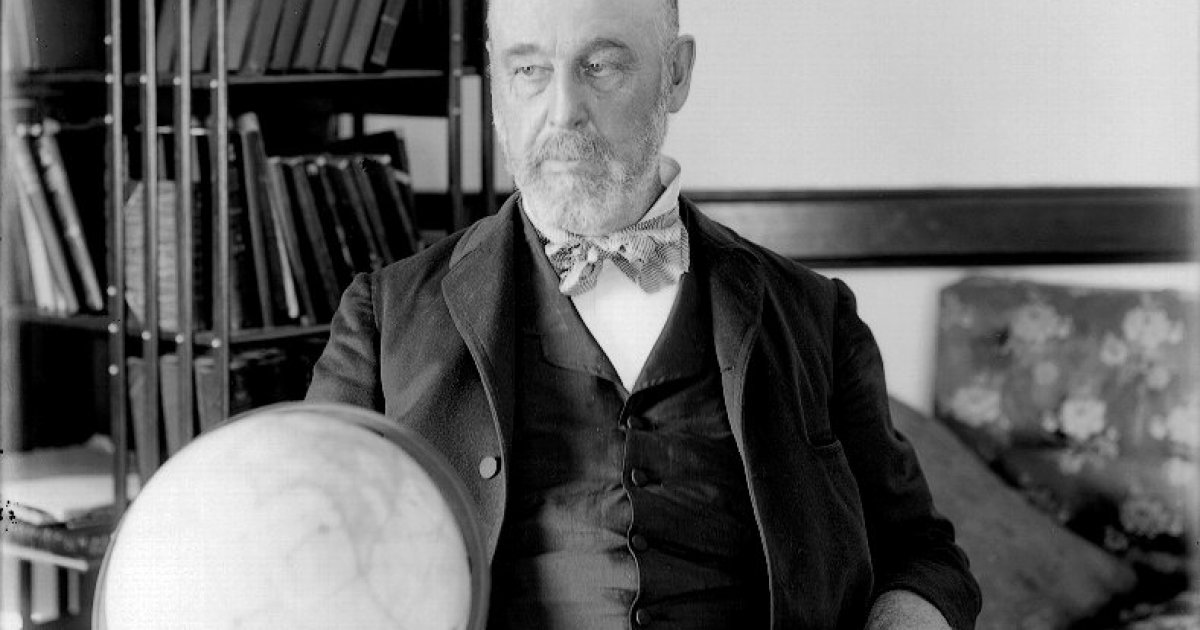
Today in the history of astronomy, the smaller of Mars’ two tiny moons is spotted from the U.S. Naval Observatory. | Published: August 11, 2026 Asaph Hall won several awards after his discovery of Phobos and Deimos in 1877. Credit: U.S. Navy/Wikimedia Commons After spending the 1850s at Harvard Observatory calculating orbits, Asaph Hall became an assistant at the U.S. Naval Observatory at Washington, D.C., in 1862. He was quickly promoted, and by 1873 had not only held several scientific discussions with Abraham Lincoln during the president’s visits to the observatory, but had also been put in charge of the 26-inch Clark refractor. It was with this tool that Hall searched during an 1877 close opposition of Mars for the Red Planet’s much-speculated moons. On Aug. 11, he spotted a moon, but lost sight of it due to the poor weather that the observatory’s “Foggy Bottom” location was famous for. Frustrated, he nearly gave up the search, but his wife convinced him to keep looking. The next evening, he conclusively discovered Deimos, the smaller of Mars’ two moons. Elisa Neckar is senior production editor of Astronomy magazine, and the editor of the Today in the History of Astronomy feature on Astronomy.com.
Aug. 11, 1877: Asaph Hall discovers Deimos
Full Article
Original Source
Read the full article at Astronomy →KhanList aggregates and links to publicly available news content. We do not host full articles from third-party sources. Always verify important information with original sources.