
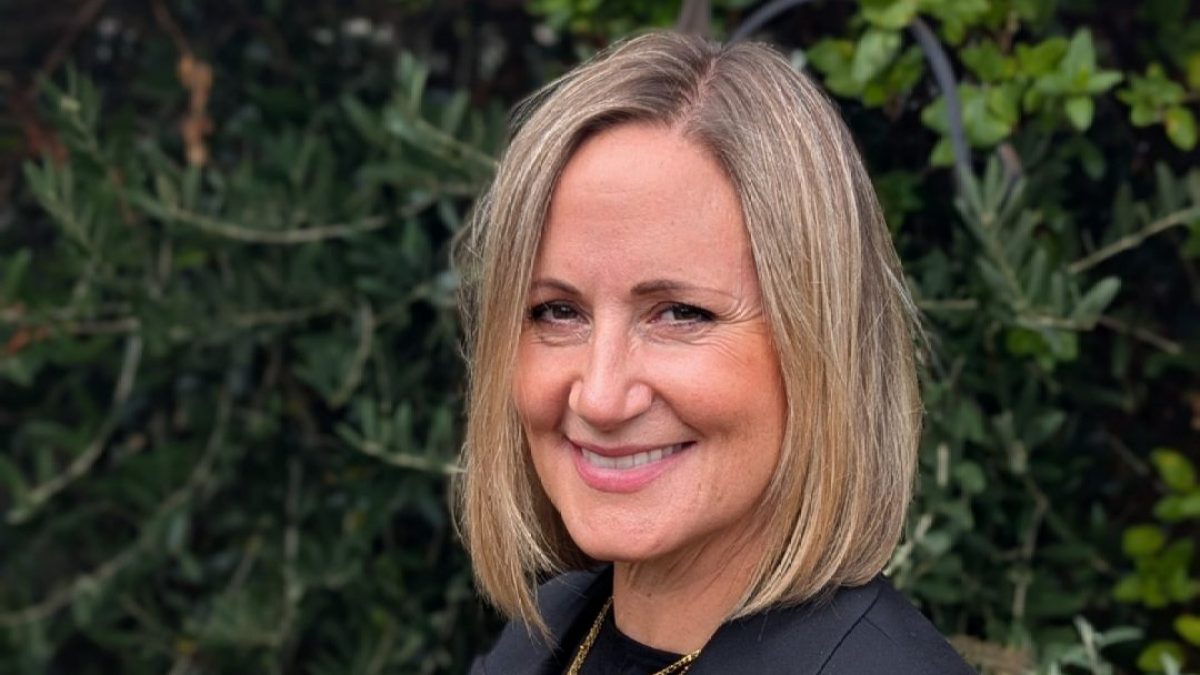
More mid-life workers are making career pivots than ever before. After decades in the workforce, people in their forties, fifties, even sixties are taking a leap of faith to leave their jobs and follow their dreams – but it isn’t without its challenges. Kate Etherton, 47, based in south-west London, worked in technology PR for 26 years. Earlier this year, she left her career to retrain as a wedding and funeral celebrant. Interview by Maybelle Morgan When I first told my husband and teenage kids that at 47, I was going to leave my decades-long corporate career to become a celebrant, they laughed. They said: “You cry when other people cry – how are you gonna do this?” But now, several funerals, naming ceremonies, vow renewals later, plus four more weddings booked, it has been the best thing I’ve ever done for myself. I feel like a different person. It definitely was never my dream to work in PR, and I ended up in it by accident. At school I did physics, chemistry and maths A-levels, but at the last minute, I chose a drama degree at university. When I graduated, there was no obvious career path. One day at the careers office, someone put me in contact with an old graduate who had set up his own technology PR fund and who was looking for a graduate to join the team. I applied, got an interview, and I was offered a job as a junior account executive. Shorts This was around the early Noughties – the internet boom time – and we were launching brand new things that people had never seen before. It was cool and so exciting. I ended up at a technology specialist agency, which was part of WPP, the global media collective. Over the years, I was promoted time and time again. I became the UK managing director, then the president of Europe, then stepped into a global role as chief experience officer, looking after global client experience across Latin America, US, and Europe. I truly loved it. I had always deeply believed in the power of technology to do good for business, people, and society. But at the start of 2025, the US administration completely changed. So many technology companies seemed to be bending over backwards to do the bidding of Donald Trump, and lots of safeguarding was going out of the window. I found it very hard to feel like everyone was on the good side and I didn’t always believe in the client’s work. The impact that AI was having on the communications industry was huge, and everyone was freaking out about it wiping out entire jobs. I started craving work that had heart in it – something human and real. One day, after dropping my daughter off at a play date at somebody’s house, I walked past a local funeral director, and it struck me that this was something human that could never be replaced by AI. For millennia, people have ritualised pivotal moments in our lives with ceremonies, whether it’s around death or marriage. We’ve always needed living, breathing human beings to mark these moments. I started thinking about celebrancy. It wasn’t new to me. Fourteen years ago, a friend of mine had asked me to be the celebrant at her wedding. I used to do a bit of stand-up comedy on the side and I was known for my delivery style, keeping a room warm, and bringing people on a journey. I realised that through my life, I had always been given the role of leading the emotional room, whether that was in a work or corporate setting, or being asked to speak at a funeral. I came home that evening and told my husband I was going to become a funeral celebrant. He said, “I can’t tell if you’re joking or not, but I do think you’d be really good at that.” After doing hours of research and realising there were so many aspects I loved about it, I booked myself on to a course in May this year and took the leap. Around the same time I had booked on to my course, it was announced there would be restructuring at my company and I was made redundant. It felt like a good time to leave. Timings-wise, it was quite fortuitous. Redundancy meant I could really throw myself into celebrancy and there would be a little bit of a financial buffer. I did a week-long residential course, which was terrifying. It’s an immersive training programme where students live on-site while learning to write and officiate weddings, funerals, and naming ceremonies. Then I did an actual qualification with the ICPC, the International College of Professional Celebrants, which cost around £3,000. It meant that I had liability insurance and access to a business accelerator programme, which helps you transition from full-time job to being self-employed. A week after I finished the course, I started calling funeral homes, and quickly got a booking – funerals tend to come through suddenly. Since then, I’ve been averaging one or two a week. I recently did a funeral for a baby, and after, the family came over and put their arms around me, saying it was perfect and what they needed. It’s a job that really opens you up to the kindness that’s within people even in their deepest, rawest moments. I’ve done naming ceremonies and I have weddings booked in Surrey, London, and one up towards Derbyshire. Funnily enough, I happen to think that celebrancy is the ultimate communications job. It’s just on a very hyper-focused scale. You work with somebody intimately, you understand the story that they need to tell, you build it up, present it back, and you take a whole room with you on that emotional arc of a journey. If you work in communications and you do a great campaign, you affect thousands of people to a tiny degree. Whereas as a celebrant you get to have such a huge impact on a much smaller scale, and the emotional reward is through the roof. The challenging thing is building your reputation in the celebrant space to get the bookings at the value that you are worth. For funeral services, you’re generally paid around £250. But in London, you might receive a fee of around £400. For weddings, the spectrum is huge. You can be paid anything from £500 up to £1,000 for a wedding. I’ve had to redefine what success means and looks like to me. I had always been the main breadwinner, earning significantly more than my husband – who works as a data analyst – but luckily he’s very supportive and has been telling me for a while that I needed something new to make me happier. We reduced our overheads where we could, extending the mortgage term to lower the monthly pressure. Thankfully, my two kids are still at state school – I wouldn’t have been able to do this if I had big school bills over my head. Right now, just a few months in, I’m earning 20 per cent less than my senior corporate salary. I’d happily earn a fraction of my old income and feel completely fulfilled, because the reward here isn’t the number – it’s the work itself. If I’m making a good, steady living doing something this meaningful, I’ll consider that a roaring success. It’s unlocked a lot more creativity, energy and happiness in me, and I feel like I have a lot more emotional space for the people I love. It was hard before when you’re fraught after meetings, or you’ve made difficult decisions at work that mean people’s jobs are impacted. But now, oddly, even though I’m doing a more emotive job, I have more space for my own emotions and the emotions of my children. If anyone is thinking about doing this, my advice is to do it as a side hustle first. If you’re building something from scratch, you’ll put in so much time and effort into building a website, making connections, doing the training, and none of that is paid work. You’ve got your costs for starting up your business: the web hosting, the domain name, buying a printer, the listing services. Your outgoings suddenly start to become very high and your incomings are very low. Doing one thing for 25 years became a comfort zone, and walking away from it felt truly terrifying. But I feel more confident than I’ve ever felt before – in myself and how I come across. It’s almost insidious the way that a corporate environment can knock your confidence. The ridiculous things that we go through: stupid annual appraisals that everybody knows is meaningless, the huge layoffs, people being treated so impersonally. At some point, you just find yourself thinking, something’s got to give. Don’t get me wrong: I’d still love to win the lottery and put my feet up, but if that something’s got to give is the luxury holidays or the massive car, I say do it – you might actually find that you can be a lot happier.
At 47, I gave up my corporate job to be a celebrant – I love funerals the most
Full Article
Original Source
Read the full article at Inews →KhanList aggregates and links to publicly available news content. We do not host full articles from third-party sources. Always verify important information with original sources.