
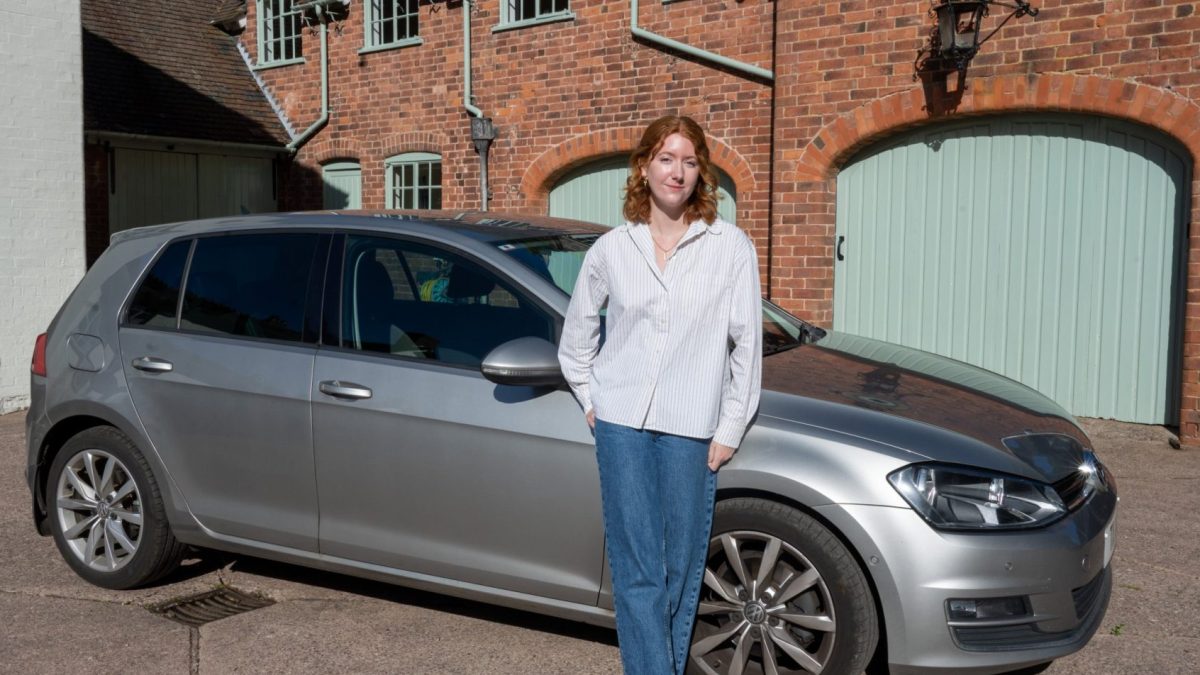
Am I embarrassed to say I’m 25 and still can’t drive? No, I’m not. But I admit, there are moments in my life when lacking a car and a licence does become more a source of shame rather than simply an indicator of how I get from points A to B. Take, for example, a party I went to this summer. I was chatting to a guy I’d fancied for years, suspecting that he might fancy me too. He brought up a weekend trip that he was planning with friends and asked if I wanted to join. Of course, I said yes, but added that I’d need to share a ride. “Can’t you drive?” he said, followed by an enquiry into how I got here. Shorts It was coming, I knew it was. “My parents gave me a ride,” I said reluctantly. I could literally see our chemistry evaporate before my very eyes; clearly my messy relationship with adulthood was quite the turn off for him. From there onwards, our conversation sadly fizzled, not helped by the brief interruption from my dad ringing to say he’d be half an hour early – and that I’d left my bedroom lights on. In retrospect, I fully support my old crush ditching me at the scene. And yet, in spite of situations like these becoming more and more common, I still feel absolutely no desire to learn how to drive. Why do I feel such an aversion towards one of the most basic milestones of adulthood there is, the very thing that offers the key to freedom and prosperity? Where’s the logic in shying away from the capacity to go wherever you please, whenever you wish? I assure you, there is logic to my madness, logic which is increasingly being followed by many others in my generation, Gen Z. Research by the energy firm Hive found that 50 per cent of 14- to 29-year-olds in Britain believe they can live happily without owning a car. 71 per cent no longer view it as a rite of passage and 29 per cent say they’re too scared to get behind the wheel. The result of this is an escalating decline in young drivers. The Department for Transport revealed that in the early 90s, 48 per cent of 17– to-20-year-olds held a full driving licence. By 2024, the figure had fallen to about 29 per cent. I see it reflected in my daily life. I have five sisters, four above the age of 17 but only one of us (the 33-year-old) can drive. My friendship group is split 50:50 split between those who can and can’t drive, a phenomenon now coined the “driving-divide”. And no, we don’t live in London, where it might be more understandable to not have your licence, given the transport network. Plenty of my non-driving friends are based in small towns like mine in Staffordshire, and depend on bikes, buses, and parental generosity. Part of the reason is the cost. Us Gen Zers don’t have it easy when it comes to economics. We’re facing one of the toughest job markets in years, youth unemployment is ever-growing and we’re coming of age in the midst of a national housing crisis. 43 per cent of 25-year-olds are still living at home – myself included. For most of us, a driving licence is simply a luxury we can’t afford. It now costs on average £1,000 just to pass a driving test. This is before one even considers car insurance, fuel, parking, road tax, MOTs, servicing, tyre replacements, and, oh yeah… the cost of actually buying or leasing a car! Our collective reluctance to get behind the wheel is driven by ethics and environmentalism, too. I mean, maybe it’s more of an added bonus, but surely, it can’t be too long until the government outlaws driving altogether – or at least expand Ulez to every corner of the nation? Is there really any point in investing time and money (which I don’t actually have) into something that might be banned by the time I’m taking my future children to school? Even if cost and concern for earth’s survival weren’t factors to consider, I still doubt I’d be on the roads. These factors being so widely accepted by my generation makes it easier to hide the real problem for me: I’m scared. The thought of driving fills me with fear. As a dyslexic (who, under pressure, gets her left and rights jumbled up) I’ve always questioned my ability to drive. In fact, I consider it a matter of public safety that I don’t! The problem is, despite currently getting along just fine using the “Cab of Mum and Dad”, I’m beginning to contemplate how this might affect me going forward into adult life. It’s become something of an axiom to say us Gen Zers are delaying the arrival of adulthood, that we’re putting off reaching key milestones like moving out, getting a job, falling in love and having children. As a consequence, we’re prolonging our state of dependency which, ironically, is amplifying our instability; making us more insecure, unsure of our future and thereby less keen to invest in it. Living at home without a driving licence is delaying me reaching all those milestones and markers of adulthood. It’s not that I want to delay growing up. But then again, as time goes on, and as life as an independent becomes more and more out of reach, adulthood is appearing increasingly more daunting. I can feel my prospects both socially, and in my work life, dwindling. Since leaving university last year, I’ve had to limit my job search to cities where public transport is readily available and, while still in waiting, I’ve been working from home, accepting the limitations that being a non-driver inevitably brings. The UK now has over a million young people not in education, employment or training, and there are warnings that the decline in driving is fuelling the crisis in youth unemployment. “Access to independent transport broadens employment options, particularly in areas where public transport is limited”, says Lee Gamble, managing director of Berry Recruitment, my local recruitment agency. “In our experience, employers are generally looking for reliability and the ability to get to work consistently, and a driving licence can provide greater confidence in that regard.” It matters less in cities, of course. In the likes of London, you’re overwhelmed by choice. “In smaller towns and rural areas,” Gamble says, “not having access to a car or driving licence can limit the range of jobs available and, in some cases, prevent candidates from applying altogether”. But what I and others in my generation are beginning to understand is that driving is about much more than just transport. It’s about confidence. When my eldest sister learnt how to drive aged 26, I remember her saying how empowered she felt, the independence, the freedom, the feeling you’re finally a fully fledge member of the working world. True, I dislike cars and fear motorways, but it would be wrong for me to suggest I don’t want that feeling, that I don’t want to take those next steps in life. Unfortunately, I’m still saddled with the overriding issue of affordability. Meaning even if there was just the slightest inkling inside of me that desires a licence, I can’t actually act upon it. For now, I’ll be sticking with my parent’s taxi service, holding out hope for driverless cars and maybe, for romance’s sake, telling my future crushes: “It’s just having an MOT.”
At 25, I can’t drive – it’s holding Gen Z back at work
Full Article
Original Source
Read the full article at Inews →KhanList aggregates and links to publicly available news content. We do not host full articles from third-party sources. Always verify important information with original sources.