
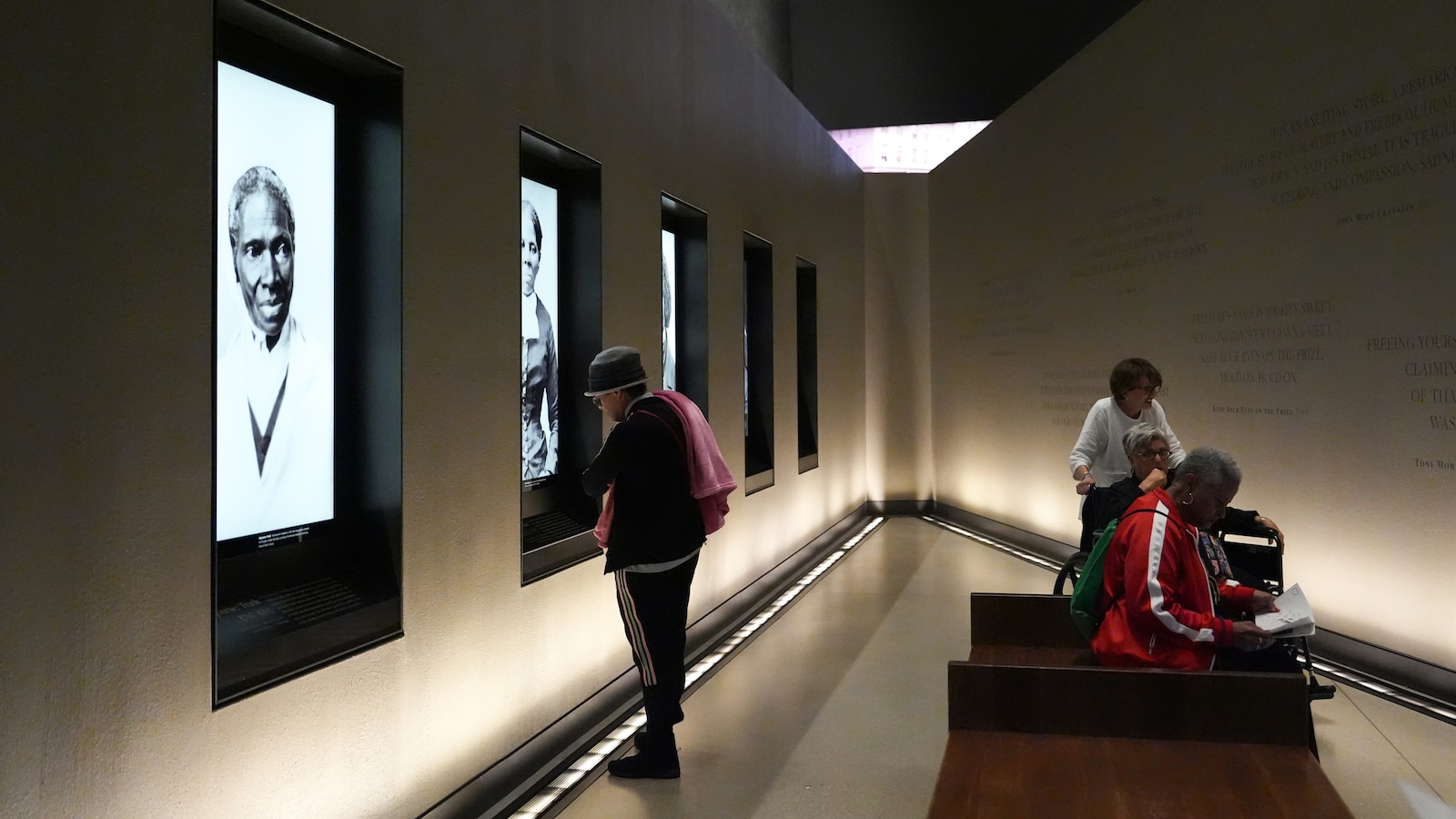
WASHINGTON -- Deeply impactful exhibits, ticketed galas and educational events are expected ways to celebrate a world-class museum. But at the National Museum of African American History and Culture, which marks the 10-year anniversary of its opening on Thursday, the singing of Stevie Wonder's “Happy Birthday” will give the event the flavor of a down-home family reunion."Our anniversary is really founded through this theme of ‘Welcome Home. Our Legacy Continues,'" said Shanita Brackett, the museum's acting director. "It means we are planning our next 10, frankly 20 years of exhibitions right now.”Beginning with a full museum activation on Thursday, the celebrations extend through the rest of the weekend, both at the museum's National Mall home and The Wharf, located along the historic Washington Channel of the Potomac River. Smithsonian Secretary Lonnie G. Bunch III, the museum's founding director who announced his plan to retire earlier this month, will headline “Understanding America,” a discussion to commemorate the anniversary.The festivities come as the Smithsonian museum, affectionately called the “Blacksonian” by its most committed visitors and patrons, has faced outright hostility from President Donald Trump's administration. The president last year signed an executive order seeking to change a range of museums and landmarks supported by the federal government. The Interior Department has also removed dozens of displays from national monuments that highlighted the history of social activists, people of color, women and LGBTQ people, among others.The order instructed federal officials to work with Congress to bar the Smithsonian from using federal funding for exhibits that allegedly “degrade shared American values, divide Americans based on race, or promote programs or ideologies inconsistent with federal law.” But the Smithsonian's leadership, which responds to a board that includes lawmakers from both parties, private donors and Supreme Court Chief Justice John Roberts, says they have continued their work without interference.“We have not changed any exhibitions. We haven't changed our language. We know that what we do is steeped in scholarship,” Brackett said of the African American museum.The Smithsonian is supported by a mix of federal and private funding. The institution's significant funding and complex governance structure have made it difficult for the administration to directly influence its content, as officials have done with federal landmarks, which are maintained directly by the executive branch. That hasn't stopped an outpouring of concern from supporters of the African American museum's mission in response to any curatorial changes the museum has made over the last two years.Administration officials have also expressed frustration at the Smithsonian's resistance and have outlined new measures. Trump has ordered to place signs in front of some Smithsonian buildings warning visitors they may experience exhibits with an inaccurate portrait of American history.Brackett said her museum is confident they can continue with the museum's original vision “to capture and share the unvarnished truth of African American history and culture.” “We know that Black history is a part of American history, and it's our job to ensure that everyone who comes to this museum, who engages in our programming, who visits us online, understands exactly how all of this evolved, how the contributions of African Americans have advanced this country, and that's really what people walk away with,” she said.“There are no changes to exhibits other than rotating objects that need conservation,” she added. Some visitors had expressed fears that exhibits, such as the casket of Emmett Till and a Greensboro lunch counter housed at the neighboring American History Museum, may have been altered to appease the administration’s concerns. Brackett was clear: “Nothing has changed.”Popular ReadsThe idea of a landmark recognizing the contributions of African Americans on the National Mall goes back more than a century. In 1915, Black Civil War veterans called on lawmakers to establish a landmark honoring their contributions to the war effort, often fighting for their own liberty. The idea advanced in fits and starts over the 20th century until eventually calls to commemorate the legacy of the Civil Rights movement captured the interest of lawmakers on Capitol Hill.The Museum of African American History and Culture was first approved by Congress in 2003 and opened its doors on Sept. 24, 2016. At its opening ceremony, then-President Barack Obama urged African Americans to see their story as an integral thread in the broader American story. “It is a glorious story, the one that’s told here. It is complicated, and it is messy, and it is full of contradictions, as all great stories are,” Obama said. “The very fact of this day does not prove that America is perfect, but it does validate the ideas of our founding: that this country — born of change, of revolution, of we the people — that this country can get better.”Since its opening a decade ago, the museum has welcomed close to 14 million visitors from 200 countries and has hosted more than 26,000 school groups, according to the Smithsonian. Across 10 floors — five above ground celebrating art and cultural achievements and five below ground exploring deep histories — visitors have learned of the complex history of African Americans in the U.S., a story that is by turns harrowing and triumphant, and how it fits into the broader narrative of American history.A day before the anniversary, Shallary Duncan of Williamsport, Pennsylvania, visited the museum for the first time.“Quite honestly, with all of the changes in our country, it made me yearn to be here. I don't want to see any changes that would mitigate the reality of this experience,” said Duncan, a psychologist and self-described “history buff.”“We know that African Americans have been in this country for as long as the country has been here, so it's important for us that we are a part of a voice that says this is real, our history is real and we don't want it to change,” she added.More than a dozen students from a consortium of historically Black colleges and universities also visited the museum on Wednesday, eager to learn from its exhibits. Some of the students said they had visited the museum repeatedly since they were children.For Jaina Dotson, the trip was a special experience. Growing up in Maryland, she'd visited the museum once as a child and was “eager to see how my perspective has changed.” Now a student at Tuskegee University studying architecture, the visit was also a chance to put her classwork into practice. Dotson said she had researched the museum’s design for her latest architectural project.“Looking at the outside facade, the corona, and the intention of the design behind that, as well as the layout of the museum itself, was an integral part of my research,” Dotson said. “The layout of the museum, its architecture, is really important for the experience. So it'll be fun to actually experience that as a patron.”
At 10 years old, Smithsonian's Black museum is undaunted amid pressure from Trump administration
Full Article
Original Source
Read the full article at Abcnews →KhanList aggregates and links to publicly available news content. We do not host full articles from third-party sources. Always verify important information with original sources.