
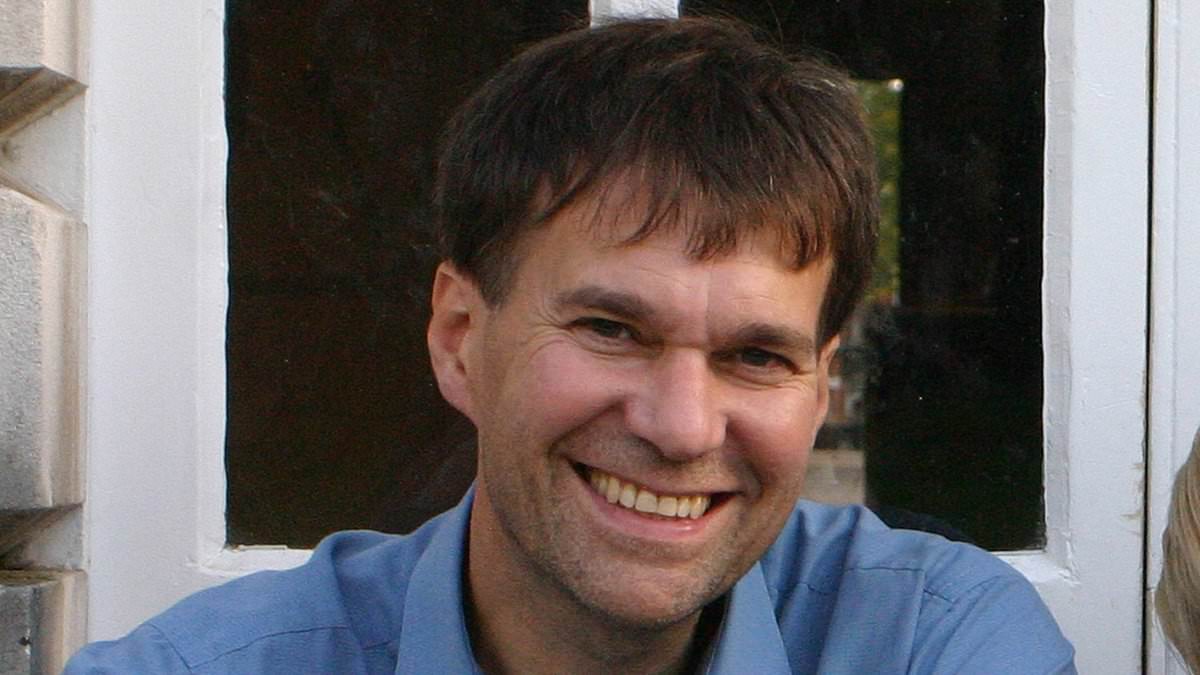
When Quentin Webb was told he had less than a year to live, his response was somewhat unusual.Instead of breaking down in tears like his wife Helen, he calmly declared that he wasn't worried. 'I don't feel like I'm dying,' he said in the doctor's office, having received a diagnosis of advanced kidney cancer. 'I'll worry when I feel like I'm dying.'As it transpired, Quentin was right. Twenty years later, he is in remission and has watched his son Oakley, who was just two at the time of his diagnosis, grow up, start school and graduate from university. 'I never accepted that I was going to die – and here we are,' he says today. When Quentin Webb was told he had less than a year to live, he declared he wasn't worried Twenty years later, he is in remission and has watched his son Oakley, who was just two at the time of his diagnosis, grow up, start school and graduate from universityQuentin's confidence came from the healthy lifestyle he had led throughout his life. A former international Dragon Boat racer and Scout leader, Quentin, from Rickmansworth, Hertfordshire, spent his free time sailing and climbing.That's why the first symptoms of his cancer were brushed aside.Quentin first noticed feeling far more tired than normal in September 2005, followed by unexpected weight loss and an enlarged testicle. 'You just think, 'Oh, bless, he's getting older'', says Helen, 61.However, when he began falling asleep at the dinner table, she suspected something far more sinister was going on.Quentin visited his GP, but the couple say he was not sent for blood or urine tests, which can reveal clues linked to kidney cancer. Instead, he underwent a scan of his testicles which 'found nothing'. In April 2006, they paid privately for a second opinion but say he was diagnosed with a varicocele, a swelling of veins in the genitals similar to varicose veins. However, Helen believes the swelling was actually being caused by the tumour. Newly hard veins or swellings behind the testicles can be linked to kidney issues, as the vein that drains blood from the left testicle empties directly into the left kidney vein.And when the doctor took the vein out, Helen said nothing changed. It was only after Helen's sister, a doctor, urged the couple to push for blood tests that the cancer was finally uncovered in October 2006. Days later came a second devastating blow. The cancer had spread to his lung.Kidney cancer is now the sixth most common cancer in the UK, with almost 14,000 people diagnosed each year and around 4,700 deaths annually. Cases are also rising among younger adults, with those born in 1990 up to three times more likely to develop the disease than people born in the 1950s, a trend experts believe is linked in part to rising obesity and high blood pressure. Quentin first noticed feeling far more tired than normal in September 2005, followed by unexpected weight lossOne reason kidney cancer is often diagnosed late is that early-stage disease frequently causes few or no symptoms. As a result, many tumours are only discovered during tests carried out for unrelated conditions.Doctors immediately removed Quentin's tumour, which weighed 3.5lb – or 1.5kg – along with his left kidney and left adrenal gland.Helen said surgeons had to break his ribs to remove the mass, which she compared in size to a 'small baby'.But because the cancer had already spread – known as stage four – and would not respond to chemotherapy or radiotherapy, the couple say they were told by doctors there was 'nothing we can do'.Quentin was given just eight to 12 months to live.Then, Helen came across an alternative treatment – Interleukin-2 (IL-2), which was then only being offered in America and Canada.IL-2 is a naturally occurring protein that helps power the immune system, stimulating white blood cells to attack cancer cells. Before modern immunotherapy drugs became widely available, giving patients the treatment in a high-dosage was one of few capable of producing long-lasting remissions for advanced kidney cancer and the deadly skin cancer, melanoma. Researchers have reported that a small number of patients achieved complete remissions lasting many years, and in some cases decades – like Quentin.After speaking to her husband's medical team, she tracked down a US doctor willing to treat him, and the couple began planning to fly out. Then came a stroke of luck.Clinicians at The Christie NHS Foundation Trust in Manchester were pioneering the therapy, making it available much closer to home. Quentin (left, with his family) was given just eight to 12 months to liveAt the time, it was one of only a handful of centres in Europe offering the treatment.After his first treatment in July 2007, Mr Webb says his chances of survival rose from 2 per cent to 5 per cent. 'There were hundreds of cancer spots scattered through my lungs,' he said.'And my thinking was, this is my only chance, because it wasn't a given that it was going to fix me.'You've got a two-year-old who's waiting for you and needs you.'Helen added: 'Quentin was facing not being here at all, and I was facing the prospect of when he's not there, thinking, how do I bring this child up who doesn't have a father?' Key warning signs of kidney cancer: Blood in urinePersistent pain in side, back or under ribsFatigueUnexplained weight lossLump or swelling in abdomenLoss of appetiteFever or excessive sweating 'The treatment was finally a bit of hope after a long time.'The treatment ended in August 2008 and left Quentin suffering side effects including severe skin flaking. He later had surgery to get rid of as many remaining cancerous spots as possible. 'I remember the call and they said: I'm confident we've got it,' Helen said.In 2015 cancer was found in Quentin's right adrenal gland – but it was removed, and he is now on steroids for life. But ultimately, IL-2 put him into remission.Today, however, the treatment is far less common. Although it produced extraordinary results for some patients, it could also cause severe side effects.These included dangerously low blood pressure, fluid leaking from blood vessels, breathing difficulties, kidney problems and heart rhythm disturbances.It has largely been superseded by newer immunotherapy drugs such as nivolumab, pembrolizumab and ipilimumab.These are effective in more patients and are generally easier to tolerate. But for Quentin, IL-2 was miraculous. Today, he continues to enjoy sailing, climbing and volunteering as a Scout leader, while also attending twice-yearly check-ups.He has also raised £50,000 for The Christie Charity.'There was one point before we'd found the Interleukin-2, where I was reflecting, and I said to Quent, I just want you to see [our son] start school, and Quent said, well, I want to see him start secondary school,' Helen says.'I thought we had no hope of that, no hope whatsoever, so there are moments now where you think, wow, we are so lucky.'Celebrating 20 years is a real landmark and it does make you think, Oakley's now grown up and we do have an absolutely normal life – and that is against all the odds.'
Astonishing tale of dad, 46, with kidney cancer and given a year to live with 'nothing doctors can do'... still alive two decades later thanks to pioneering immunotherapy
Full Article
Original Source
Read the full article at Dailymail →KhanList aggregates and links to publicly available news content. We do not host full articles from third-party sources. Always verify important information with original sources.