
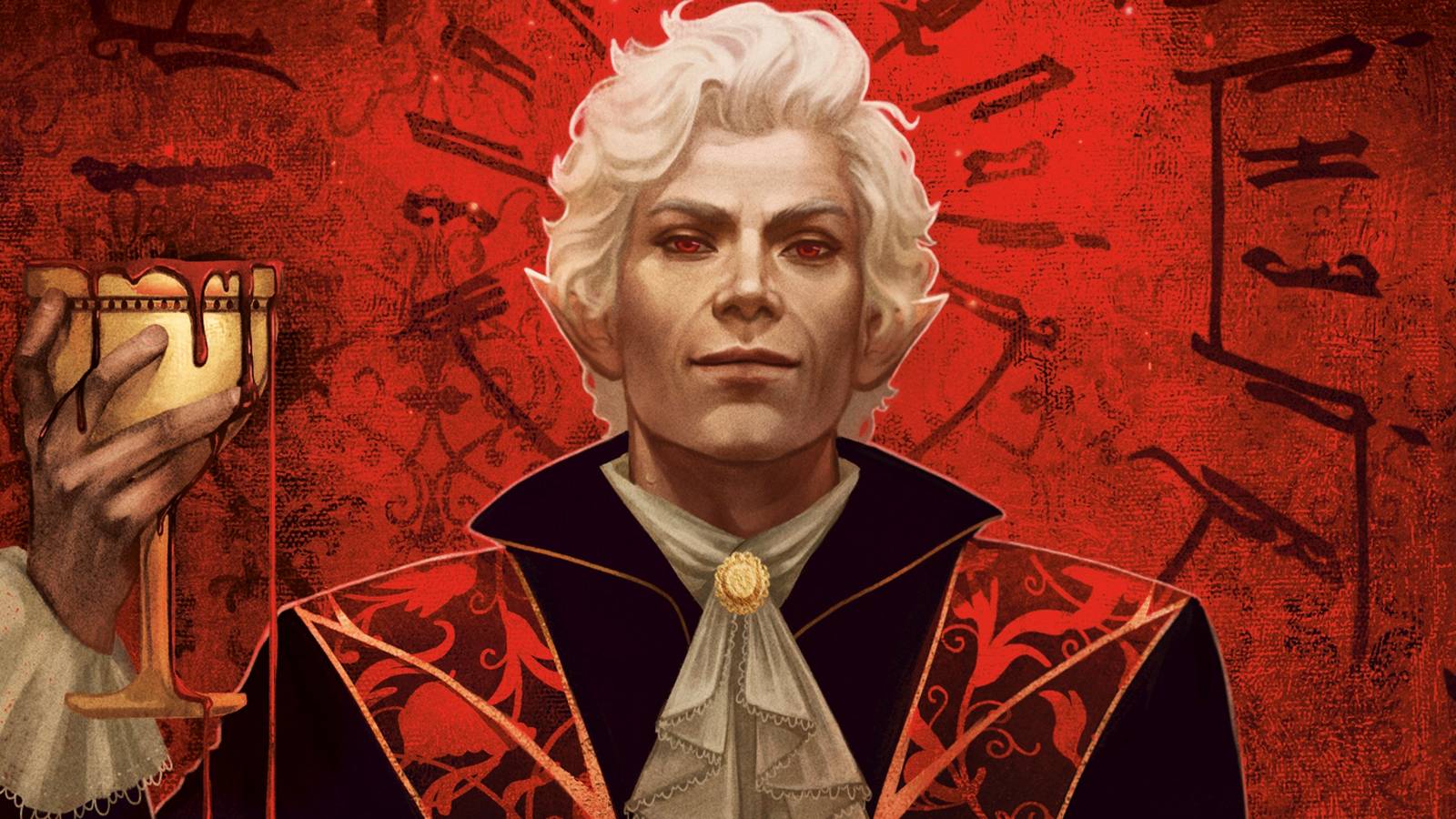
Published Sep 30, 2026, 1:00 PM EDT The book's author, T. Kingfisher, does her best — and mostly succeeds Image: Random House Worlds / Wizards of the Coast In 2023, Larian Studios' venture into Dungeons & Dragons’ Forgotten Realms with Baldur’s Gate 3 was a major success — and not just for the studio. Much like Critical Role’s arrival inspired many nerds to take a new interest in tabletop role-playing games, Baldur’s Gate 3 had a similar effect. Players wanted to learn more about the world their favorite companions came from, and D&D publisher Wizards of the Coast was ready with supplementary material, from miniatures and character sheets to crossover appearances in games like Idle Champions of the Forgotten Realms and Magic: The Gathering. Wizards of the Coast also announced four tie-in books from Penguin Random House, including an Astarion Acunin prequel novel (out now) from award-winning Nettle & Bone author T. Kingfisher (aka, Ursula Vernon). While all the Baldur’s Gate 3 companions are loved, the witty elf-vampire Astarion in particular has inspired a fervent, devoted fanbase, with many empathizing with the abuse he suffered at the hands of his cruel vampire master, Cazador. Kingfisher has proven more than capable of handling dark, grim topics in books like The Twisted Ones, so it’s little wonder Wizards chose her to handle Astarion. With input from Astarion’s writer, Stephen Rooney, and voice actor, Neil Newbon, Kingfisher delivers an emotional whirlwind of a novel in Baldur's Gate 3: Astarion. But it was unfortunately doomed from the outset. T. Kingfisher gets Astarion Astarion, a pale elf with white hair and red eyes, looks to the left, gazing at something off-screen.Image: Larian Studios via Polygon Astarion’s story shifts between his early days as a young working-class boy taken in by a rich relative and his present life as a vampire spawn in Cazador’s mansion, alongside his fellow spawn. With no clear chapter breaks, transitions between past and present feel jarring. The book reads like a series of vignettes until the main plot arrives halfway through. One could argue this format makes sense given the jumbled headspace of a vampire who has endured centuries of physical and emotional torture, but it doesn't make for the best reading experience. Given Astarion’s story of violence and sexual abuse in Baldur’s Gate 3, any book dipping its toes into his background would require the utmost care, along with an author who wouldn’t necessarily sand down the horrors the character experienced. Although some dialogue feels overly hammy — as if Kingfisher is winking at Baldur’s Gate 3 players instead of focusing on the story — the writer strikes a fine balance between depicting the horrors inflicted on Astarion and the small pleasures he carves out for himself whenever he can, like the fine curtains he hides from his siblings and Cazador. Yet even in these pleasures, melancholy lingers. Unlike in Baldur’s Gate 3, where Astarion is far more reassured now that he’s tasted freedom from Cazador, Kingfisher highlights an Astarion who believes he’ll be stuck as his vampire master's lapdog forever. As much as Kingfisher injects humor into the narrative, often with a witty one-liner from Astarion himself, the tone is often biting. When Astarion muses on his inhumane treatment, he does so matter-of-factly. Kingfisher wisely avoids turning the novel into torture porn, which means glossing over some critical history established by the game. That doesn’t mean there aren’t scenes that will make you feel queasy, such as when Cazador tricks his spawn children into thinking he’s gifted them with an orgy, only for them to realize they are, in fact, porking pigs. (Yes, seriously.) However, the novel doesn’t linger on it. Astarion’s language and how he moves through the novel make it clear he's lived a life of pure hell. We don’t need Kingfisher to make Astarion turn to the reader to say it. A lesson in Wizards of the Coast’s meddling Image: Random House Worlds / Wizards of the Coast For as much as we enjoyed our time with Astarion, it was hard to ignore the elephant in the room: the retcons and changes to Astarion’s background, namely with the Gur. In Baldur’s Gate 3, Astarion is very clearly established as a racist. After he was killed by a mob of nomadic monster hunters after they felt a ruling he had made as a magistrate was unjust, he developed an irrational hatred for them. It isn’t just the Gur that Astarion hates; he loathes most shorter races, such as halflings and gnomes, and often ridicules them whenever he encounters one. In Astarion, the Gur who killed Astarion have instead been replaced by hunters who received justice after being caught for poaching. Unlike the implication in Baldur’s Gate 3 that Astarion is corrupt in his job, the novel makes it clear he gave a fair ruling. Kingfisher confirmed the reason for the change in Gur on Bluesky: interference from Wizards of the Coast: “That particular bit was specifically because WOTC told me to, too! I’d had it as the Gur originally, but [Wizards of the Coast] are trying to get away from that.” When asked for further clarification, Kingfisher said the explanation they received was that the Gur came across as “Romany-stereotype coded,” which was not their intent. This is far from the first time Wizards of the Coast’s interference has altered a character’s background or relationship. The company also faced backlash after erasing the romantic relationship between planeswalkers Chandra Nalaar and Nissa Revane in the Magic: the Gathering novel War of the Spark: Forsaken, for which the company apologized. For Wizards to sand down Astarion’s edges isn’t surprising, but it does show how much the company is willing to do to appeal to a mass market. Authentic, non-stereotypical representation of marginalized people is deeply important. However, the Gur were never portrayed negatively — that all fell on Astarion and his treatment of them. Image: Larian Studios Ultimately, this change to Astarion’s character is like a pebble in the ocean. While small, its consequences mean the Astarion we spend time with in this novel isn’t quite the character we know and adore/abhor. It isn’t a dealbreaker. Kingfisher captures Astarion’s voice and mannerisms well enough that he remains recognizable, and the novel is an enjoyable romp from start to finish. But it does show a troubling trend: a company that doesn't trust its audience to know the difference between right and wrong. With Wizards of the Coast involved in HBO’s upcoming Baldur’s Gate 3 adaptation, this lack of faith will no doubt leave gamers who have spent countless hours with their favorite characters concerned about the future. If Wizards doesn’t trust readers to have basic literacy, will TV executives think the same?
Astarion's New 'Baldur's Gate 3' Prequel Story Was Doomed From the Start
Full Article
Original Source
Read the full article at Polygon →KhanList aggregates and links to publicly available news content. We do not host full articles from third-party sources. Always verify important information with original sources.