
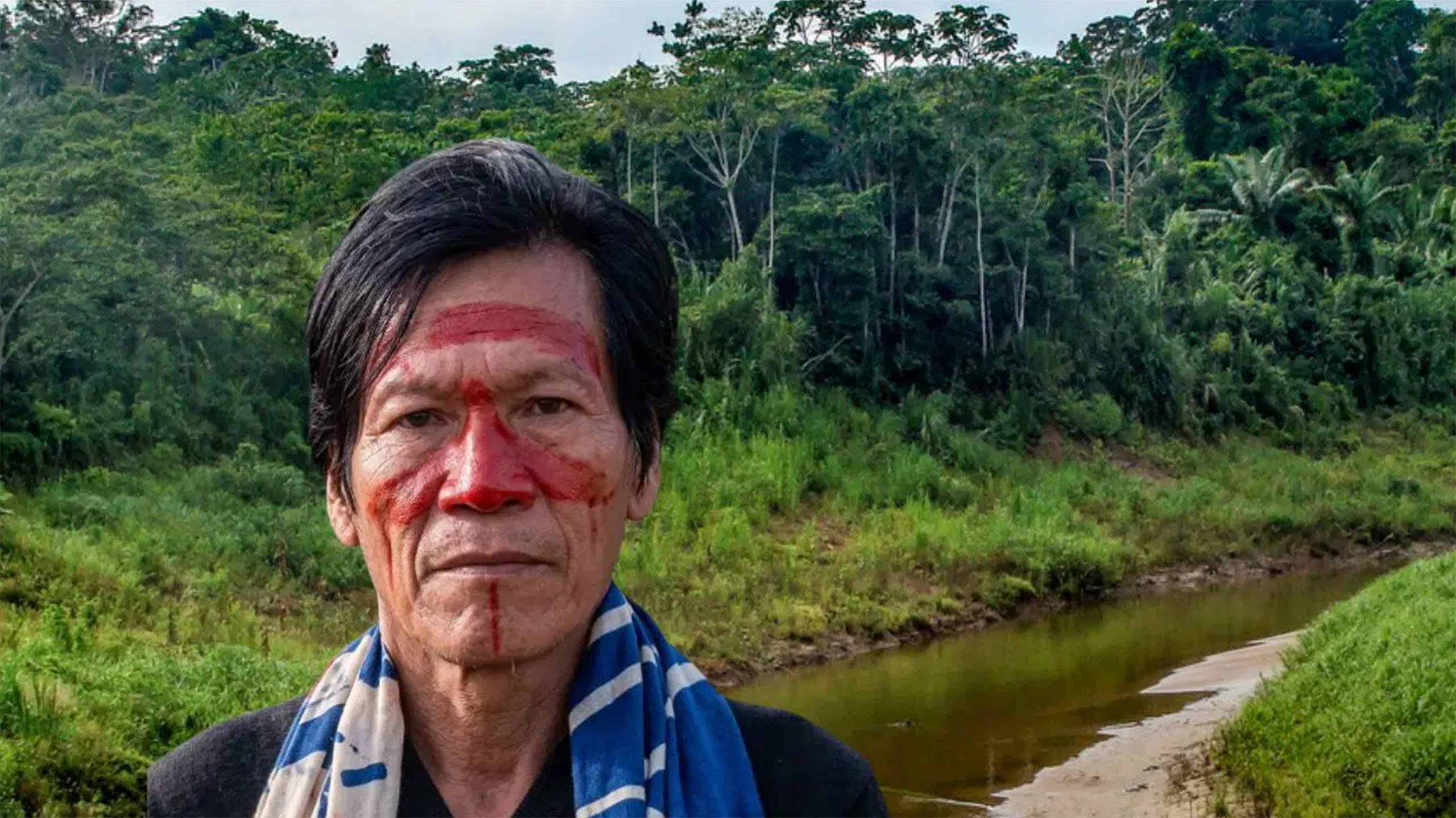
Ashéninka leader Américo Pascuala Tumisha was shot and killed Aug. 23 while patrolling the territory of the Onconashari Indigenous community in Peru’s Ucayali region.Onconashari residents have reported incursions linked to unauthorized copaiba extraction since at least 2020, including threats against community members who objected.The community has a long history of territorial monitoring and in 2025 received formal government recognition for its Forest Surveillance and Control Committee, which Pascuala later coordinated.Global Witness has documented more than 60 killings and disappearances of environmental and land defenders in Peru since 2012; AIDESEP says at least 38 Indigenous defenders were killed in the Peruvian Amazon between 2014 and 2026. Ashéninka leader Américo Pascuala Tumisha was shot and killed on Sunday while patrolling the territory of the Onconashari Indigenous community in Peru’s Ucayali region. According to the Regional Organization AIDESEP Ucayali (ORAU), Pascuala encountered people who were allegedly extracting copaiba oil without permission inside the community’s territory. A confrontation followed, and he was fatally shot. Pascuala was serving as coordinator of Onconashari’s territorial surveillance committee at the time of his death. He was previously chief of the community. Unauthorized copaiba extraction had been reported in the area since at least 2020. A 2023 report by the Peruvian nonprofit Derecho, Ambiente y Recursos Naturales (DAR) found that a group from the nearby Nueva Luz de Arara community had been entering Onconashari and the neighboring Murunahua Indigenous Reserve without the community’s permission to extract copaiba oil. The reserve was created to protect Indigenous peoples living in isolation and initial contact. The report said some extractors threatened Onconashari residents after they complained. Community authorities then reported the incursions to their Indigenous federation, Peru’s Ministry of Culture, and the police. Joint patrols followed in late 2022. Copaiba extraction in the area expanded during the COVID-19 pandemic, when cash was scarce and buyers from Pucallpa arrived in the Yurúa area, according to the report. The oil is tapped from copaiba trees and used in traditional medicine and commercial products. Government records show patrol and surveillance work around Onconashari as early as 2014. In August 2025, the Ucayali regional government formally recognized Onconashari’s Forest Surveillance and Control Committee. Its members were accredited as forest and wildlife custodians, with authority to patrol the territory, report illegal logging, and alert officials to threats. “It is important to take care of our territory because sometimes our neighbors do not respect the boundaries,” Robinson Pascual, then the community’s chief, said when the committee was recognized. “With this recognition, we will be better able to protect it.” AIDESEP said Américo Pascuala had previously reported outsiders entering the community’s territory but received neither a state response nor protective measures. Peru’s Public Prosecutor’s Office has opened an investigation into his killing. More than 60 environmental and land defenders have been killed in Peru since 2012, according to Global Witness. AIDESEP’s own early-warning system says at least 38 Indigenous defenders were killed in the Peruvian Amazon between 2014 and 2026. Among them were four Asháninka leaders from the Alto Tamaya-Saweto community in Ucayali, killed in 2014 for resisting illegal loggers, and Kichwa leader Quinto Inuma Alvarado, killed in San Martín in 2023 after repeatedly reporting illegal logging and threats. On Monday, a day after Pascuala was killed, a Peruvian court sentenced four men over Inuma’s murder, with prison terms ranging from 15 to 35 years. AIDESEP says Peru’s Intersectoral Mechanism for the Protection of Human Rights Defenders has not provided adequate protection in remote Indigenous territories. “Despite efforts to confront illicit activities, Indigenous leaders continue to be killed,” AIDESEP Vice President Miguel Guimaraes said. “The intersectoral mechanism does not have enough funding. Paper cannot stop a bullet; concrete action is needed on the ground to protect defenders.” The Ashéninka are an Arawak-speaking Indigenous people with communities in Peru’s Ucayali, Pasco, Junín, and Huánuco regions, as well as across the border in Acre, Brazil. Peru’s Ministry of Culture estimates that about 15,300 people live in Ashéninka communities, including along the Yurúa River. The closely related Asháninka population is much larger, at roughly 120,000. Banner image: Américo Pascuala Tumisha. Photo courtesy of Rainforest Foundation Norway (RFN) Credits Topics
Ashéninka leader killed while patrolling Indigenous territory in Peru
Full Article
Original Source
Read the full article at News →KhanList aggregates and links to publicly available news content. We do not host full articles from third-party sources. Always verify important information with original sources.