
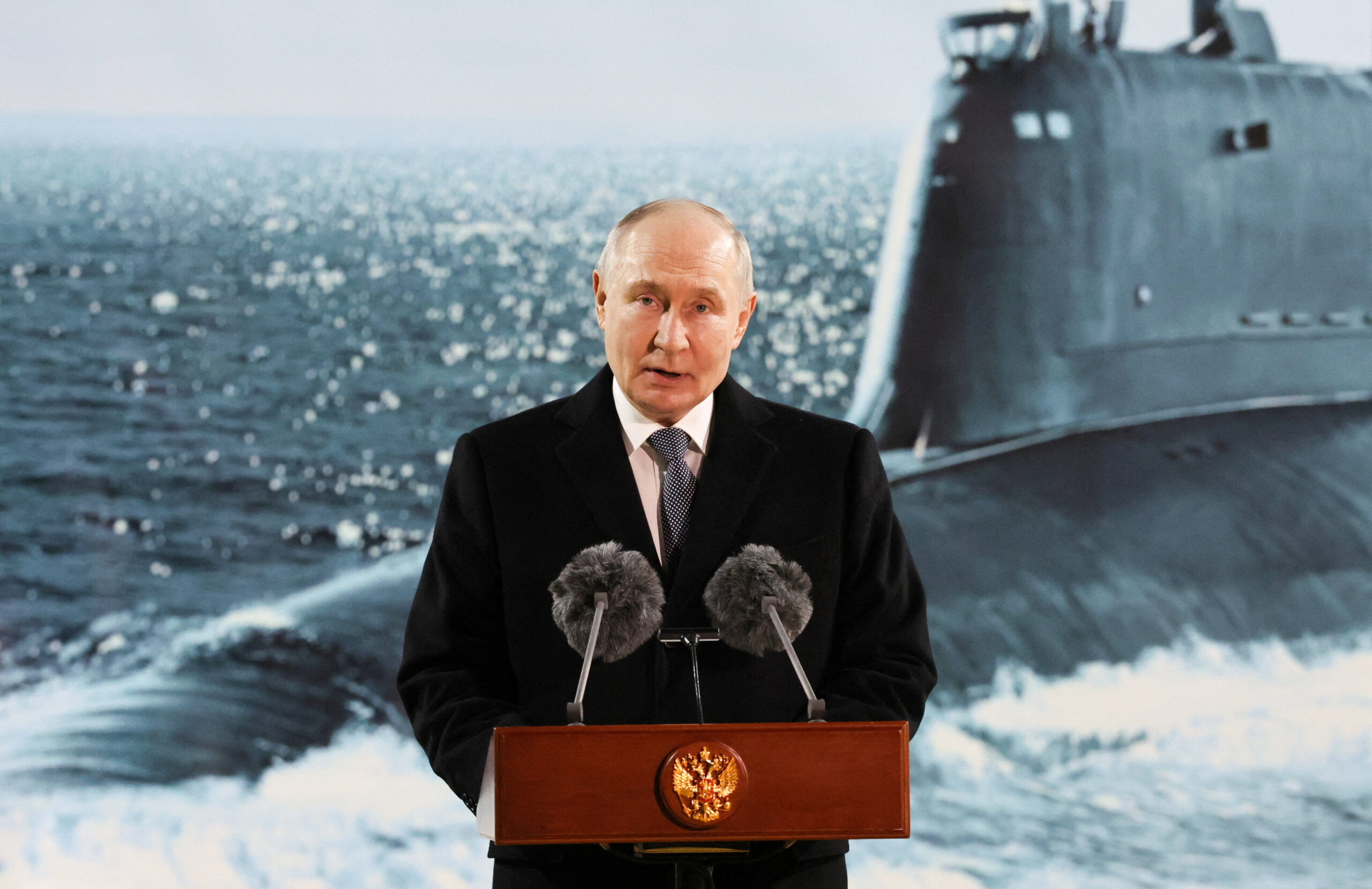
Three Russian missiles struck Polish territory on November 20 in one of the most serious violations of NATO airspace since the onset of Russia’s full-scale Ukraine invasion. The timing of this incident was particularly concerning, as it coincided with European military drills in support of Ukraine taking place nearby. Polish Prime Minister Donald Tusk branded the incident an “intentional provocation” and dismissed claims that the missiles had entered Poland accidentally during an overnight bombardment of Ukraine. Tusk’s Defense Minister Władysław Kosiniak-Kamysz voiced similar concerns. “It’s hard to regard it as a coincidence that the time and place of the violation of Polish airspace coincided with the Coalition of the Willing’s exercises,” he commented. This recent incident came amid a broader expansion of the Kremlin’s shadow war against Europe. Russia’s gray zone campaign has been underway since the start of the Ukraine invasion in 2014 and has intensified significantly in recent years. It includes airspace violations, infrastructure sabotage, disinformation operations, and cyberattacks, along with a wide range of additional measures designed to destabilize societies and disrupt daily life. Moscow seeks to create a climate of uncertainty throughout Europe and reinforce the perception that supporting Ukraine carries direct security risks. Russia relies on ambiguity and routinely denies any involvement in operations taking place in countries across Europe. This strategy of plausible deniability is strengthened by the use of so-called “disposable agents,” who are recruited via online platforms to conduct acts of sabotage while concealing Moscow’s involvement. The Kremlin’s use of hybrid warfare is proving effective as Europe is deeply reluctant to risk open confrontation with Russia. Moscow is counting on these fears. Putin believes that cautious European leaders are unlikely to respond to Russian acts of aggression that deliberately blur the lines between war and peace while remaining below the traditional threshold for international conflict. Stay updated As the world watches the Russian invasion of Ukraine unfold, UkraineAlert delivers the best Atlantic Council expert insight and analysis on Ukraine twice a week directly to your inbox. With the Russian army struggling to advance on the battlefield in Ukraine despite suffering heavy losses, there are now mounting indications that the Kremlin is intent on escalating against Europe. This reflects recognition in Moscow that in order to finally overcome Ukrainian resistance, Russia must first cut Kyiv’s lifeline of European financial and military support. In recent months, the Kremlin’s hybrid campaign has become noticeably bolder and more destructive. This has included attacks on European infrastructure, defense industry production plants, communications sites, and storage facilities linked to the war in Ukraine. The attempted August bombing of Leipzig Airport, which serves as a logistical hub for the NATO alliance, was widely seen as a major escalation. Meanwhile, Polish authorities claim to have recently foiled Kremlin plans for a false flag incursion from Russia’s Kaliningrad enclave that was intended to cause mass casualties and stop aid to Ukraine. Despite growing awareness of Russia’s tactics, Europe is still struggling to find the right response. Moscow is likely to continue exploiting this hesitation, especially as Russia knows that the Trump administration has undermined confidence in America’s commitment to European security. Eurasia Center events Concerns over a possible military confrontation with Russia mean European leaders have limited options. However, much more could be done to counter the Kremlin. A more active defensive posture could include shooting down Russian drones and missiles that violate European airspace. This could potentially be extended to the border regions of western Ukraine without dramatically increasing the risk of direct involvement in the war with Russia. Following the latest airspace violation, Poland has announced plans for a no-fly zone along the country’s border with Ukraine. At sea, the Baltic Sentry Mission is a positive case study that has allowed NATO to substantially improve response and surveillance capabilities in the Baltic Sea. This has not only increased pressure on Moscow’s shadow fleet, but also prompted Russia to deploy additional warships to escort sanctioned tankers. Since the 2025 launch of this initiative, incidents of suspected sabotage against critical undersea infrastructure have declined. Estonia has recently set a new standard by announcing plans to close its land border with Russia in response to what it claims is Moscow’s long-standing escalation of hostile activities across Europe. “This is about more than border security. We are making Europe safer, closing opportunities for Russia to exploit our openness, and increasing pressure on Moscow to end its aggression against Ukraine,” commented Estonian Foreign Minister Margus Tsahkna. Brussels is also looking to tighten restrictions on EU visas for Russian nationals. A new sanctions package includes a proposal to ban all Russian military personnel who fought in Ukraine. “Russian ex-combatants pose a security risk to Europe. They cannot be allowed to wander freely across our countries. Therefore, entry into the European Union will be off limits,” stated European Commission President Ursula von der Leyen. While these steps have angered Moscow, they will not be enough to deter the Kremlin. Russia’s shadow war against Europe is now closely linked to the invasion of Ukraine. If European leaders want to push back in a manner that will really resonate, they should focus on measures that will strengthen Ukraine, while demonstrating that each new act of gray zone Russian aggression deepens their collective resolve to counter the Kremlin. Until Putin believes his hybrid warfare tactics are counterproductive, he will continue to escalate. Maksym Beznosiuk is an analyst whose work focuses on Russia, Ukraine, and international security. He is an associate fellow at GLOBSEC. Further reading The views expressed in UkraineAlert are solely those of the authors and do not necessarily reflect the views of the Atlantic Council, its staff, or its supporters. The Eurasia Center’s mission is to enhance transatlantic cooperation in promoting stability, democratic values, and prosperity in Eurasia, from Eastern Europe and Turkey in the West to the Caucasus, Russia, and Central Asia in the East. Follow us on social media and support our work Image: Russian President Vladimir Putin delivers a speech during a flag-raising ceremony for the nuclear-powered submarine Perm, the first submarine equipped with Zircon hypersonic missiles, as he visits the Sevmash shipyard in Severodvinsk, Russia. November 27, 2026. (Sputnik/Grigory Sysoyev/Pool via REUTERS)
As Russia stalls in Ukraine, Putin escalates against Europe
Full Article
Original Source
Read the full article at Atlanticcouncil →KhanList aggregates and links to publicly available news content. We do not host full articles from third-party sources. Always verify important information with original sources.