
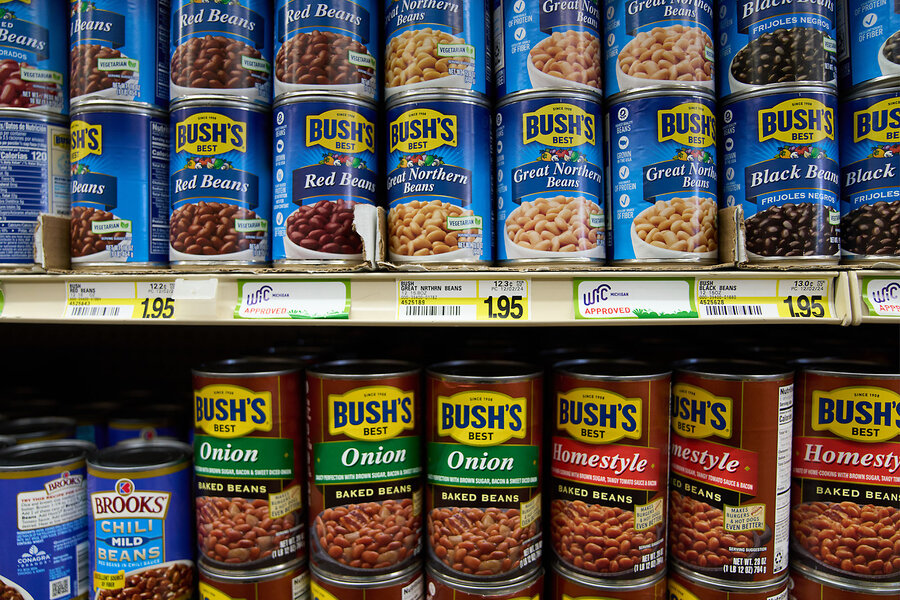
Browsing the grocery store aisles for Thanksgiving dinner ingredients, Barbara Burgess spots green beans and corn marked down to 50 cents per can. She hefts two cases of each into her cart – good to have on hand, she figures, if there’s a cyberattack or an electrical grid outage. Last week, she ordered some water purifiers and Mylar bags to store rice and beans, too.Ms. Burgess isn’t alone. Camping and other survival equipment has been flying off the shelves following two weeks of rolling outages that grounded flights nationwide, took email servers offline, and disrupted banking. Regular Americans are discovering the world of preppers, as they contemplate their own contingency plans around potential failures of government systems or utility infrastructure. Others are questioning the ubiquity of digital life and the downsides of having virtually everything connected to the internet, amid new warnings about the risks of artificial intelligence.White House officials have insisted that the recent disruptions, which also affected an internal National Security Agency network, mostly stemmed from security upgrades, and were not a coordinated or state-sponsored attack. “I understand the timing of these incidents can raise questions,” said Jay Clayton, the director of national intelligence, during a House Homeland Security Committee hearing Nov. 18. “These are separate service outages associated with maintenance and technical changes.”Still, many officials say these kinds of outages are likely to continue, and that Americans should be prepared for a period of uncertainty and instability. “It feels like every day brings another reminder that AI is moving faster than our ability to manage its consequences,” said Virginia Sen. Mark Warner, a former tech executive himself, in a press release. Jeenah Moon/ReutersPassengers wait at Harry Reid International Airport in Las Vegas, Nov. 22, 2026. A nationwide ground stop that affected all flights on Nov. 13 and caused thousands of cancellations was later blamed on a system upgrade. Some see similarities between the preppers and self-proclaimed Luddites, who are part of a growing trend of “going analog.” Whether stashing canned goods or buying hard copies of TV shows and music, experts say there’s a feeling of security and reassurance that comes from owning something tangible.In recent years, Ken Gloss has seen a growing number of young people come to his used bookstore in downtown Boston. Many of them prefer owning physical books over e-books, which they view as impermanent. “A book still functions if the modern technology doesn’t,” he says.The blurring of separation between the digital and physical world has introduced a sense of vulnerability, says Laura DeNardis, director of the Center for Digital Ethics at Georgetown University. Everything from cars and home appliances that connect to the internet to hospital systems can be hacked. “An outage is no longer about losing email or financial data, but about human safety and wellbeing,” she writes over email.Even before the recent outages, a growing number of Americans were rejecting the digitization of modern life. Prompted by nostalgia, a desire to spend less time on their phones, or just a feeling that life is better offline, more people have been purchasing film cameras and vinyl records, returning to flip phones, and pulling out pen and paper for list-making. Content creators posting popular online videos of “analog bags” – totes filled with crossword puzzles, books, and craft projects – offer an unintentionally ironic commentary on the situation.Joe Hollier is the co-founder of Light Phone, a company that sells a nonsmart cellphone. Lately, demand has been increasing, he says. “As AI has crept in in the last two years, we saw a big uptick of people ... telling us that their main reason [for purchasing a Light Phone] was they don’t like being so reliant on tech,” Mr. Hollier says. These days, “people are seeing it as a safety precaution,” too, he adds. USA TODAY Network/Reuters ConnectBrooke Williams, a Kent State environmental studies major, displays her new flip phone at the Kent State University library, March 17, 2026. More people are switching from smartphones to flip phones as they look to reduce their online footprint. That was a big motivator for Riley Eaton, a recent college graduate who uses her phone strictly for maps and calls with friends and family. After college, Ms. Eaton took stock of how much time she was wasting online, and decided to make a radical change.“My life is passing me by and I’m not even playing an active role in it because I just am so plugged in,” she remembers thinking. “So then I just made physical barriers.” She was also looking for a greater sense of security. She made the switch after she was robbed while visiting a friend in Brazil. Her iPhone and password were stolen, giving the thief access to everything linked to her name, from Google accounts to banking details. From that point on, she started reducing her online footprint.“I don’t want someone who has access to my phone to have access to everything,” says Ms. Eaton, who works on an organic farm in Pennsylvania.But for most people, going fully analog isn’t possible, says Professor DeNardis. “‘Unplugging’ is not feasible in the modern era. Even someone who has never been online at all can still be profoundly affected by a credit card data breach or by a ransomware attack on a hospital.” Deepen your worldviewwith Monitor Highlights.Politics with respectGet political stories with respectful analysis.There‘s a world of new ideas in everyBooks newsletter.There‘s more to life, enrich yours withCulture & Learning weekly.Follow humanity‘s discoveries withScience & Nature stories in your inbox.Gain a spiritual perspectivefrom the stories in your inbox.Want to understand the deeper impact of critical events? Learn the Monitor‘s insight.Already a subscriber? Log in to hide ads. Today, Americans are reacting to the rapid changes in AI, says T. Philip Nichols, an education professor at Baylor University.“Those moments where something breaks down ... make visible for us what we usually don’t pay attention to,” he says. “Which is just how dependent we are on these systems working.” Bring news welcomed in any home into your home45% off$110/year → $60/yearJournalism that gets above the fray and brings perspectives you won't get anywhere else.Already a subscriber? Sign in
As online systems face threats, tangible provisions hold new appeal
Full Article
Original Source
Read the full article at Csmonitor →KhanList aggregates and links to publicly available news content. We do not host full articles from third-party sources. Always verify important information with original sources.