
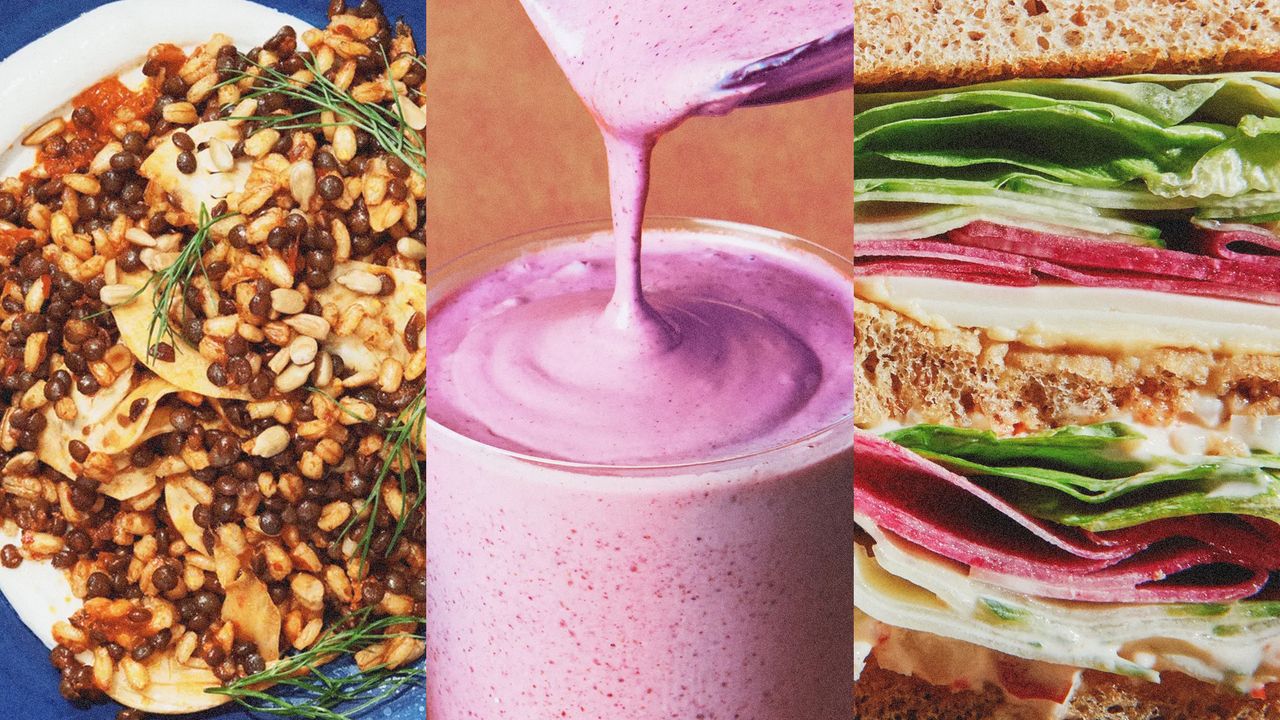
Editor’s note: The following story references disordered eating.“Food is fuel.” I’ve heard the cliché my entire life, and it never resonated. Food has always represented much more to me: a reason to gather, a way to celebrate holidays, a source of nostalgia and novelty. To see food as proverbial gas in the tank seemed clinical.But food has also been a source of deep personal anxiety, and in moments, downright pain. For many years, I was obsessive and compulsive with my eating behavior. A binge-and-restrict cycle became my norm, with food acting as the currency for doling out punishment and rewards.As I worked with a therapist and mended my relationship with food, I started seeing it as nourishment for my spirit. This was actually fairly easy—I’ve always loved to eat. But it was finding the resolve to intentionally fuel my body, especially as I’ve established a deeper practice of strength training and running, that remained a struggle.So used to underfueling, I assumed everyone was so tired after a jog or lift that they also literally fell asleep an hour later. Not the case! Many people with robust movement routines eat enough carbs, protein, and fat—not just to achieve a baseline level of physical nourishment, but a quantity necessary to build stamina for heavier sets, increasing mileage or speed, what have you.This kind of nutrition was new to me. It was more than salad and a plank of salmon. As I educated myself on truly energy-enhancing and recovery-supporting foods, I found ingredients I’d been conditioned to see as “unhealthy,” like bread and cheese, or white potatoes and red meat, actually offered incredible nourishment.Throughout my teens and early adulthood, I approached health with an all-or-nothing mentality. When I learned that red meat was higher in saturated fat than legumes, I limited my intake of the former. After reading that too many carbohydrates could spike my blood sugar, potentially leading to more hunger and weight gain, I swapped my morning oatmeal for yogurt. Even though I had no medical predispositions to warrant slashing these foods, I saw the ingredients as barriers to optimal health.At the time, my definition of “healthy” was misguidedly synonymous with “being thin.” I logged hours of endless, directionless cardio, the only intention for which was to burn the minimal calories I consumed the rest of the day.After a brief respite in the 2010s where body-positivity and neutrality were in vogue, the pendulum has swung back with a vengeance. Today, I have the opportunity to buy a get-skinny-quick scheme in the form of certain peptide therapies, which can result in fat loss and decreased appetite. Myriad celebrities who once touted body-positivity are taking and becoming advocates for the FDA-approved versions of these weight-loss drugs, often known as GLP-1 drugs—choices that are, of course, theirs, and none of my business, but ones that are public and influential.This is not to bash properly taking a prescribed medication: Many users report that, since taking a GLP-1 drug, they are able to comfortably exercise, or found it easier to avoid alcohol and stay sober, or even manage a binge-eating disorder. My main concern with these medications is how easy it is to access and abuse them. I’ve been in several social settings in the past months where someone has mentioned they are “microdosing” a GLP-1 drug. These are folks who do not medically need the prescription, but take the shots or pills purely to lose that “last” 5 or 10 pounds. And where things get especially sticky for me is when these conversations shift to food noise. And they almost always do.Though there’s not a formal definition, the concept describes when thoughts of food become so intrusive they disrupt the regular flow of the day. Yet I fear many people, especially those who have a history of disordered eating, conflate food noise with any thoughts of food, even as a result of hunger—something your body should feel throughout the day, especially if it’s expending energy. When someone praises a drug for helping them forget about food altogether, something is wrong. And blaming the medication alone is a Band-Aid on a gushing wound. What we should really be focusing on is why people are ashamed to fuel themselves.This has become something of a mantra for me lately: It is human to feel hungry, and what a privilege it is to be able to satiate myself. Look at what I can accomplish when I am truly nourished.My strongest, most capable body might not be its most lean version. What’s more, I don’t want to rid myself of thoughts of food at the expense of losing my appetite. I love food. And I want to learn why certain ingredients, even those I’ve been conditioned to fear in the past, are beneficial to my body.This doesn’t mean I’m switching my protein sources to exclusively chicken breast or beef because the gym rats swear by it. In fact, I probably only cook meat once or twice a week. Seafood and plant-based proteins are incredibly nutritious, each offering plenty of macronutrients—not that I’m tracking anything religiously.If there aren’t personal dispositions from an ethical or medical perspective, there is no reason to completely omit any ingredient from one’s diet. A russet potato filled with ground beef appears in this column alongside legumes and grains, chicken breast, and sardines precisely to show that a healthy diet is a varied one, especially for active people.Do I eat more on particularly lively days, when I can really reap the benefits of the extra energy? You bet. Do I force myself to curb my appetite on lower-activity days because I haven’t “earned” my sustenance? Not anymore. In fact, intentionally underfueling can slow metabolism as the body attempts to store nutrients. Diet culture may have turned calories into something to fear or avoid, when in reality they are simply units of measurement for energy. And we all need energy!Sometimes it’s as simple as that. Reorienting my perspective to see food not as a reward, but a power source, changed everything. And fueling both my body and brain are equally worthy. I need complex nourishment after finishing a 10k just as much as I will after writing this essay. And it won’t just be a collection of the appropriate dose of macros to keep me going. It will be salty (or sweet) and rich, crunchy and colorful, something I genuinely crave.Read Rebecca’s column, Good for YouWhite Potatoes Aren’t Empty Calories. They’re Great for YouHow I Make Protein Pancakes Without Protein PowderPack a Meal’s Worth of Veggies Into One Satisfying SandwichThe Smoothie That Made Me Love Cottage CheeseAre Sardines the Secret to Glowing Skin?Chicken Breasts Don’t Have to Be Sad Health FoodThe Fiber-Rich Salad I Actually CraveThis Bone Broth Soup Is a Meal, Not a Cleanse
As a Food Editor, ‘Food Is Fuel’ Never Resonated. Here’s What Changed My Mind
Full Article
Original Source
Read the full article at Bonappetit →KhanList aggregates and links to publicly available news content. We do not host full articles from third-party sources. Always verify important information with original sources.