
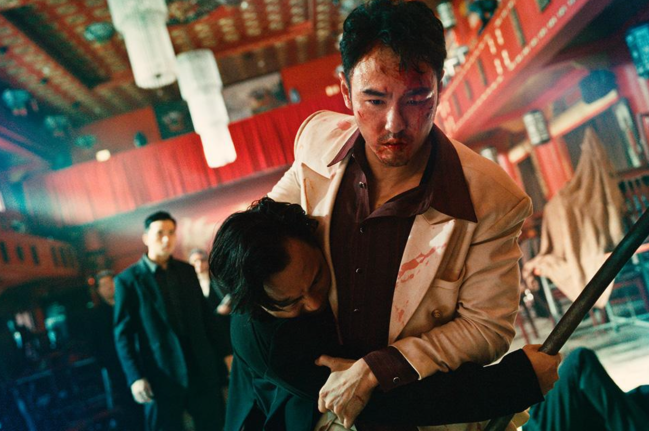
Japanese genre maven Sabu heads to Taipei for his latest film, “Arrested Memory,” in which a celebrated undercover detective, Lee (Ethan Juan), is assigned to a kidnapping case shortly after a traumatic sting that left his entire squad dead. Cinematographer Jai Ip frames early scenes in anamorphic wide shots that emphasize depth and space around the characters and recall the work of Hong Kong maestro Johnnie To. To remains a touchpoint for the film when it is revealed that, as in that director’s 2009 “Vengeance,” Lee has begun to show signs of memory loss that contributed to the massacre of his men when he zoned out at the worst possible moment. Where To used amnesia to somberly ruminate on the existential nature of revenge, Sabu plays Lee’s lapses in awareness mostly for Mr. Magoo-esque comedy. Tasked with handling the ransom payment of Japanese businessman Hatta (Sabu regular Shinichi Tsutsumi) to recover his kidnapped child, Lee no sooner gets to the subway where the drop is meant to occur and forgets what he is doing. The other cops assigned to Lee’s detail take this to be an elaborate act and marvel at his authenticity; “He really looks lost,” exclaims one undercover with a note of reverence. When Lee ends up wandering off entirely, however, both his colleagues and the Hattas come to believe he has gone rogue. Despite its trim, 87-minute runtime, “Arrested Memory” packs an astounding number of complications into the spiraling catastrophe of Lee’s fugue state roamings. Following instructions from the kidnappers (unbeknownst to his increasingly agitated comrades), Lee drives out to meet them for the exchange, only to wreck his car and become distracted saving a nearby woman, Hua (Moon Lee). Later, he spots a man dragging a woman into a hotel room and subjecting her to torture, only to burst in and realize a moment too late he may have imagined the whole thing. Even before things go awry, Lee pulls over on the way to the Hattas to arrest a meth addict, Mad Dog Luke (Akira Huang), for a drug buy, forcing the cops to bring the man along with them. The stacking cast of people sucked into Lee’s orbit introduces various new subplots, creating a suffocating density that is compounded by Ip gradually reducing the focus of his images until more and more of the frame is blurred out to reflect Lee’s worsening mental faculties. Occasionally, the frame turns into a refracted doubling or tripling of objects and people, a world viewed through a kaleidoscope as the detectives focus glazes. Sound also regularly drops out to a high-pitched tinnitus drone or outright silence. Juan communicates all of this in his own performance, giving Lee a resting expression of vacant stares and slack-jawed gaping that he maintains even when Lee encounters a (real or perceived) enemy and he executes judo tosses and armbars with unconscious muscle memory. Lee’s tragicomic blankness makes the haplessness of his comrades’ efforts to bring him in as an ostensible traitor all the funnier. Despite his slow, ambling movement, Lee is always one step ahead of other cops, even in a foot chase where both men run at a shambling, sluggish pace. Back at the Hatta home, cop Ming (Kent Tsai) impotently rants and raves about Lee as the Hattas and their aid and translator, Tami (Hsieh Ying-hsun), grow so incensed that they begin to defer to Luke, who, despite showing symptoms of withdrawal, displays a far calmer and more logical grasp of the situation. As much as the film mines Lee’s condition for absurdism, it also finds small pockets of grace in his interactions with others. After Lee saves Hua from her suicide attempt, the young woman castigates him for his unwanted assistance, causing him to absentmindedly reach into the bag of ransom money he’s holding and offer her a stack of bills. As he does so, the frame suddenly illuminates in a warm, orange glow as if Lee were enhaloed, only for this sudden brightness to be revealed as the headlights of a bus coming to the stop where the pair are seated. This could have been a great punchline, particularly when Hua instantly takes the money and hops aboard, but the camera stays with her for a few seconds, just long enough to see her look of surprised, triumphant surprise fade back into a miserable, far-off gaze as she works out in real-time that money will not solve the issues that drove her to such extreme ends. Billed as an action-comedy, “Arrested Memory” restrains its moments of gunplay or close-quarters grappling to a few, brief bursts, devoting the bulk of its time to the increasingly muddied tone of black humor and more sober sympathy for Lee and the many sad people he encounters. Sabu takes a clear interest in capturing the small quirks that the actors bring to their parts, from Hsieh’s mischievous smirks when Tami translates the Hattas’ ever-angrier tirades to the police to Huang giving Mad Dog a host of totally wired jitters that provide a sharp contrast to the man’s moments of sudden clarity as his body language straightens up and he begins issuing instructions as if he were the captain in charge of this operation. Some of the ending swerves are a bit too tidy, smoothing out the truth of situations that were far more intriguing when left as possible figments of the hero’s addled imagination, but they fit the overall tone of affection that the film has for all of its characters, no matter how incompetent or irascible. Grade: B “Arrested Memory” premiered at the 2026 Venice International Film Festival. It is currently seeking U.S. distribution.
‘Arrested Memory’ Review: Sabu Plays Amnesia for Gentle Comedy
Full Article
Original Source
Read the full article at Indiewire →KhanList aggregates and links to publicly available news content. We do not host full articles from third-party sources. Always verify important information with original sources.