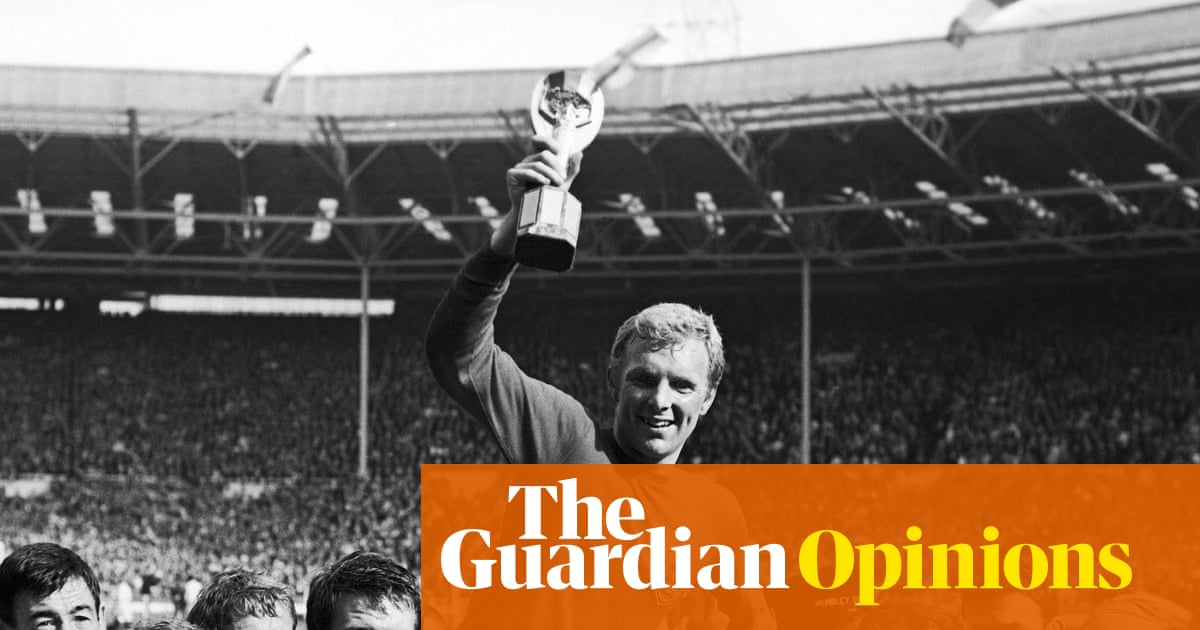
It’s almost all over. No more hydration breaks, no more obligatory pans of the TV cameras to Hollywood A-listers, or dread of the crushing inevitability of English disappointment. The Fifa World Cup 2026 is at an end, after another month of planet-straddling drama laced with significance and symbolism, both on and off the pitch.Before the kick-off between Spain and Argentina on Sunday evening, the result is already clear: football’s greatest prize is more than a sporting event; it is a geopolitically charged economic juggernaut.After a month of fixtures, billions of dollars have been spent in an extravaganza of consumerism and corporate largesse, fuelled by advertising spend, ticket sales, merchandise, gambling, travel and hospitality. Fifa estimates that the tournament will add $40.9bn (£30.4bn) to global GDP, with the US – ahead of Canada and Mexico as the leading economy among the co-host nations – accounting for almost half of the total.There are good reasons for the World Cup’s economic impact: no other sporting event – not even the Olympics, Tour de France or Wimbledon – can match its global reach. Sunday’s final is expected to draw an audience at least 10 times that of the Super Bowl.According to Fifa, more than half the world’s population – about 5 billion people – were estimated to have watched at least part of the last World Cup in Qatar in 2022. With the competition’s expanded format this year, total engagement is expected to be higher still.Big sporting and cultural events can be significant money-spinners able to send ripples through the wider economy. Taylor Swift’s 2024 Eras tour supposedly pushed up quarterly GDP in Britain and Singapore, and a Beyoncé concert was blamed for driving up inflation in Sweden.But the impact is not always entirely clear-cut. Using data from the 1982 World Cup onwards, analysts at Goldman Sachs found only a marginally positive effect on economic output for the host nation. The long-run effects are also virtually zero: while activity is boosted short term, much of the spending is often simply redirected from other activities, and any boom during the finals is often followed by a decline afterwards.Early analysis by the US Federal Reserve shows that, while some bars in Boston ran out of booze as Scotland fans descended on the city, the positive impact was mitigated by economic weakness elsewhere as consumers cut back amid rising prices linked to the Iran war. Regular tourists have also avoided host cities because of anticipated congestion and sky-high prices.There are intangible benefits, however. Goldman’s analysts point out that many fans would pay over the odds to see their country win. The sense of national pride, happiness and cultural heft is large, and difficult to quantify on the cold-hearted GDP ledger.Riding on the coat-tails of the World Cup is also, clearly, big business. The corporate sponsors have cashed in, with airlines, bars, restaurants, hotels and retailers across the 48 nations involved also ringing in profits. But this is about more than just money: it is about soft power and who wields it.Just look at Fifa’s official sponsors. Each shines a spotlight: Qatar Airways and Saudi Aramco, among the top-tier “partners” – believed to be paying up to $200m for the privilege – underline the dominance of fossil fuels in powering global output, and the influence seeking of the energy-rich Gulf states. Adidas, Coca-Cola and Visa cling on for the old guard of western capitalism, while the fast-growing economies of Asia are represented by the South Korean carmaker Hyundai-Kia and the Chinese technology company Lenovo.A World Cup replica trophy displayed in a Louis Vuitton case. Photograph: Amy Tennery/ReutersBelow them, the cadre of “sponsors” and commercial “supporters” range from a crypto exchange to tech companies, banks, and even an “official dairy sponsor” in China’s Mengniu Dairy. Not all sound that compatible with elite sport – not least the “quick-service restaurant sponsor” McDonald’s, or official snack food sponsor Frito-Lay (known better in the UK as Walkers). Some border on the absurd: does the World Cup need a bespoke Louis Vuitton trophy trunk to be carried on to the pitch in New York? Even the clothes worn by Fifa’s officials are a money-spinning opportunity, for “official formal wear supplier” Boggi Milano, an Italian fashion house.skip past newsletter promotionafter newsletter promotionSixty years ago, when England lifted the trophy in 1966, pitch-side advertising – for brands including Brylcreem and Gordon’s Gin – crept into the tournament for the first time. A year earlier, the Rolling Stones lambasted the dawn of the modern consumerist age (“He can’t be a man ‘cause he doesn’t smoke the same cigarettes as me”). Today? The band has a “landmark collaboration” with world football’s governing body to sell three limited-edition vinyl album covers, and a remixed song for the Official Fifa World Cup 2026™ Album.As the ringmaster, Fifa is expected to earn a small fortune – with projections it will rake in more than the $7.6bn it earned at the 2022 Qatar World Cup.Part of the reason for the commercial whirl is understandable. Fifa’s mission is to grow and develop football in each of its 211 member associations – from the grassroots to elite competition; youth, women’s football and education programmes. It is laudable stuff. For all of the rivalry in football, the game still brings people together – despite our fragmenting world.It would also be foolish to pretend that money and power have no place in the beautiful game. The kicking of a pig’s bladder in medieval England would not have developed into a global sport without the spread of empire. Money has also long played an outsize role in the business of winning trophies, in a relationship that, although riven with tension, is ultimately symbiotic.But has the balance tipped too far? Such corporate encroachment, into a game with deep working-class roots, is increasingly fraught in an age when globalisation is being questioned and the fruits of trickle-down economics have turned sour.
Are money and soft power draining World Cup football of its magic? | Richard Partington
Full Article
📰 Original Source
Read full article at Theguardian →KhanList aggregates and links to publicly available news content. We do not host full articles from third-party sources. Always verify important information with original sources.