
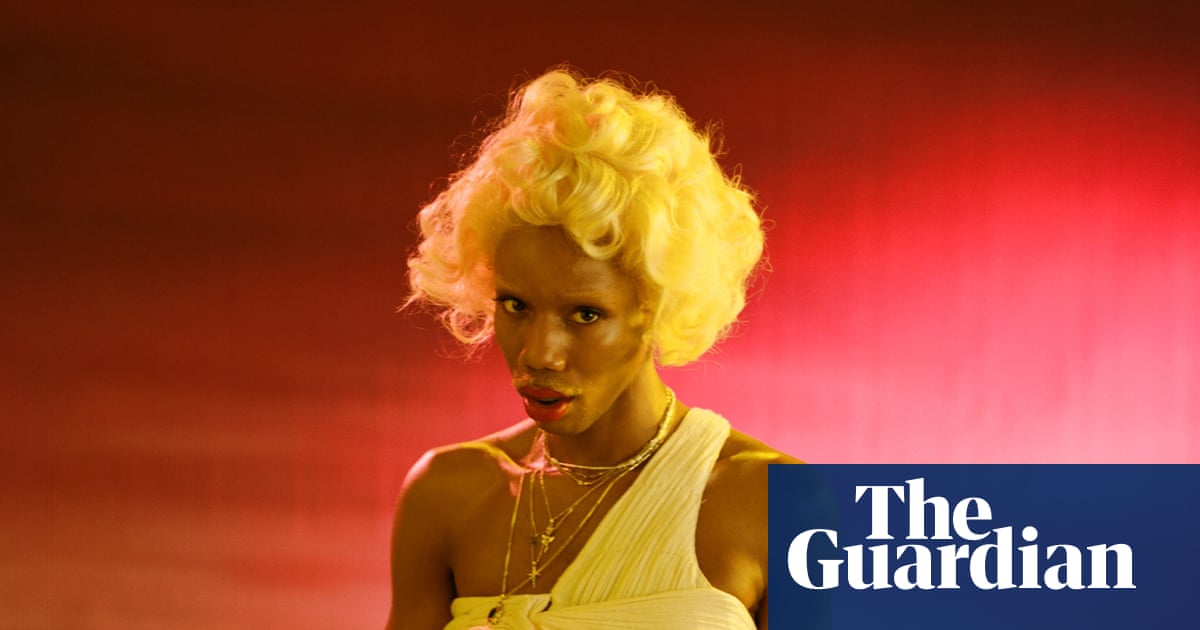
Through thoughtful conversations and dynamic images, Quil Lemons’s new book Quiladelphia explores how Black men navigate desire and masculinity as well as the stereotypes placed on them. With a foreword by Brontez Purnell and including Lemons in dialogue with musician Santigold and artist Lyle Ashton Harris, Lemons asks the audience to consider who can embody the American dreamMelanin Monroe (Reprise), 2021. Photograph: Quil LemonsTue 27 Oct 2026 09.00 EDTVessel, 2021‘I came to photography through curiosity,’ Lemons says. ‘Growing up, I would play with my aunt’s camera, and later Tumblr opened up this whole world of fashion, art and people living in ways I hadn’t encountered in Philadelphia. The camera became a way to connect what I was imagining with the people and experiences around me. There’s a moment in my conversation with Santigold in Quiladelphia where we talk about returning to the things that bring us joy, even when they aren’t the things people are applauding. That feels close to what keeps me making photographs: staying connected to the curiosity that existed before it became a career.’Untitled (Flag), 2023‘Black men are constantly given messages about what makes us valuable – our bodies, our labor, our athleticism, our sexuality, our ability to project strength. Masculinity can become something you perform because you understand that a particular performance gives you access, attention or protection. The American dream carries its own promise about belonging and success, but I’m interested in what that promise asks us to become. Can you pursue it and still recognize yourself?’Boy Parts (Released in collaboration with Google Pixel), 2019‘Sometimes a small gesture or a moment between poses tells me more than the picture I initially imagined. Clothing, nudity, posture and setting can all shift how we read someone. I’m interested in allowing those elements to complicate one another. A body can appear strong and vulnerable in the same image. Someone can be conscious of their beauty and still feel uncertain. That requires trust and conversation. I want the person to have room to participate, to express a preference, and to bring something I couldn’t have invented on my own. The intimacy carries a responsibility that continues when the image leaves the room.’Nasir + Naleek Lemons, 2019‘Philadelphia gave me grit, ambition, and a strong sense of where I come from. There’s a directness to the city that I carry into my work. I trust what I see, and I’m willing to stand behind it. But there’s tenderness in that inheritance, too. Family and community remain central to my photographs because they’re central to how I understand myself. Even when I’m imagining another world, I’m bringing something of home into it.’Allies, 2024‘Some [of the subjects] are friends or people already within my community; others are people I encounter or seek out because something about them stays with me. It might be a face, a gesture, their style, or the way they carry themselves. Attraction is part of it, but so is curiosity. I want to know what happens when we make an image together. Someone can look very traditionally masculine and have a relationship to beauty or softness that you wouldn’t anticipate. I’m drawn to those possibilities. Casting is often the beginning of discovering the photograph. Those relationships continue beyond the photograph, and that matters to how I make the work.’Afro-Latino Trade, 2026‘When someone approaches a photograph as though they already know what a Black queer body means. They can arrive with an entire narrative before they’ve really looked at the person. I’m aware of that, but I can’t allow an imagined audience to determine every choice I make. That would make it difficult to be honest. My responsibility begins with the person I’m photographing and the image we’re creating together. A photograph can be intimate without giving you someone’s entire story. Being visible doesn’t mean being completely available. I want people to spend time with that uncertainty and notice what their own assumptions bring to the encounter.’Melanin Monroe (Reprise), 2021‘I realized how much of myself exists in photographs where I never appear. The men I’ve photographed hold different parts of my curiosity, desire, uncertainty and imagination. Looking at the images together, I could see questions I had been asking repeatedly, even as my visual language changed. I also saw how closely family and sexuality sit beside each other in my understanding of intimacy. They belong to the same life. The book gave me room to recognize those connections without needing to resolve every tension between them.’I Hope You’re Ready, 2021‘Over time, I’ve become more interested in questioning where shame comes from and whose beliefs I’m carrying. So much of what we’re taught about our bodies and desires arrives before we’ve had a chance to understand them ourselves. Unlearning that takes time. Making photographs has been part of that process for me. It creates a space where I can approach desire with curiosity and give tenderness the same attention as sexuality. I don’t think of shame as something you resolve once and never encounter again. But I have more freedom now to recognize it without letting it make every decision.’Untitled (Excerpt from Sky High Farm Hudson Valley Inaugural Campaign), 2023‘In Quiladelphia, I talk about an early friendship and a home where I felt safe being every version of myself. That acceptance stayed with me. It gave me an understanding of how much becomes possible when you don’t have to keep defending who you are. That freedom influences the atmosphere I want to create when I photograph. I want someone to feel that their pleasure, vulnerability or self-expression can be met with care. There’s something powerful about being looked at without being made to feel wrong.’Boy Parts (Released in collaboration with Google Pixel), 2019‘I would hope [my images gave young Black queer people] a little more room to imagine their life. Maybe they recognize a gesture, a desire, or a softness they’ve been taught to hide, and seeing it in a photograph makes it easier to acknowledge in themselves. I want them to feel that they deserve beauty, pleasure, tenderness and a future they’re excited about. They don’t have to have themselves completely figured out to deserve those things. If an image helps someone feel less alone, that matters to me, and gives them the confidence to make something, love someone, or move through the world with a little less fear, I would be grateful to have contributed to that possibility.’
‘Approaching desire with curiosity’: the many facets of Black masculinity – in pictures
Full Article
Original Source
Read the full article at Theguardian →KhanList aggregates and links to publicly available news content. We do not host full articles from third-party sources. Always verify important information with original sources.